
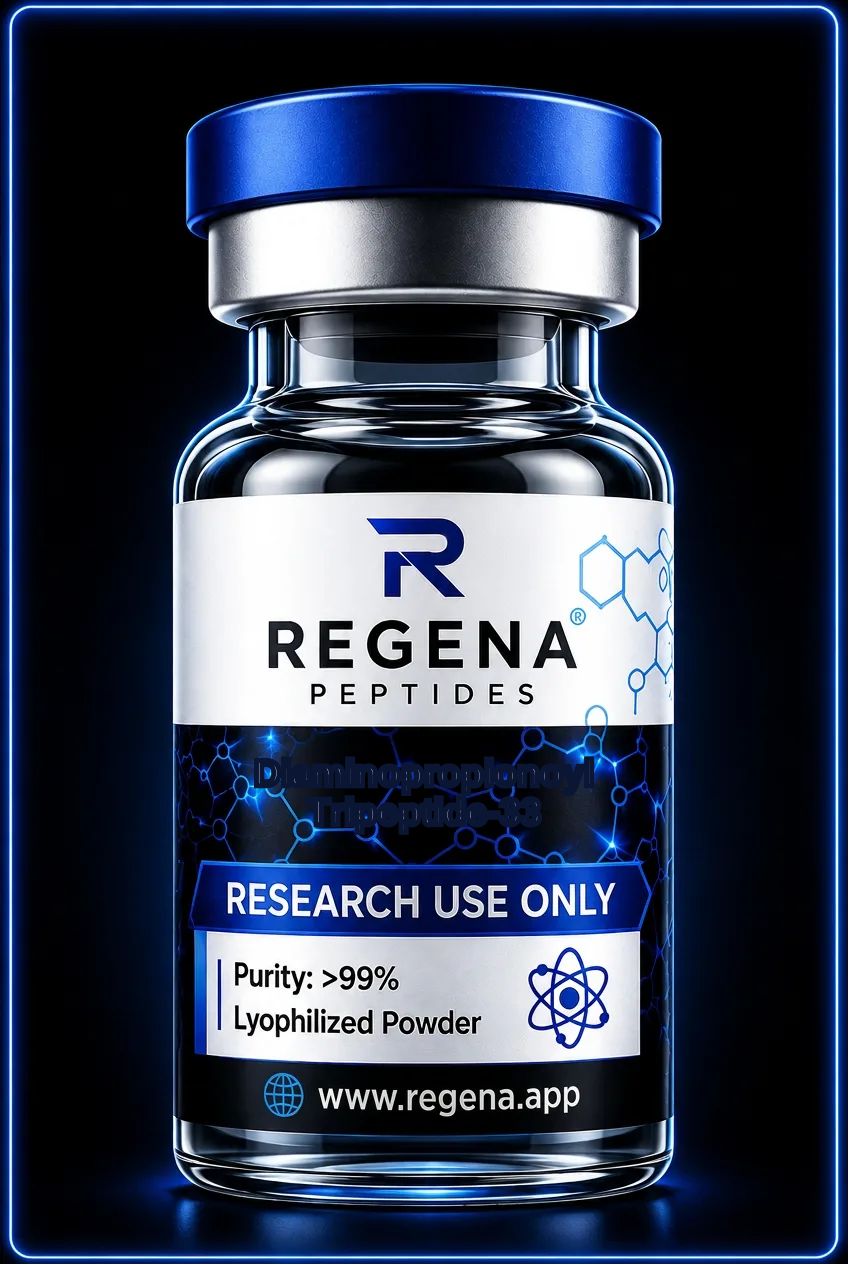
Cosmetic · Nominally a diaminopropionoyl-modified peptide; connectivity unverified
Diaminopropionoyl Tripeptide-33
Also known as —
A nominal diaminopropionoyl-modified tripeptide with unresolved sequence, connectivity and target specificity.
- Length
- 3-residue peptide component implied; total residue count unverified
- Half-life
- Not well characterised
- Mechanism
- Neither a molecular target nor a validated signalling mechanism can be established from this designation. Any proposed interaction would require confirmation of the diaminopropionoyl group's connectivity, stereochemistry and contribution to the molecule's charge.
- Studied in
- Initial laboratory work should focus on structural elucidation, solution behaviour and controlled biochemical screening rather than assuming an established receptor or animal model.
About Diaminopropionoyl Tripeptide-33
This designation suggests a tripeptide component associated with a diaminopropionoyl group, but it is not a complete structural description. Diaminopropionic-acid-derived chemistry can introduce an additional amino group relative to many conventional residues. Its precise position, substitution and stereochemistry nevertheless require documentation. The name alone does not establish whether the modifying group is counted within the reported peptide length, nor does it identify the underlying sequence or its origin.
A reliable discovery account and compound-specific receptor pharmacology cannot be supplied without a primary reference or authenticated chemical specification. Depending on connectivity and protonation, additional amino functionality could influence charge, chromatographic retention and interactions with assay components. These are hypotheses for characterisation, not demonstrated biological properties of this named material. Structural analysis should therefore precede functional screening, with particular attention to positional isomers and any unprotected reactive groups in the supplied batch.
Laboratory notes
- For research use only; request a structure drawing specifying all amino-group linkages and stereocentres.
- Use complementary analytical methods where necessary, since intact mass alone may not distinguish connectivity isomers.
- Document assay pH and buffer composition when evaluating charge-sensitive interactions.
Storage and reconstitution basics: storage guide.
Questions about Diaminopropionoyl Tripeptide-33
Does the name establish a total of three amino-acid residues?
It suggests a tripeptide component, but the relationship of the diaminopropionoyl group to the total residue count requires a verified structure.
Can a target be inferred from the extra amino group?
No. Additional amino functionality may affect physicochemical properties, but it does not identify a receptor, enzyme or binding specificity.
Are 1mg and 5mg confirmed catalogue options?
No. These are illustrative research-vial sizes; a supplier must confirm availability and the basis of the stated mass.
Is Diaminopropionoyl Tripeptide-33 for human use?
No. It is supplied strictly for in-vitro laboratory research and is not for human or animal consumption.
Related research peptides
All products are sold for laboratory research use only. Not for human consumption, not a medicine, not for diagnosing, treating or preventing any condition.