
Regenerative · Research kit
KPVlaboratory reference kit
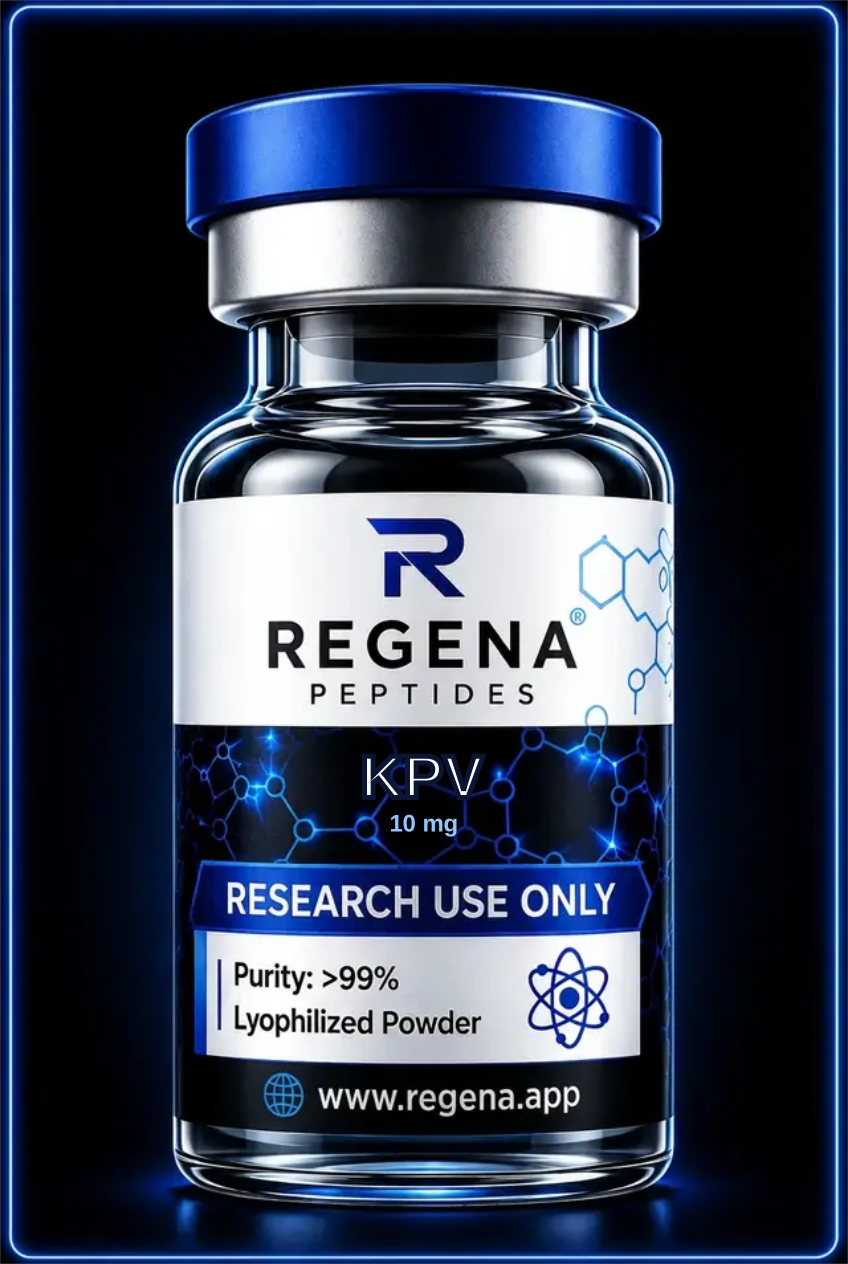
α-MSH tripeptide fragment studied in mucosal inflammation models.
- Class
- α-MSH C-terminal tripeptide
- Half-life
- Short
- Kit
- 10 vials
- Use
- Research only
Kit of 10 vials · 10mg per vial
Best value€259.00
€25.90 per vial · €2.59/mg
Sold as 10-vial kits · minimum order
We don't sell single vials. Every order is a sealed 10-vial research kit with the size and full kit price shown before ordering.
- ✓ Batch documentation — ask for documentation matching the batch available to order.
- ✓ Clear format — the selected vial size, vial count and total kit price stay visible before adding to cart.
- ✓ Sealed 10-vial kit (small glass bottles, lyophilised powder)
- ✓ Ask for the Certificate of Analysis available for this batch
- ✓ Tracked worldwide shipping from Germany, the USA or China · allow 5–18 business days from tracking
- ! You'll also need bacteriostatic water to mix your peptides
- DocumentationAsk before ordering
- Tracked delivery5–18 business days
- Research use onlySee policy
Secure checkout · Wise card and bank-transfer options · Germany, USA or China fulfilment
Estimated delivery
Choose your country to see a delivery estimate.
€ Price per mg — honest breakdown
Every KPV kit ships as 10 vials. Here's the exact maths so you can see which strength gives you the most peptide per euro. Larger kits are usually significantly cheaper per mg.
Kit price
€259.00
10 mg × 10 vials
Per vial
€25.90
€259.00 ÷ 10 vials
Total mg in kit
100 mg
10 mg × 10
Per mg
€2.59
€259.00 ÷ 100 mg
What is KPV?
KPV is the C-terminal tripeptide of α-MSH and retains a portion of its anti-inflammatory activity via the melanocortin pathway, with research focus on mucosal models.
Mechanism of action
Anti-inflammatory action via melanocortin pathway.
Primary research areas
Mucosal and inflammatory bowel models.
Research notes
- Most data derives from rodent IBD-like models.
KPV research guide
What KPV is and why it's studied
KPV is the three-residue C-terminal sequence of α-melanocyte-stimulating hormone (α-MSH). The full α-MSH peptide carries broad neuro-hormonal activity, but the KPV fragment retains the immunomodulatory tail without engaging melanocortin receptors that drive pigmentation. Published preclinical research has explored KPV in inflammatory bowel models, dermatological inflammation panels and mucosal-immunity assays.
Its short sequence makes KPV inexpensive to synthesise and easy to dissolve, but the same short sequence means batch identity is best confirmed by mass spectrometry rather than HPLC alone — the molecule's small size means impurity peaks can co-elute on standard reverse-phase gradients.
How Regena verifies every KPV batch
Each KPV batch is independently tested before release. Mass spec is doubly important on short peptides because impurity peaks can hide under the main HPLC band.
Janoshik Analytical is the default verification partner. Per-batch reports are published on the lab reports page and traceable to the batch number printed on every vial cap.
Storage, reconstitution and handling
Lyophilised KPV is supplied as a sterile white powder under inert atmosphere. Hold unopened vials at 2–8 °C and transfer to −20 °C only if reconstitution will not happen within 8–12 months. Reconstitute with bacteriostatic water for a two-month (60-day) in-use stability window under refrigeration; sterile water is acceptable for same-day work but not for multi-day storage.
KPV dissolves readily — solutions should be clear and colourless within seconds of gentle swirling. Cloudy reconstitution is the most common warning sign of handling error or undisclosed impurities. Most laboratories store working solutions at 1–5 mg/ml in single-use aliquots.
KPV vs BPC-157 in inflammation research panels
Researchers building inflammation-focused panels often include both KPV and BPC-157. The two molecules sit in distinct mechanistic lanes — KPV operates through the α-MSH immunomodulatory tail while BPC-157 is a 15-residue fragment of a gastric protective protein with a separate set of regenerative endpoints in preclinical work.
Stocking both from the same supplier keeps COA formatting, packaging and reconstitution protocols consistent across the panel and simplifies cross-experiment troubleshooting.
Quality signals to demand from a KPV supplier
An honest KPV supplier publishes the per-batch third-party COA, names the testing laboratory, includes both HPLC and mass-spec data, and prints the batch number on the vial. Mass spec is non-negotiable on tripeptides — purity numbers from HPLC alone are not enough to confirm identity on a molecule this small.
Regena's consultations team can walk new buyers through the COA, the reconstitution maths and the storage plan before any order ships.
KPV: expanded research context
KPV is the C-terminal tripeptide of α-MSH (α-melanocyte-stimulating hormone) — Lysine-Proline-Valine. Unlike full-length α-MSH, KPV lacks pigmentary activity but retains anti-inflammatory signalling, acting through both melanocortin-receptor-dependent and receptor-independent pathways. Preclinical work has focused on colitis and inflammatory-skin models.
Research interest centres on IBD (inflammatory bowel disease), atopic dermatitis and mucosal inflammation. KPV's small size and stability across oral and topical routes have supported multiple preclinical delivery platforms.
Published clinical evidence
Selected peer-reviewed studies and outcome trials referenced in the KPV literature. Sources listed for orientation; full papers via PubMed / journal DOI.
KPV in DSS-induced colitis (mouse)
Journal of Immunology · 2004
Oral KPV reduced clinical, histological and cytokine markers of colitis in a DSS mouse model without pigmentary effects.
Nanoparticle-delivered KPV in IBD models
Gastroenterology · 2013
Colon-targeted nanoparticle KPV delivery further attenuated colitis parameters at reduced systemic exposure.
α-MSH C-terminal fragment anti-inflammatory activity
Peptides · 2011 (review)
Synthesis of KPV and related C-terminal α-MSH fragment work — anti-inflammatory activity without melanocortin-driven pigmentation.
KPV in atopic-dermatitis models
Journal of Investigative Dermatology · 2016
Topical KPV reduced pruritus, epidermal thickening and Th2 cytokines in murine atopic-dermatitis models.
Third-party COA — testing in progress
Need the batch-specific COA for your order? Email inforegenapeptides@gmail.com — we'll send it as soon as the lab returns the report (typically 5–10 business days after shipment).
Why researchers buy from Regena
HPLC ≥99% purity
Every batch independently tested. Mass spectrometry verification on every research compound. COAs on request.
10-vial kits, properly sealed
Lyophilized peptide, rubber-stoppered amber vials, batch-coded. Stable for shipping; cold storage on arrival.
Germany · USA · China hubs
Tracked delivery from the best hub for your destination and available stock. Discreet, plain packaging.
Secure SEPA bank transfer
Encrypted checkout, verified IBAN. No card details stored. Card payment links available on request.
How ordering works
- 1
Pick your KPV kit above
Each kit contains 10 vials. Choose your strength — bigger vials give you a lower €/mg.
- 2
Secure checkout in under 2 minutes
Add to cart, fill in shipping, get your IBAN and order reference instantly.
- 3
Pay by bank transfer (or card on request)
Bank transfer is fastest and fee-free. Need a card? Message us on WhatsApp and we'll send a payment link.
- 4
We ship within 24 hours
You get a tracking number by email + WhatsApp. EU delivery 5–18 business days. COA included on request.
Frequently asked questions
Research-use disclaimer
Information on this page is provided for educational and scientific reference purposes only. KPV is a research compound intended for in-vitro laboratory investigation by qualified professionals. Nothing here constitutes medical advice, dosing guidance or a recommendation for human or veterinary use. Half-life and mechanism descriptions reflect published literature approximations.
Share Regena with a research colleague. They get trusted peptides; you earn 3–30% affiliate commission based on your monthly referred sales.
Free download · PDF
Free: Peptide Storage & Reconstitution Guide
30-page PDF — vial handling, sterile reconstitution, dosing math, cold-chain storage. Plus a daily research insight email from the lab.
We email one short research insight per day. Unsubscribe anytime in one click.
Keep reading
More on KPV and related research
On Regena Peptides
Delivery areas
KPV — shipped to research hubs worldwide
Same HPLC-verified KPV batch, same COA — tracked delivery to laboratories and independent researchers across Europe, the UK, the USA and beyond. Pick a hub for local shipping window and currency notes.
- KPV for Boston researchers
- KPV for Burgos researchers
- KPV for Castellón researchers
- KPV for Córdoba researchers
- KPV for Dallas researchers
- KPV for Dublin researchers
- KPV for Exeter researchers
- KPV for Georgia researchers
- KPV for Granada researchers
- KPV for Hull researchers
- KPV for Indiana researchers
- KPV for Kansas researchers
- KPV for Leicester researchers
- KPV for Lleida researchers
- KPV for Luxembourg researchers
- KPV for Manchester researchers
- KPV for Mijas researchers
- KPV for Mississippi researchers
- KPV for Nebraska researchers
- KPV for New York researchers
- KPV for Norway researchers
- KPV for Oklahoma researchers
- KPV for Palma de Mallorca researchers
- KPV for Phoenix researchers
Customer reviews
What researchers say about KPV
Share your experience
Your review helps other researchers evaluate KPV. We publish every real review — positive or critical — after a quick moderation pass to filter spam and PII.
Cite this reference
Researching KPV?
Copy a ready-made citation or HTML link. Backlinks from research blogs, lab wikis and biohacker communities help others find verified peptide sources.
Regena Peptides. (2026-10-22). KPV — HPLC-verified research peptide. https://regena.app/peptides/kpv
Want a logo badge or affiliate link? See our link-to-us page →
Affiliates
Earn 20% linking to Regena
Run a research blog, lab wiki or biohacker channel? Apply for our affiliate program and get a personal promo code + free peptide guides.
Head-to-head research comparisons
Deciding between compounds? Compare mechanism, receptor profile, half-life and handling side-by-side.
You may also like
Related research peptides
Regenerative
GHK-Cu
Copper-binding tripeptide widely studied in skin and hair biology.
View
Regenerative
GHK-Cu (Peptide)
Injectable research-grade GHK-Cu kit (10 vials) for subcutaneous research models.
View
Regenerative
KLOW Blend
KPV + GHK-Cu + BPC-157 + TB-500 research blend for inflammation and tissue models.
View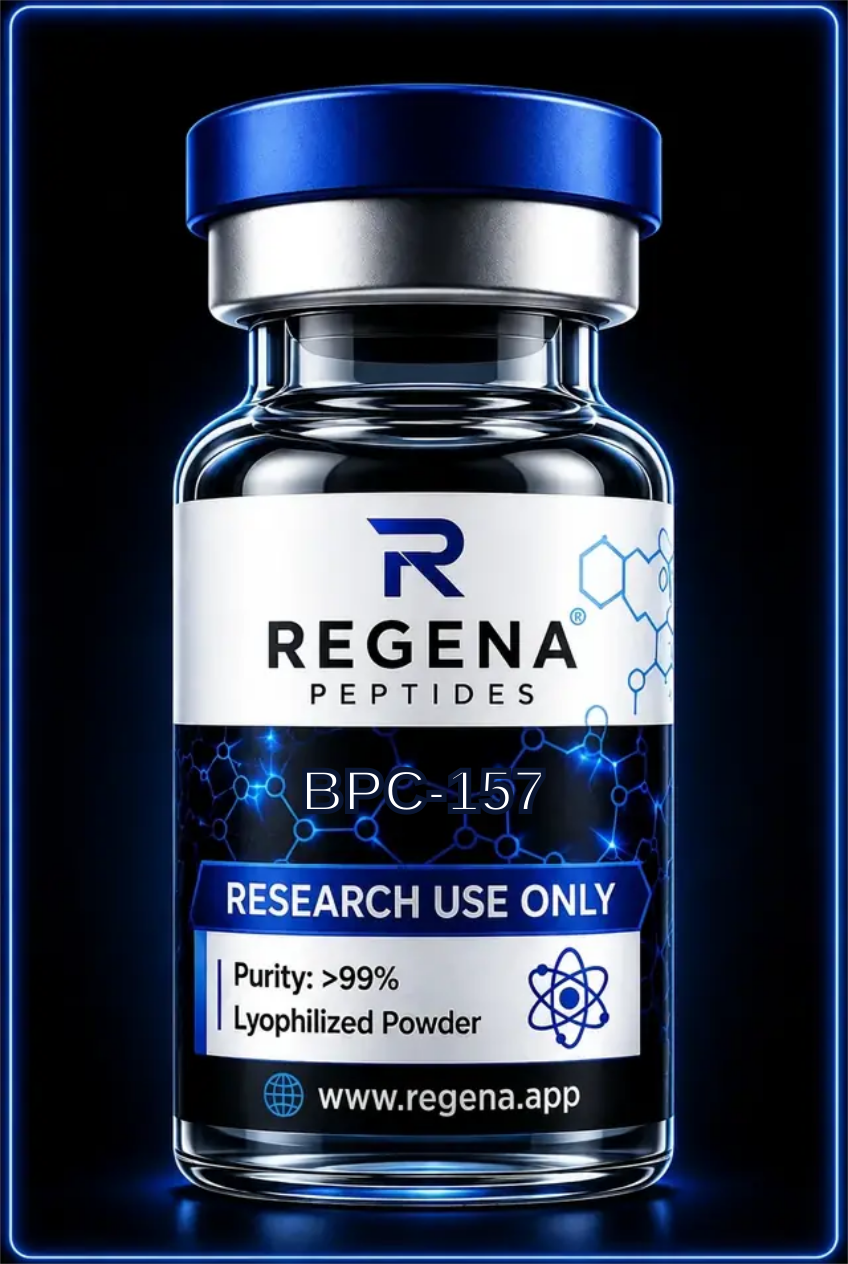
Regenerative
BPC-157
Pentadecapeptide widely studied in tendon, ligament and gut repair models.
View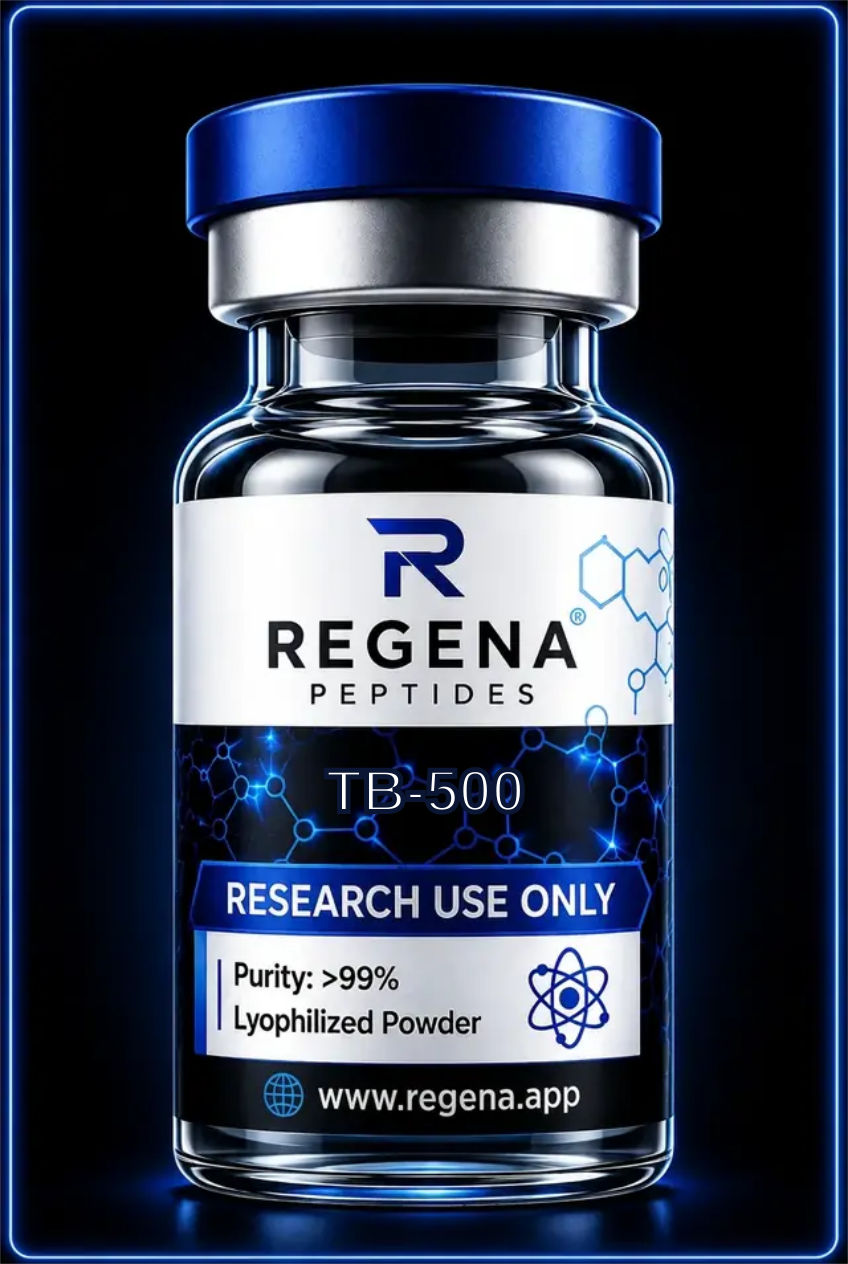
Regenerative
TB-500
Thymosin Beta-4 fragment studied in soft tissue repair and migration assays.
View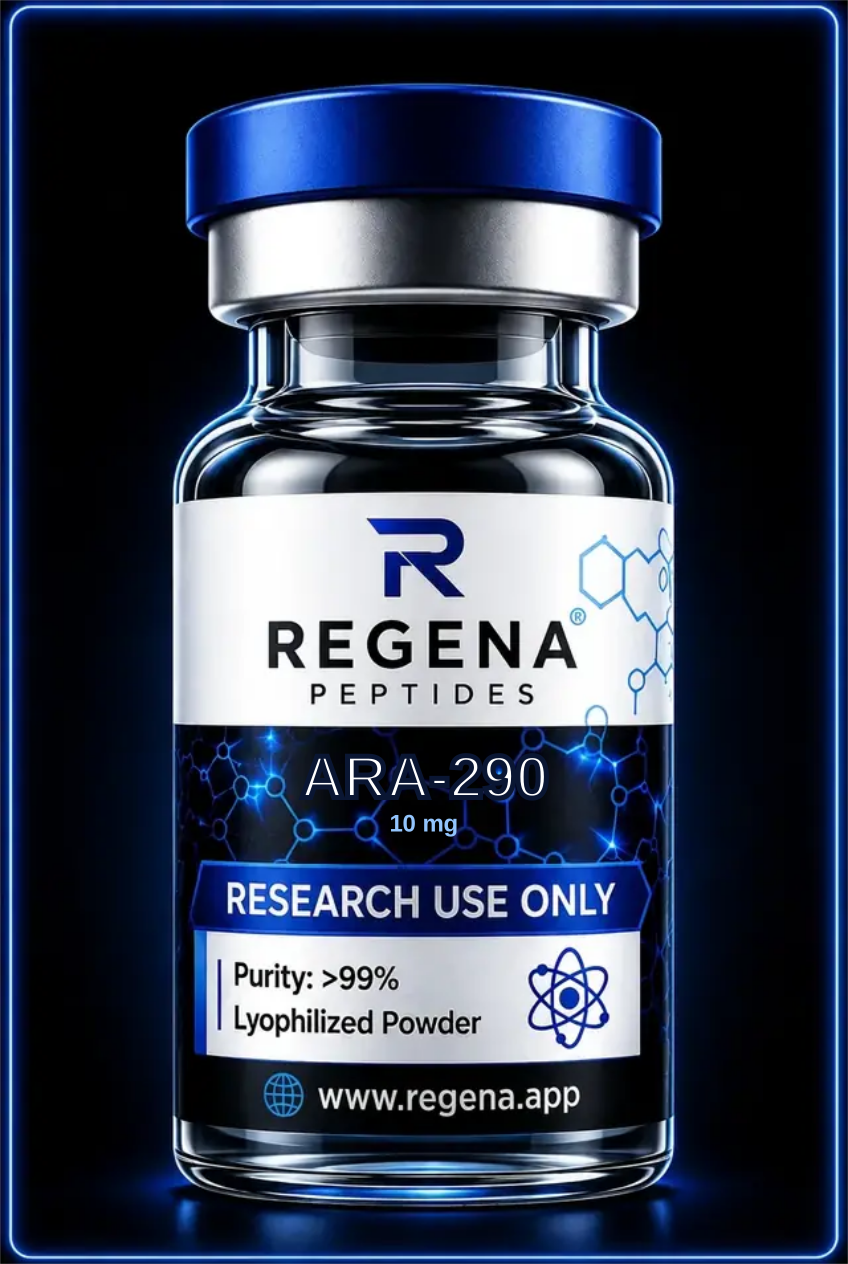
Regenerative
ARA-290
EPO-derived peptide for non-erythropoietic tissue-protection research.
View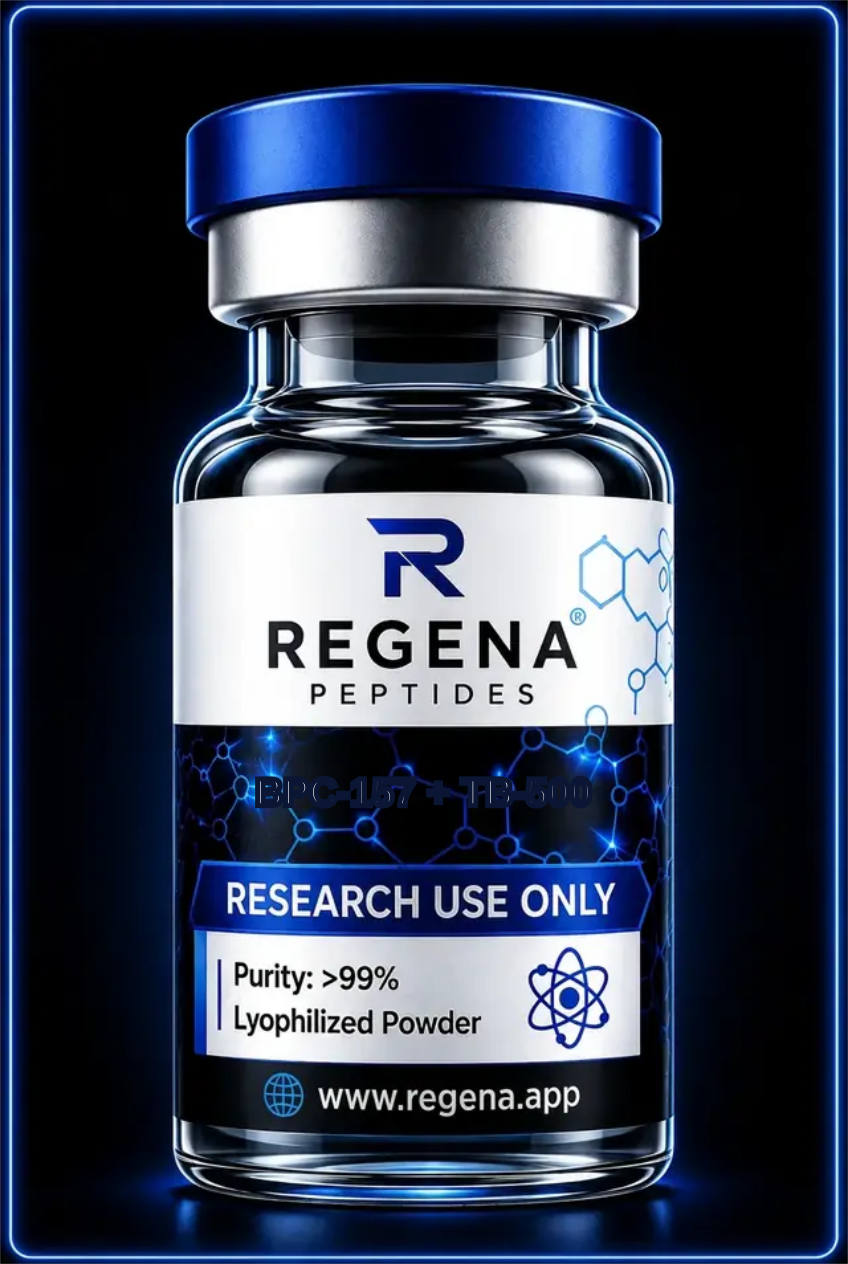
Regenerative
BPC-157 + TB-500
Combined regenerative research blend for soft-tissue repair models.
View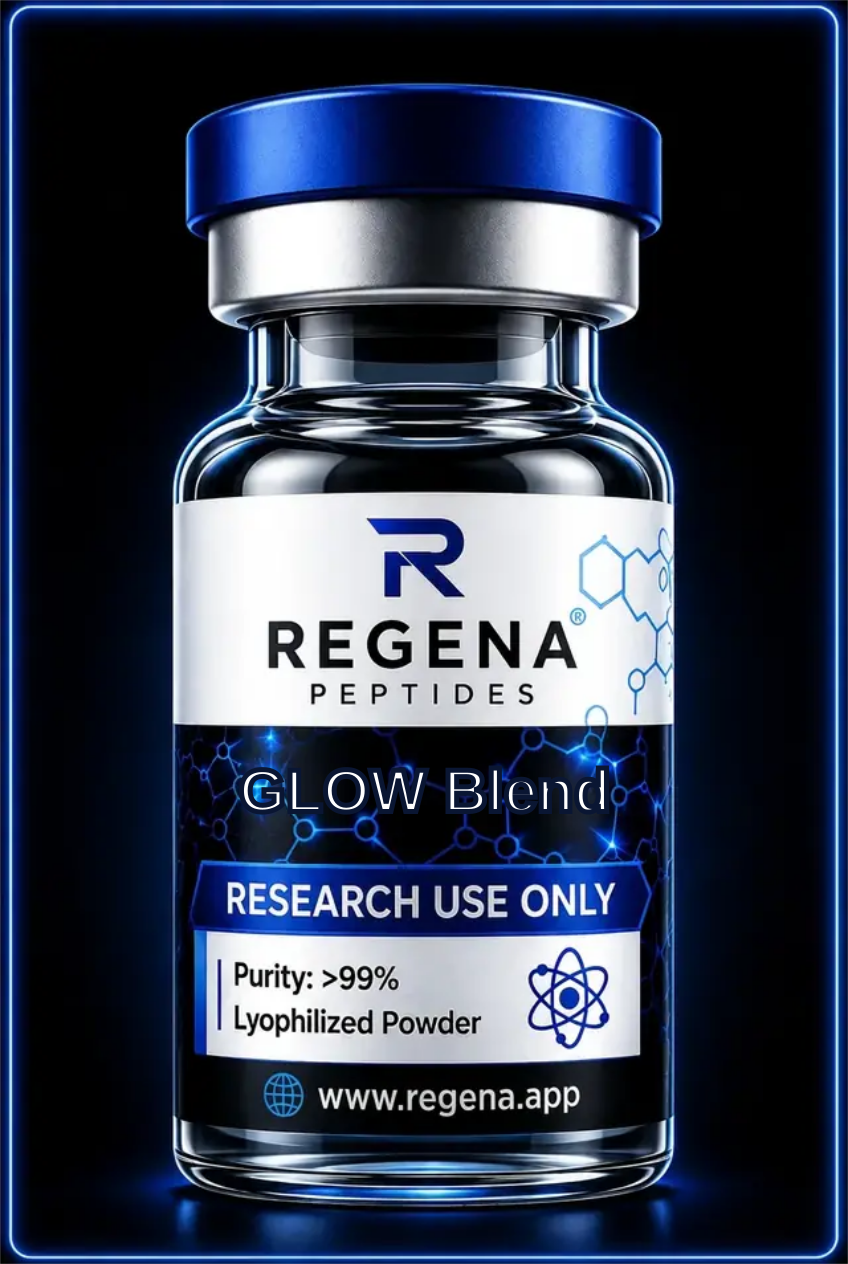
Regenerative
GLOW Blend
GHK-Cu + BPC-157 + TB-500 blend for skin and regenerative research.
View