
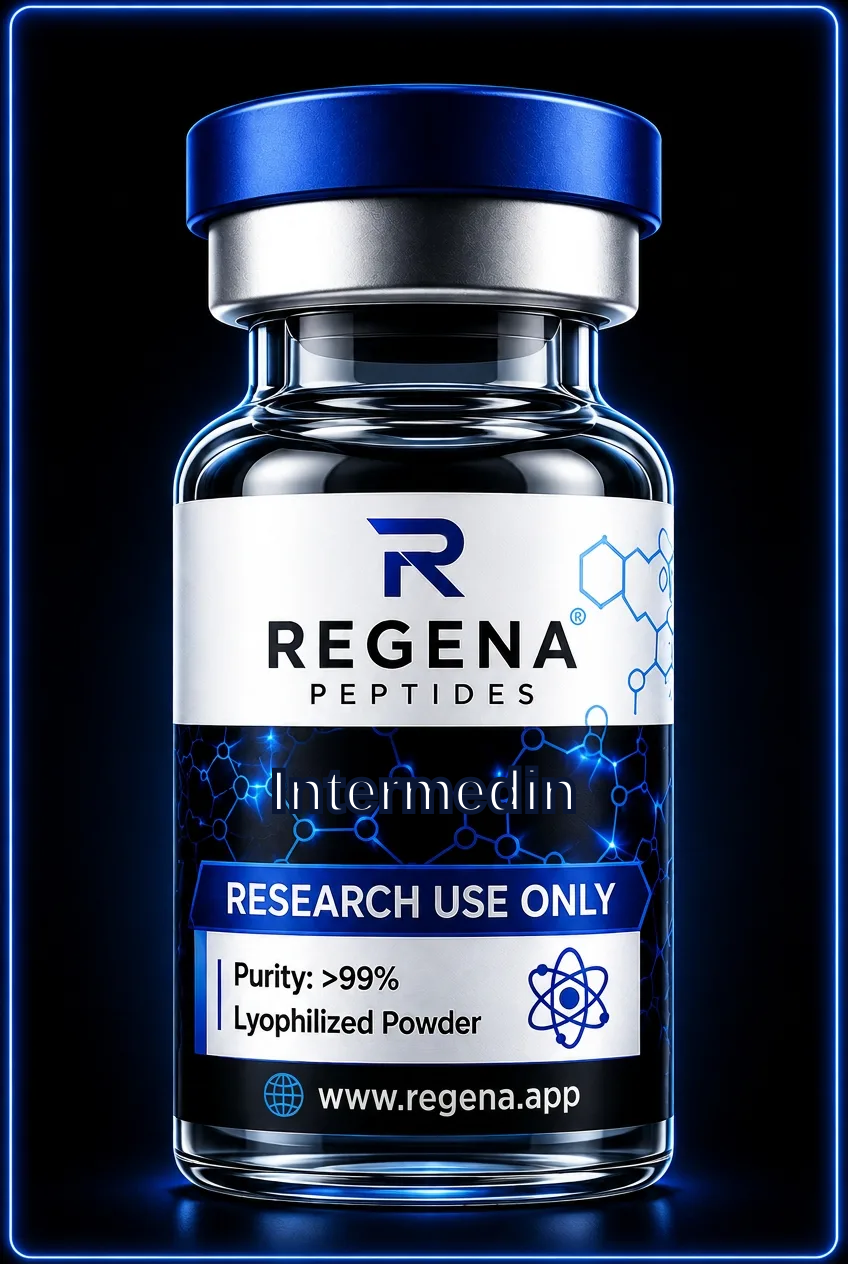
Cardiovascular · Calcitonin/CGRP-family peptide
Intermedin (Adrenomedullin-2)
Also known as Intermedin; IMD; adrenomedullin-2; ADM2; AM2
A calcitonin-family peptide that signals through CLR–RAMP receptor complexes and is studied in vascular and endothelial models.
- Length
- 47 amino acids for IMD1–47; other characterised forms contain 40 or 53 amino acids
- Half-life
- Not well characterised
- Mechanism
- Intermedin activates calcitonin receptor-like receptor complexes containing receptor activity-modifying proteins, including CLR–RAMP1, CLR–RAMP2 and CLR–RAMP3. These complexes predominantly engage Gs-dependent cAMP signalling, with apparent potency and selectivity influenced by peptide form and receptor context.
- Studied in
- Recombinant receptor cell lines, cultured endothelial cells, isolated vessels and rodent cardiovascular models are used to investigate intermedin signalling and vascular biology.
About Intermedin (Adrenomedullin-2)
Intermedin was independently described in 2004 as a member of the calcitonin/CGRP peptide family and as adrenomedullin-2. Processing of its precursor can yield peptides designated IMD1–47, IMD8–47 and IMD1–53, corresponding to 47, 40 and 53 residues respectively. These forms share a conserved C-terminal region. Like related family members, biologically active intermedin has an intramolecular disulphide bond and a C-terminal amide, structural features that should be specified when comparing research materials.
Its receptor system consists of calcitonin receptor-like receptor, abbreviated CLR, paired with a receptor activity-modifying protein. CLR–RAMP1 forms the CGRP receptor, whereas CLR–RAMP2 and CLR–RAMP3 form the AM1 and AM2 receptors. Intermedin can activate all three, although assay conditions influence the observed ranking of activity. Importantly, the peptide name adrenomedullin-2 does not imply exclusive binding to the AM2 receptor. Laboratory studies commonly measure cAMP accumulation, endothelial signalling and isolated-vessel responses.
Laboratory notes
- Specify the intermedin fragment, species sequence, disulphide connectivity and C-terminal amidation before comparing batches or publications.
- Record both CLR and RAMP expression in recombinant assays; CLR expression alone does not define the receptor phenotype.
- Prepare aliquots using a validated solvent and minimise repeated freeze–thaw cycles; assess adsorption losses in dilute working solutions.
Storage and reconstitution basics: storage guide.
Questions about Intermedin (Adrenomedullin-2)
Are IMD1–47 and IMD8–47 interchangeable?
No. They differ in N-terminal length, and their activity can depend on receptor composition and assay conditions.
Is adrenomedullin-2 selective for the AM2 receptor?
Not exclusively. Intermedin can activate CLR complexes containing RAMP1, RAMP2 or RAMP3.
What is a useful proximal signalling readout?
cAMP accumulation is commonly used in cells expressing a defined CLR–RAMP complex, with receptor-negative cells providing a specificity control.
Is Intermedin (Adrenomedullin-2) for human use?
No. It is supplied strictly for in-vitro laboratory research and is not for human or animal consumption.
Related research peptides
All products are sold for laboratory research use only. Not for human consumption, not a medicine, not for diagnosing, treating or preventing any condition.