
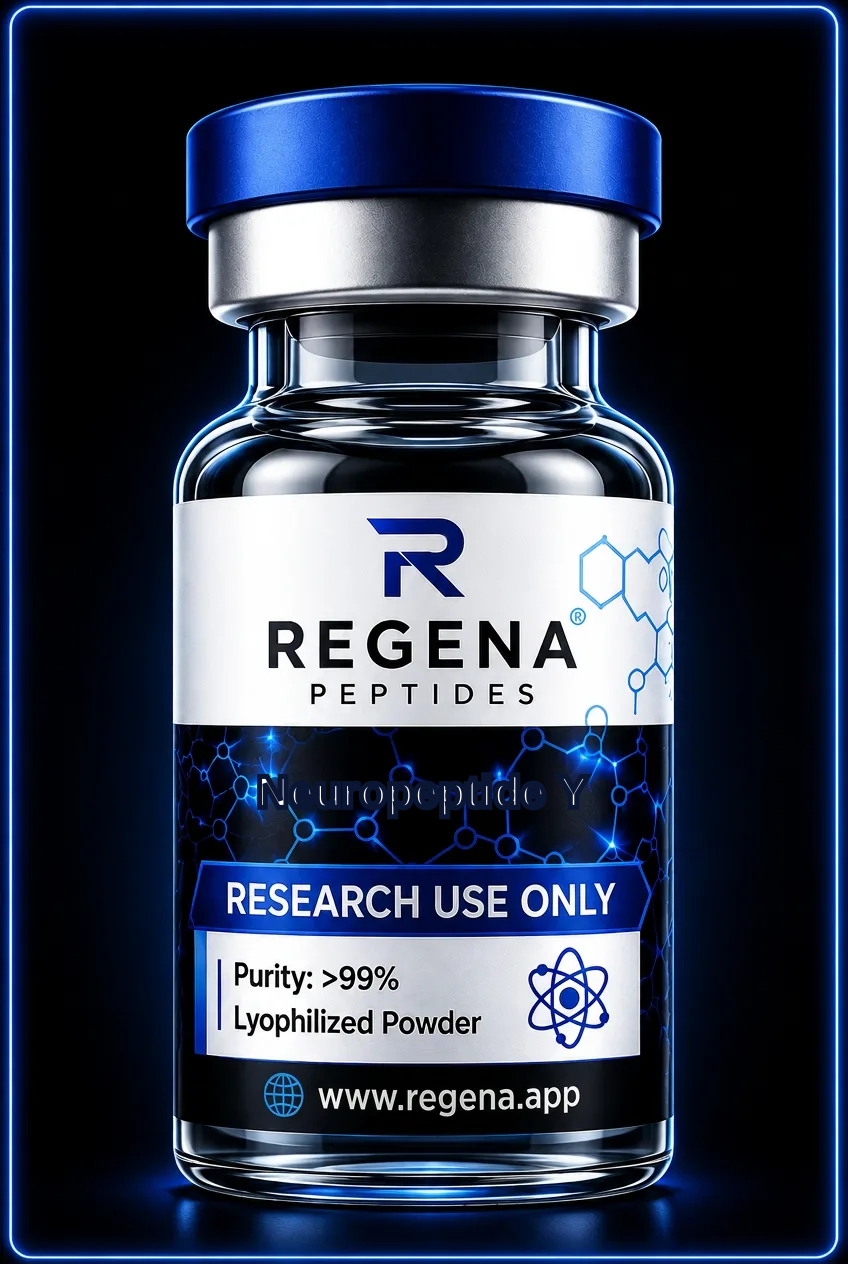
Other · N-terminally truncated neuropeptide Y; Y2-preferring agonist
Neuropeptide Y (3-36)
Also known as NPY(3–36); NPY3–36
A 34-residue NPY fragment generated by N-terminal cleavage, used to examine Y2-preferring signalling and neuropeptide processing.
- Length
- 34 amino acids
- Half-life
- Not well characterised
- Mechanism
- NPY(3–36) preferentially activates Y2 receptors relative to Y1, while activity at other Y-receptor subtypes depends on the experimental system. Y2 predominantly couples to Gi/o proteins, inhibiting adenylyl cyclase and regulating calcium-channel activity and transmitter release.
- Studied in
- Recombinant receptor panels, neuronal cultures, brain slices and rodent neurochemical models use NPY(3–36) to investigate Y2-associated signalling and peptide processing.
About Neuropeptide Y (3-36)
Neuropeptide Y (3–36) comprises residues 3 through 36 of mature NPY and retains its C-terminal tyrosinamide. Full-length NPY was isolated from porcine brain in 1982 and recognised as a member of the pancreatic polypeptide family. Dipeptidyl peptidase-4 can remove its initial Tyr-Pro pair to generate NPY(3–36). The resulting 34-residue peptide illustrates how extracellular enzymatic processing can redirect signalling within a shared receptor family.
Removing the first two residues markedly reduces Y1 receptor activity while retaining substantial Y2 activity. However, Y2 preference is not equivalent to absolute selectivity, particularly in preparations expressing several Y receptors. Experiments commonly assess inhibition of stimulated cyclic AMP accumulation, receptor binding or modulation of transmitter release. Comparisons with intact NPY help separate effects of N-terminal processing from differences caused by receptor abundance, peptide degradation or species-specific pharmacology.
Laboratory notes
- Verify the species sequence and amidated C-terminus; the human fragment begins with serine at original NPY position 3.
- Use subtype-defined cells or validated receptor controls rather than attributing every response to Y2.
- Check peptide integrity in protease-rich media, especially during prolonged neuronal or tissue incubations.
Storage and reconstitution basics: storage guide.
Questions about Neuropeptide Y (3-36)
Why is NPY(3–36) only 34 amino acids long?
The numbering refers to positions in the original 36-residue NPY sequence; residues 1 and 2 are absent.
Which enzyme can generate this fragment?
Dipeptidyl peptidase-4 can cleave the N-terminal Tyr-Pro dipeptide from intact NPY, producing NPY(3–36).
Does a response to NPY(3–36) prove Y2 involvement?
No. Y2 involvement should be established with receptor-defined systems, genetic controls or appropriately validated pharmacological controls.
Is Neuropeptide Y (3-36) for human use?
No. It is supplied strictly for in-vitro laboratory research and is not for human or animal consumption.
Related research peptides
All products are sold for laboratory research use only. Not for human consumption, not a medicine, not for diagnosing, treating or preventing any condition.