
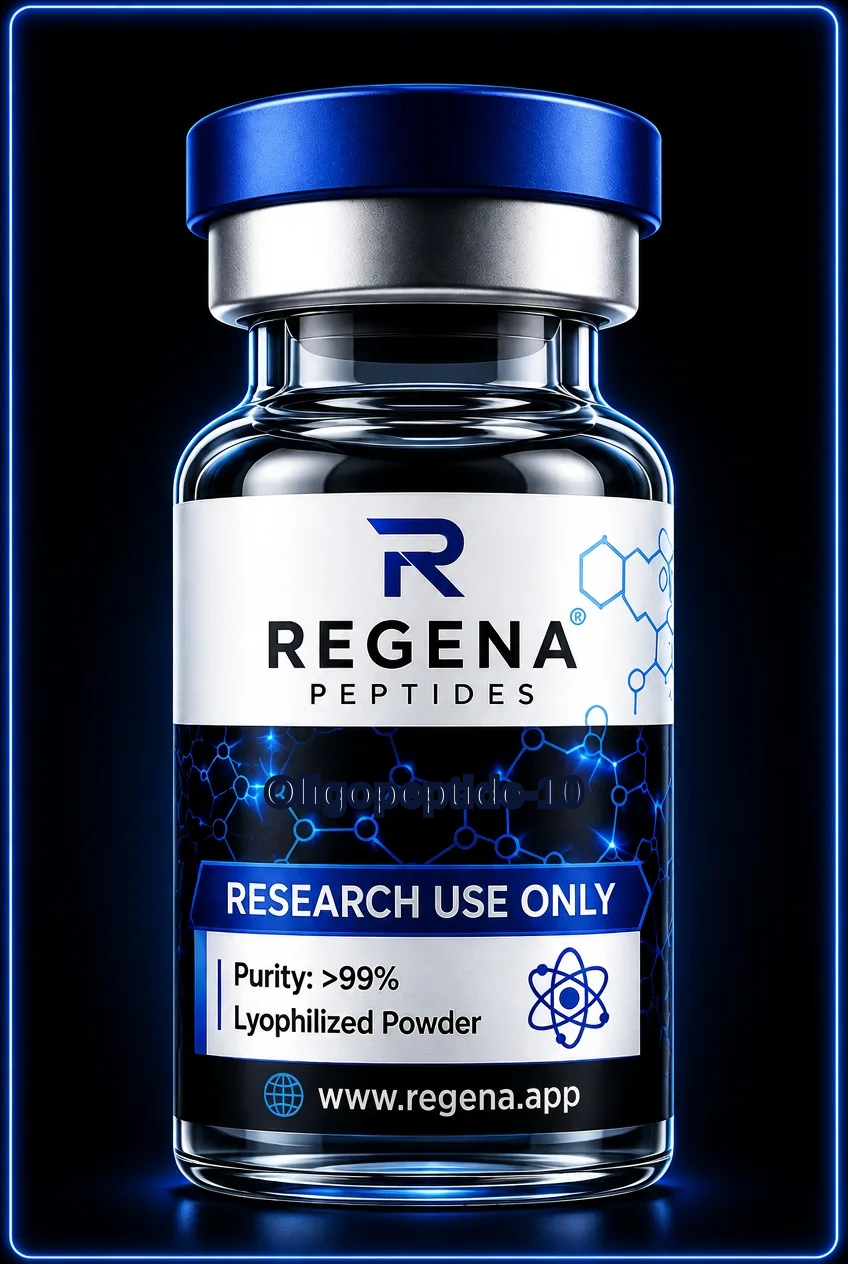
Antimicrobial · Synthetic cationic antimicrobial peptide
Oligopeptide-10
Also known as —
Lysine-rich antimicrobial peptide used in bacterial and membrane models to examine sequence-dependent membrane disruption.
- Length
- 15 amino acids for the commonly reported FAKKFAKKFAKFAFA sequence
- Half-life
- Not well characterised
- Mechanism
- The commonly reported lysine-rich peptide interacts with negatively charged microbial surfaces and is studied for membrane-disruptive activity. A specific protein receptor has not been established, and membrane effects depend on the organism and assay conditions.
- Studied in
- Bacterial culture, biofilm and model-membrane experiments investigate growth inhibition, membrane permeabilisation and selectivity relative to mammalian cells.
About Oligopeptide-10
Oligopeptide-10 commonly refers to a synthetic peptide reported as Phe-Ala-Lys-Lys-Phe-Ala-Lys-Lys-Phe-Ala-Lys-Phe-Ala-Phe-Ala, abbreviated FAKKFAKKFAKFAFA. Its name does not indicate a ten-residue sequence: the numerical suffix belongs to ingredient nomenclature. Lysine supplies positive charge, while phenylalanine and alanine contribute hydrophobic character. This combination supports investigation of interactions with microbial membranes, although sequence identity and terminal chemistry must be verified for each research material.
Published descriptions place this material among membrane-active antimicrobial peptides rather than ligands for a defined receptor. Bacterial growth assays can be combined with membrane-potential probes, permeability dyes and lipid-vesicle leakage experiments to examine that proposed mechanism. Salt, proteins and medium composition can substantially influence apparent activity by changing peptide availability or electrostatic interactions. Biofilm experiments additionally require separate measurements of biomass and viable organisms, since these endpoints are not interchangeable.
Laboratory notes
- Check the exact sequence and terminal chemistry; the ingredient name alone is insufficient for matching material across suppliers.
- Use low-binding labware and document medium composition, ionic strength and protein content when comparing antimicrobial assays.
- Include peptide–dye interference controls and mammalian-cell membrane integrity measurements when evaluating membrane activity and selectivity.
Storage and reconstitution basics: storage guide.
Questions about Oligopeptide-10
Why can Oligopeptide-10 contain fifteen residues?
The number in this ingredient name is an identifier, not a statement of peptide length.
Does it act through a known bacterial receptor?
No specific protein receptor is established. Research descriptions mainly concern interactions with microbial surfaces and membranes.
Are biofilm biomass and bacterial viability equivalent endpoints?
No. Biomass assays measure retained cells and matrix, whereas viability assays assess living organisms; either can change independently.
Is Oligopeptide-10 for human use?
No. It is supplied strictly for in-vitro laboratory research and is not for human or animal consumption.
Related research peptides
All products are sold for laboratory research use only. Not for human consumption, not a medicine, not for diagnosing, treating or preventing any condition.