
Antimicrobial · Antimicrobial Peptide (AMP)
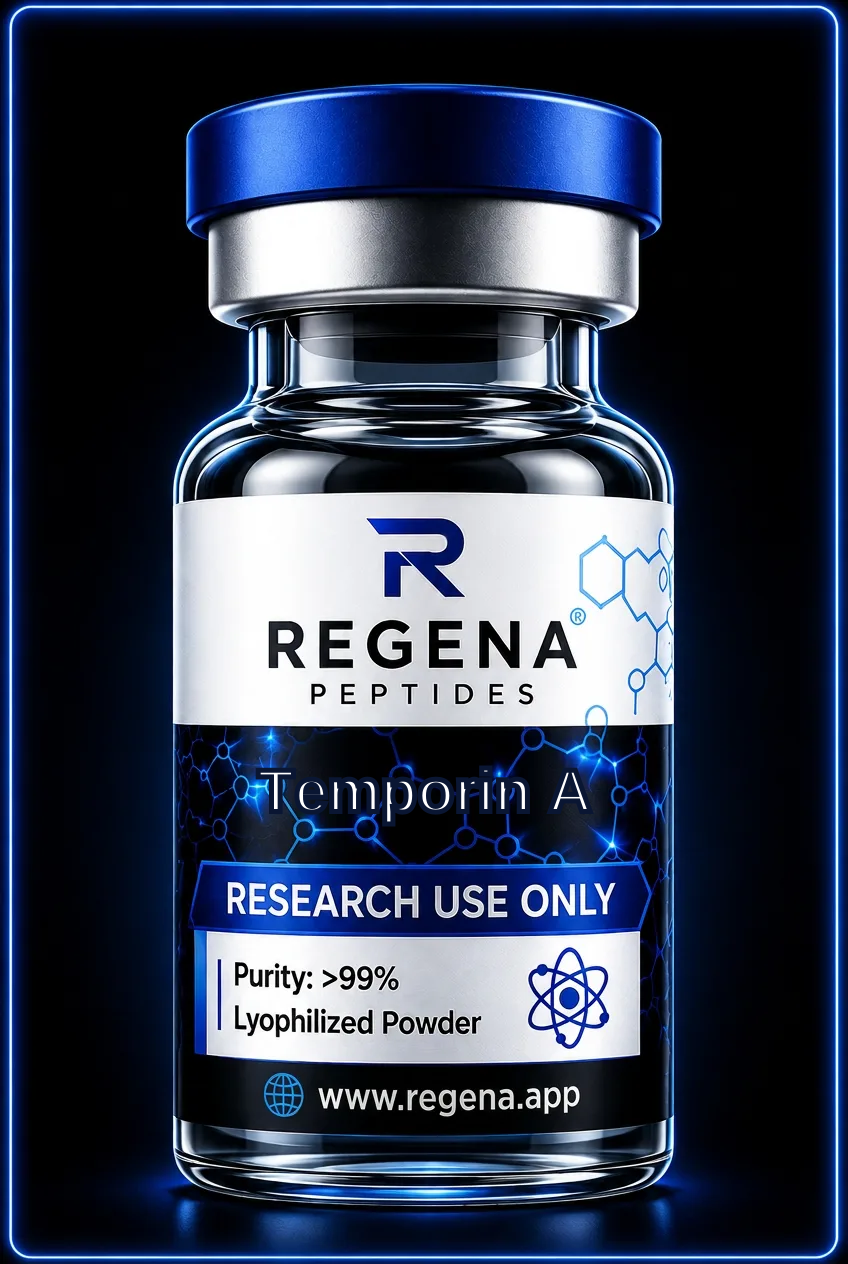
Temporin A
A short, 13-amino-acid AMP from frog skin with strong activity against Gram-positive bacteria, studied for its membrane-disrupting mechanism.
- Length
- 13 amino acids
- Half-life
- Not well characterised
- Mechanism
- Temporin A rapidly disrupts the cytoplasmic membrane of susceptible bacteria through a 'carpet-like' mechanism, leading to permeabilisation and cell lysis.
- Studied in
- In-vitro research focuses on its potent activity against Gram-positive bacteria, including resistant strains, and its synergistic effects when combined with other AMPs or antibiotics.
About Temporin A
Temporin A is a small, highly hydrophobic, and cationic antimicrobial peptide, first isolated from the skin of the European red frog, *Rana temporaria*. It is one of the shortest naturally occurring AMPs, consisting of only 13 amino acids, and is the founding member of the temporin family. Its small size and C-terminal amidation are defining structural features.
This peptide primarily targets the cell membranes of Gram-positive bacteria. Laboratory studies using model lipid bilayers suggest it acts via a carpet-like mechanism, where peptide monomers accumulate on and destabilise the membrane structure, leading to transient pore formation or generalised leakage. Its high hydrophobicity makes it a subject of interest for understanding the biophysics of peptide-lipid interactions.
Laboratory notes
- Due to its high hydrophobicity, Temporin A may be challenging to dissolve in purely aqueous solutions; use of a small amount of organic solvent (e.g., acetonitrile) or acidified water is recommended.
- Its activity is often highly specific to Gram-positive bacteria; comparative assays against Gram-negative strains are useful for characterisation.
- Assess for potential synergistic activity with other compounds by using checkerboard titration assays to calculate the Fractional Inhibitory Concentration (FIC) index.
Storage and reconstitution basics: storage guide.
Questions about Temporin A
Why is Temporin A more active against Gram-positive bacteria?
The outer membrane of Gram-negative bacteria, rich in lipopolysaccharide (LPS), can act as a barrier, preventing the highly hydrophobic Temporin A from reaching its target, the inner cytoplasmic membrane. Gram-positive bacteria lack this outer membrane.
What does the 'A' in Temporin A signify?
The letter designation (A, B, L, etc.) is used to distinguish different, but related, temporin peptides isolated from the same or different species. Temporin A was one of the first in its family to be characterised.
What is a 'carpet-like' mechanism?
In this model, antimicrobial peptides accumulate on the surface of the bacterial membrane, parallel to the lipid bilayer. Once a critical concentration is reached, they disrupt membrane integrity without necessarily forming discrete, stable pores.
Is Temporin A for human use?
No. It is supplied strictly for in-vitro laboratory research and is not for human or animal consumption.
Related research peptides
All products are sold for laboratory research use only. Not for human consumption, not a medicine, not for diagnosing, treating or preventing any condition.