
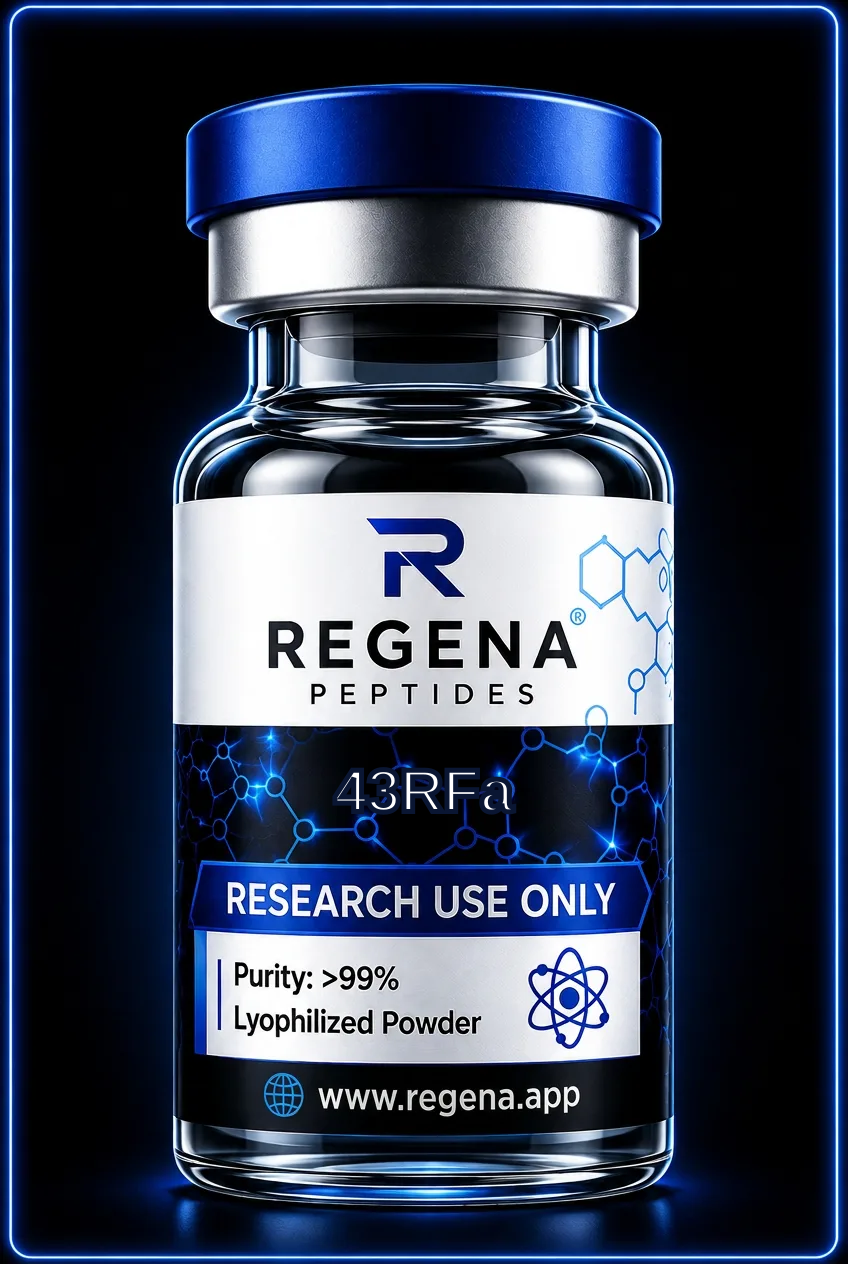
Hormone · QRFP-family pyroglutamylated RFamide neuropeptide
43RFa
Also known as QRFP-43; QRFP; pyroglutamylated RFamide peptide, 43-residue form
A 43-residue, terminally modified QRFP-family ligand for studies of QRFPR signalling and peptide processing.
- Length
- 43 amino acids
- Half-life
- Not well characterised
- Mechanism
- 43RFa activates QRFPR/GPR103, engaging G protein-dependent signalling that includes intracellular calcium mobilisation in receptor-expressing cells. Receptor orthologue and cellular background influence the measured signalling profile.
- Studied in
- Recombinant receptor systems, neuronal preparations and rodent neuroendocrine models use 43RFa to investigate QRFPR signalling and QRFP precursor processing.
About 43RFa
43RFa is the longer mature QRFP-family peptide, conventionally characterised by an N-terminal pyroglutamate and a C-terminal arginine–phenylalanine amide. It contains the full 26RFa sequence at its C-terminus, preceded by a 17-residue extension. QRFP-family peptides and their receptor relationship emerged from peptide-isolation and orphan-receptor studies in the early 2000s. The QRFP gene encodes a larger secretory precursor, from which mature peptide forms are produced through proteolytic processing and terminal modification.
The principal molecular target is QRFPR, formerly GPR103, rather than a receptor unique to the 43-residue form. Comparisons with 26RFa can therefore investigate how an N-terminal extension influences receptor engagement, extracellular persistence or assay behaviour. Calcium flux, second-messenger assays and receptor-binding experiments are common approaches. Because rodents possess related QRFPR paralogues, species and receptor identity should accompany reported results. Detection of precursor RNA alone does not establish which mature peptide form is present in a tissue.
Laboratory notes
- Check intact mass and terminal modifications against the specified species sequence; uncyclised glutamine and pyroglutamate forms are analytically distinguishable.
- Use an analytical method capable of resolving 43RFa from 26RFa and other fragments when examining processing or incubation stability.
- Validate recovery from assay vessels and storage conditions, as surface adsorption or degradation can alter the available peptide concentration.
Storage and reconstitution basics: storage guide.
Questions about 43RFa
Does 43RFa have a separate receptor from 26RFa?
No separate receptor is established for the longer form. Both peptides activate QRFPR-family receptors.
What accounts for the length difference?
43RFa has a 17-residue N-terminal extension relative to the 26-residue peptide, while retaining the shared C-terminal receptor-active region.
Can an antibody distinguish 43RFa from 26RFa?
Only if its epitope and specificity support that distinction. Antibodies recognising the shared C-terminal region may detect both forms. These peptides are for research use only.
Is 43RFa for human use?
No. It is supplied strictly for in-vitro laboratory research and is not for human or animal consumption.
Related research peptides
All products are sold for laboratory research use only. Not for human consumption, not a medicine, not for diagnosing, treating or preventing any condition.