
Hormone · Amidated RFamide neuropeptide
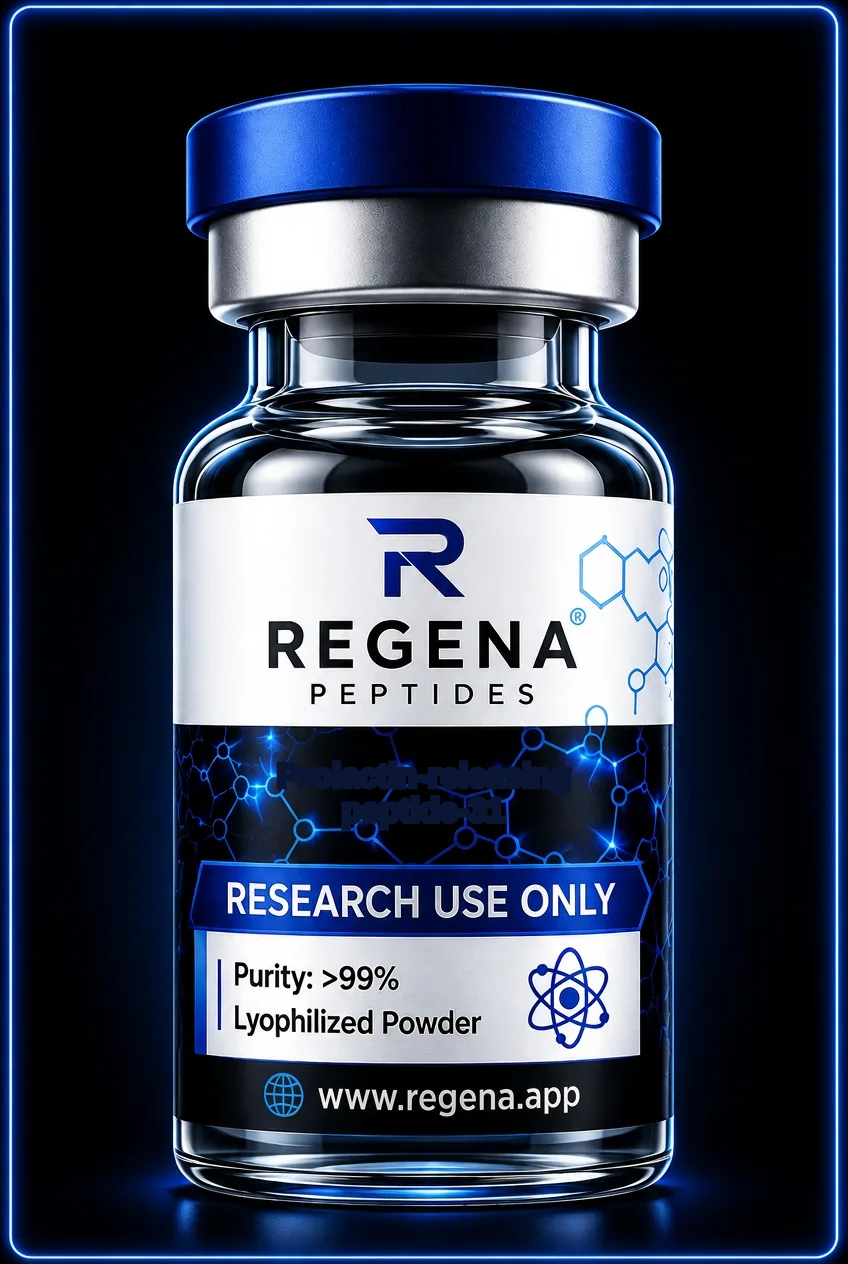
Prolactin-releasing peptide-31 (PrRP-31)
Also known as PrRP-31; prolactin-releasing peptide (1–31)
A 31-residue RFamide ligand used to investigate GPR10 signalling and neuroendocrine communication.
- Length
- 31 amino acids
- Half-life
- Not well characterised
- Mechanism
- PrRP-31 activates GPR10, also called PRLHR, stimulating calcium mobilisation and downstream kinase signalling in receptor-expressing cells. Activity at neuropeptide FF receptors has also been reported, so receptor selectivity depends on the assay system.
- Studied in
- Recombinant receptor assays, pituitary cell cultures and rodent neuroendocrine models use PrRP-31 to investigate receptor signalling, prolactin secretion and hypothalamic–brainstem circuits.
About Prolactin-releasing peptide-31 (PrRP-31)
PrRP-31 is one of two principal mature peptides generated from the prolactin-releasing peptide precursor, encoded by PRLH. The other commonly studied form, PrRP-20, corresponds to its C-terminal 20 residues. Both possess a C-terminal arginine–phenylalanine amide motif. PrRP was identified in 1998 through the isolation of endogenous ligands for the orphan receptor GPR10 from bovine hypothalamic material. Its name reflects prolactin release observed in early pituitary cell experiments, rather than an exclusive biological function.
GPR10 is a G protein-coupled receptor whose activation can produce intracellular calcium responses and ERK phosphorylation. PrRP-expressing neuronal populations occur in hypothalamic and brainstem regions, supporting studies of neuroendocrine integration and stress-related circuitry. Prolactin responses vary with experimental context, and PrRP should not be interpreted simply as a universal prolactin secretagogue. Laboratory comparisons with PrRP-20, receptor-negative controls and neuropeptide FF receptor assays help distinguish peptide-length effects from receptor-dependent signalling in defined experimental systems.
Laboratory notes
- Confirm the species sequence and C-terminal amidation on the certificate of analysis; PrRP-31 and PrRP-20 are distinct test materials.
- Prepare aliquots using a supplier-validated solvent and storage protocol, minimising repeated freeze–thaw cycles and adsorption to laboratory surfaces.
- Include receptor-negative cells and consider neuropeptide FF receptor counter-screens when attributing calcium or ERK responses specifically to GPR10.
Storage and reconstitution basics: storage guide.
Questions about Prolactin-releasing peptide-31 (PrRP-31)
How does PrRP-31 differ from PrRP-20?
PrRP-31 contains an additional 11 N-terminal residues. PrRP-20 corresponds to its C-terminal 20-residue segment, and both retain the amidated RFamide terminus.
Is GPR10 the same receptor as PRLHR?
Yes. GPR10 is the historical receptor designation, while PRLHR is the gene symbol for the prolactin-releasing peptide receptor.
Does the name establish prolactin release in every model?
No. The name derives from early pituitary experiments; secretion depends on the cell preparation and experimental conditions. This material is for research use only.
Is Prolactin-releasing peptide-31 (PrRP-31) for human use?
No. It is supplied strictly for in-vitro laboratory research and is not for human or animal consumption.
Related research peptides
All products are sold for laboratory research use only. Not for human consumption, not a medicine, not for diagnosing, treating or preventing any condition.