
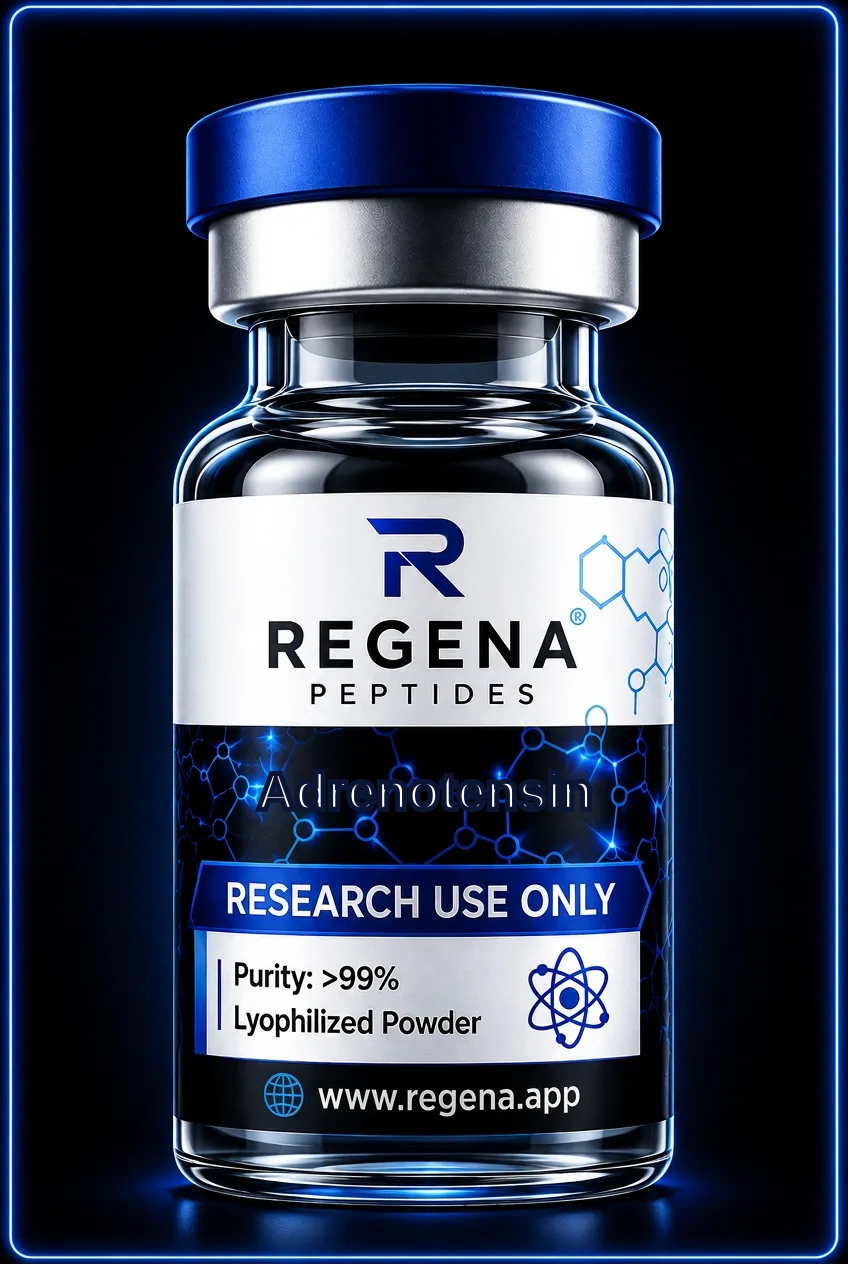
Cardiovascular · Proadrenomedullin-derived peptide
Adrenotensin
Also known as Proadrenomedullin-derived C-terminal peptide; preproadrenomedullin (153–185)
A 33-residue adrenomedullin-precursor fragment studied in experimental vascular reactivity assays, with no established cognate receptor.
- Length
- 33 amino acids
- Half-life
- Not well characterised
- Mechanism
- Adrenotensin has been associated with contractile responses in isolated vascular preparations, but its primary receptor and downstream signalling pathway remain unresolved. Its origin within the adrenomedullin precursor does not establish activity at adrenomedullin receptors.
- Studied in
- Isolated rodent vascular preparations and experimental cardiovascular models have been used to investigate vascular reactivity associated with this precursor-derived fragment.
About Adrenotensin
Adrenotensin corresponds to residues 153–185 of human preproadrenomedullin, the 185-residue precursor that also contains adrenomedullin and proadrenomedullin N-terminal 20 peptide. It occupies the precursor's C-terminal region rather than the sequence encoding mature adrenomedullin. Research on this fragment emerged from investigations into whether additional precursor regions possess biological activity. Its sequence origin is established, whereas its physiological production, abundance and functional importance are less firmly characterised than those of mature adrenomedullin.
Experimental reports describe vascular contractile activity, providing a rationale for studying adrenotensin in isolated vessel preparations. However, the evidence base is relatively limited, and a specific receptor has not been convincingly assigned. Adrenomedullin-family receptor pharmacology should therefore not be transferred to this fragment without direct testing. Useful mechanistic experiments distinguish endothelium-dependent effects from smooth-muscle responses and examine whether observed activity reflects the intact peptide or fragments generated during incubation in the assay.
Laboratory notes
- Confirm precursor numbering and species origin against the supplied sequence; adrenotensin is not synonymous with mature adrenomedullin.
- Use analytical chromatography and mass spectrometry to assess identity, purity and degradation during assay incubation.
- Include endothelium-intact and endothelium-denuded preparations, alongside vehicle controls, when investigating vascular reactivity.
Storage and reconstitution basics: storage guide.
Questions about Adrenotensin
Is adrenotensin another name for adrenomedullin?
No. It is a separate C-terminal fragment of the same precursor and does not contain the mature adrenomedullin sequence.
Which receptor should be used for a binding assay?
No cognate receptor is firmly established. Receptor-screening experiments require appropriate positive controls rather than an assumed adrenomedullin receptor target.
Does its precursor location prove that it is released as an intact endogenous peptide?
No. Sequence location alone does not establish endogenous processing or secretion; those questions require direct biochemical evidence.
Is Adrenotensin for human use?
No. It is supplied strictly for in-vitro laboratory research and is not for human or animal consumption.
Related research peptides
All products are sold for laboratory research use only. Not for human consumption, not a medicine, not for diagnosing, treating or preventing any condition.