
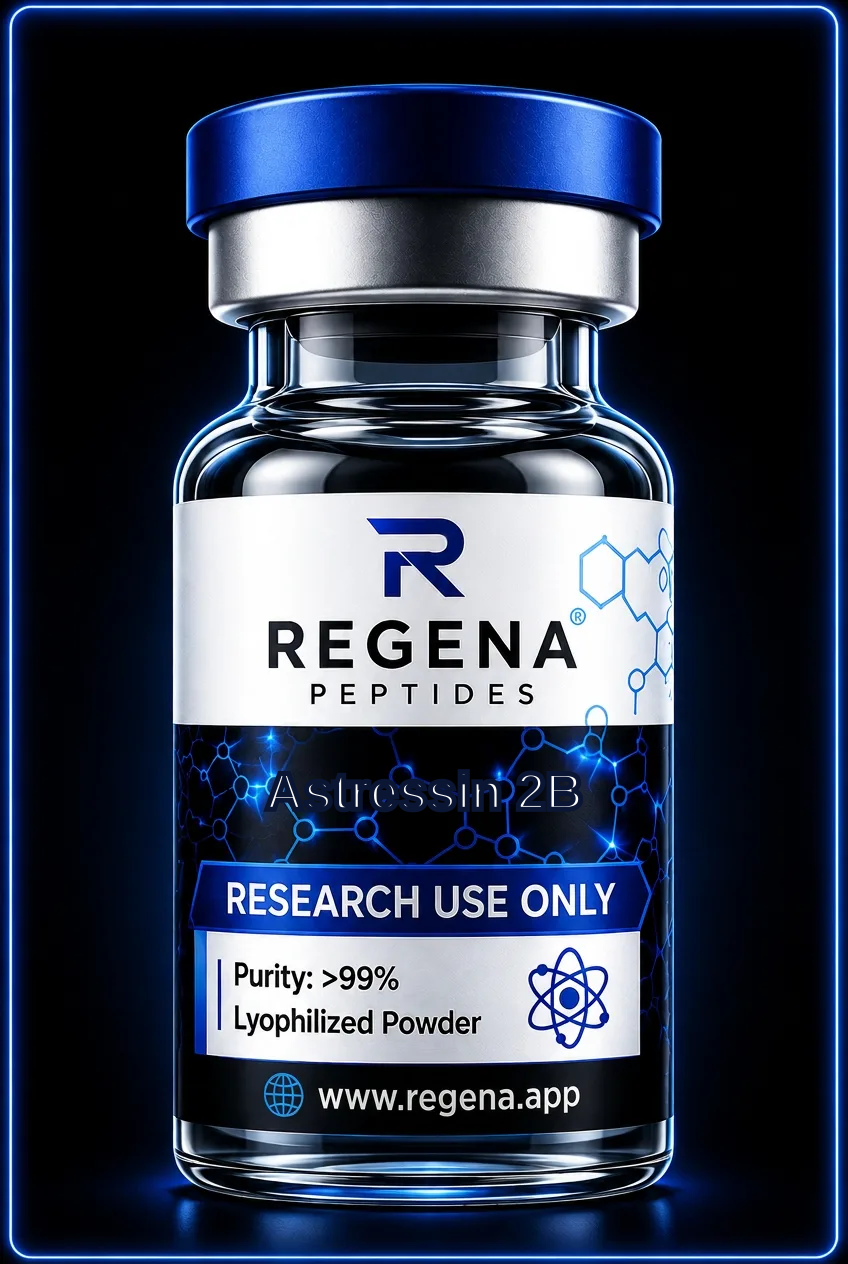
Other · Conformationally constrained CRF analogue; selective CRF2 antagonist
Astressin 2B
Also known as Astressin2-B; Astressin₂-B
A structurally constrained CRF-derived antagonist used to separate CRF2 signalling from CRF1 activity.
- Length
- 33 amino acids
- Half-life
- Not well characterised
- Mechanism
- Astressin 2B preferentially binds CRF2 over CRF1 and competitively inhibits CRF2 activation by CRF-family agonists, including urocortin 2 and urocortin 3. Its selectivity reflects engineered substitutions and conformational constraints within a CRF-derived scaffold.
- Studied in
- Matched CRF1/CRF2 expression assays, urocortin-stimulated cell systems and receptor-defined animal models use astressin 2B to investigate CRF2-dependent signalling.
About Astressin 2B
Astressin 2B was developed through systematic modification of CRF-derived antagonists to favour CRF2 recognition. The conventional structure is an N-acetylated, C-terminally amidated CRF(9–41) analogue containing D-phenylalanine-12, norleucine-21 and -38, and Cα-methylleucine-27 and -40. A glutamate-30–lysine-33 side-chain lactam provides an additional conformational constraint. Residue numbers refer to full-length CRF, not positions counted from the shortened analogue’s N-terminus; the resulting peptide contains 33 amino acids.
Unlike the broader antagonist astressin, astressin 2B is used specifically to interrogate the CRF2 branch of CRF-family signalling. Urocortin 2 and urocortin 3 provide useful agonist partners because they preferentially activate CRF2. Selectivity remains an experimental property rather than an absolute guarantee: receptor abundance, ligand concentration, species and assay timing can alter apparent discrimination. Parallel CRF1 measurements strengthen conclusions drawn from cyclic AMP assays or more complex tissue preparations.
Laboratory notes
- Verify N-terminal acetylation, C-terminal amidation, non-standard residues and lactam connectivity against the analytical specification.
- Measure CRF1 activity alongside CRF2 antagonism when establishing selectivity in a new expression system.
- Use controlled pre-incubation and endpoint timing; variable equilibration can distort comparisons between binding and functional assays.
Storage and reconstitution basics: storage guide.
Questions about Astressin 2B
How does astressin 2B differ from astressin?
Astressin 2B has a longer, differently modified CRF-derived scaffold and preferential CRF2 antagonism, whereas astressin antagonises both CRF receptor subtypes.
What do the Cα-methylleucine residues contribute?
These non-standard residues restrict local backbone conformations and form part of the structural optimisation associated with CRF2 selectivity.
Which agonists are useful for CRF2-focused experiments?
Urocortin 2 and urocortin 3 are useful CRF2-preferring agonists. Receptor-negative controls and matched CRF1 assays help confirm the specificity of the measured response.
Is Astressin 2B for human use?
No. It is supplied strictly for in-vitro laboratory research and is not for human or animal consumption.
Related research peptides
All products are sold for laboratory research use only. Not for human consumption, not a medicine, not for diagnosing, treating or preventing any condition.