
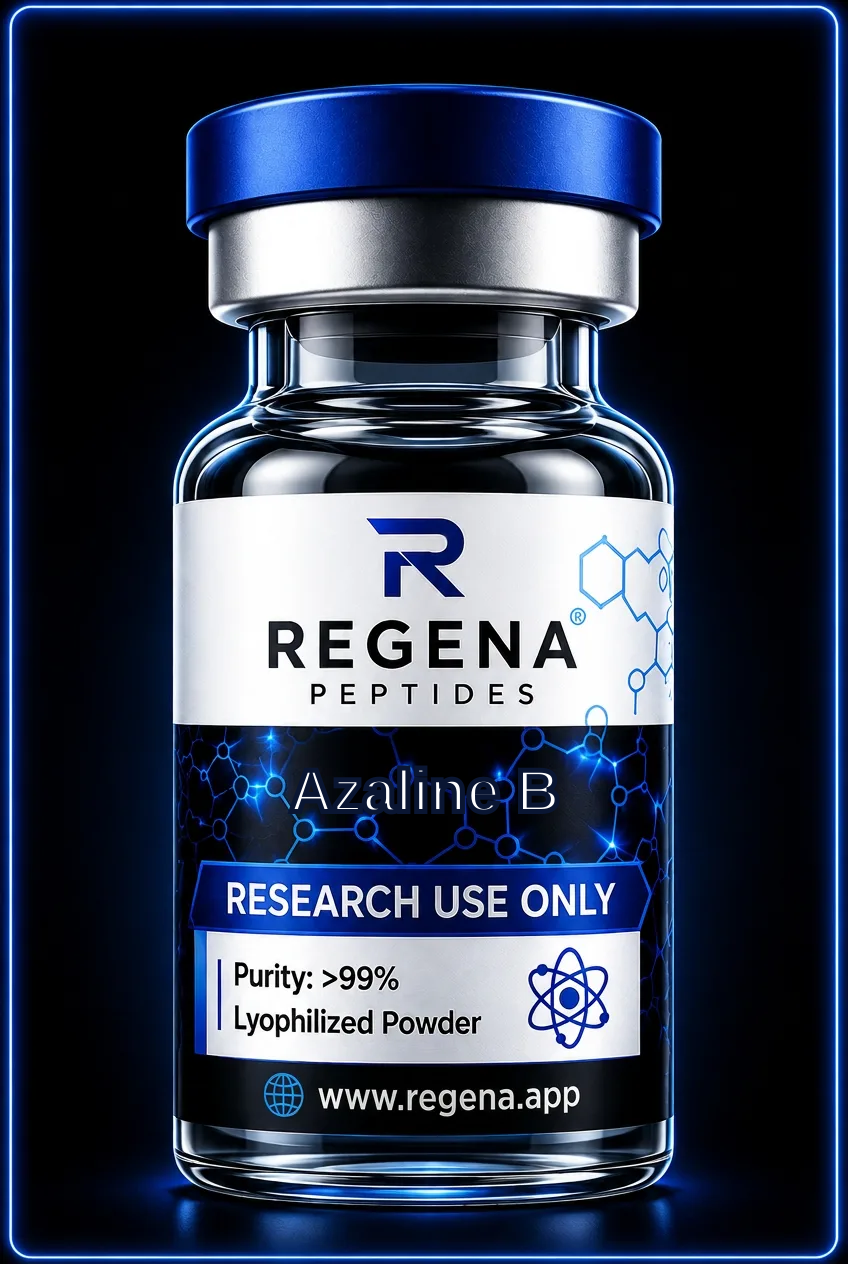
Hormone · Synthetic gonadotrophin-releasing hormone receptor antagonist
Azaline B
Also known as —
A modified GnRH decapeptide antagonist used to probe pituitary signalling and gonadotrophin-dependent biology.
- Length
- 10 amino acids
- Half-life
- Not well characterised
- Mechanism
- Azaline B competitively antagonises the gonadotrophin-releasing hormone receptor (GnRHR), blocking receptor activation by endogenous GnRH. In pituitary models, this interrupts signalling that normally stimulates luteinising hormone and follicle-stimulating hormone secretion.
- Studied in
- Rodent reproductive-endocrinology models use Azaline B to examine gonadotrophin dependence, pituitary feedback and gonadal responses to reduced GnRH signalling.
About Azaline B
Azaline B belongs to the synthetic peptide antagonist series developed from the ten-residue GnRH scaffold. Unlike native GnRH, which activates its receptor, this analogue incorporates non-native residues and stereochemical changes selected to favour antagonism. Its principal experimental target is the pituitary GnRH receptor. The compound is particularly associated with rodent endocrine research, where interruption of endogenous GnRH signalling provides a way to separate gonadotrophin-dependent processes from other regulatory influences.
Experimental interpretation benefits from distinguishing direct receptor blockade from downstream endocrine changes. GnRHR binding or cellular signalling assays address the former, whereas measurements of luteinising hormone, follicle-stimulating hormone and gonadal markers address the latter. These readouts need not follow identical time courses. Species, reproductive stage and the timing of sample collection can substantially affect results, so a duration of endocrine suppression should not be reported as the peptide's elimination half-life.
Laboratory notes
- Confirm sequence, stereochemistry, terminal modifications and counter-ion against the lot-specific certificate of analysis.
- Use low-binding vessels and assess recovery after dilution; adsorption can distort apparent activity at low peptide concentrations.
- Include a GnRH-stimulated control and an antagonist-only condition to distinguish receptor blockade from baseline assay effects.
Storage and reconstitution basics: storage guide.
Questions about Azaline B
Is Azaline B a GnRH agonist?
No. It is a GnRH receptor antagonist, used experimentally to block rather than stimulate GnRH-dependent signalling.
Does a fall in gonadotrophins establish its binding affinity?
No. Gonadotrophin measurements are downstream functional readouts; receptor affinity requires a suitable binding assay.
Why is no numerical half-life provided?
A broadly applicable elimination half-life is not well characterised. The persistence of an endocrine response is not a substitute for analytical measurement of peptide clearance.
Is Azaline B for human use?
No. It is supplied strictly for in-vitro laboratory research and is not for human or animal consumption.
Related research peptides
All products are sold for laboratory research use only. Not for human consumption, not a medicine, not for diagnosing, treating or preventing any condition.