
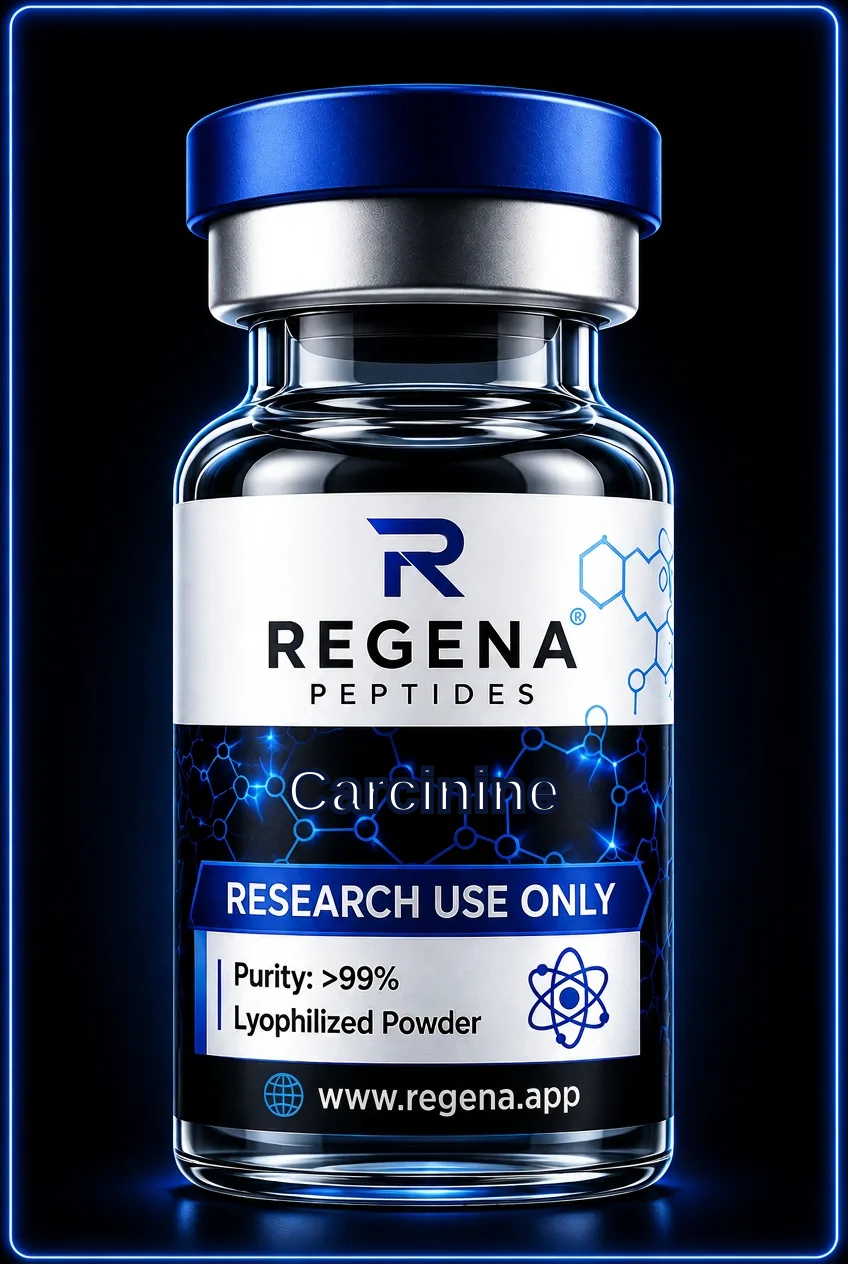
Other · β-Alanyl amide; histamine metabolite
Carcinine
Also known as β-Alanylhistamine
A β-alanyl–histamine conjugate studied as an intermediate in insect histamine recycling and visual neurotransmitter metabolism.
- Length
- 1 amino acid linked to histamine
- Half-life
- Not well characterised
- Mechanism
- Carcinine is formed by β-alanylation of histamine and serves as a recyclable histamine metabolite in insect visual systems. In Drosophila, Ebony supports its formation, Tan hydrolyses it, and the CarT transporter participates in its cellular trafficking; these are metabolic and transport interactions rather than a defined carcinine receptor pathway.
- Studied in
- Drosophila visual-system genetics, transporter assays and enzyme preparations are used to investigate histamine recycling and β-alanyl amide metabolism.
About Carcinine
Carcinine is the amide formed between the carboxyl group of β-alanine and the primary amino group of histamine. It resembles carnosine but lacks the terminal carboxyl group present in carnosine's histidine residue. Consequently, describing carcinine as a conventional two-amino-acid peptide is chemically imprecise. The compound was originally identified in crustacean tissue, and its name reflects that origin. Subsequent research established a particularly well-defined role in insect histamine metabolism.
Within the Drosophila visual system, histamine released by photoreceptors is recovered through a recycling pathway involving neighbouring glial cells. Ebony catalyses β-alanyl conjugation to form carcinine, while Tan cleaves carcinine to regenerate histamine and β-alanine. CarT contributes to carcinine uptake into photoreceptors. Genetic disruption and biochemical assays allow researchers to separate synthesis, transport and hydrolysis. These findings concern a specific neurotransmitter-recycling system and do not establish carcinine as a selective histamine-receptor agonist.
Laboratory notes
- Check for residual histamine, which could independently affect receptor-based or tissue assays.
- Distinguish carcinine from carnosine and free histamine using a validated chromatographic method with appropriate reference standards.
- Include substrate-free and enzyme-inactivated controls when measuring Ebony-dependent formation or Tan-dependent hydrolysis.
Storage and reconstitution basics: storage guide.
Questions about Carcinine
Is carcinine a dipeptide?
Strictly, it contains one amino acid, β-alanine, linked to histamine, a biogenic amine. It is more precisely described as a β-alanyl amide.
Which molecular targets are established in its recycling pathway?
Ebony and Tan are enzymes involved in formation and hydrolysis, respectively, while CarT is a carcinine transporter. These should not be described as carcinine receptors.
Why is histamine impurity important?
Free histamine can generate independent biological signals and confound interpretation of experiments intended to measure carcinine-specific effects.
Is Carcinine for human use?
No. It is supplied strictly for in-vitro laboratory research and is not for human or animal consumption.
Related research peptides
All products are sold for laboratory research use only. Not for human consumption, not a medicine, not for diagnosing, treating or preventing any condition.