
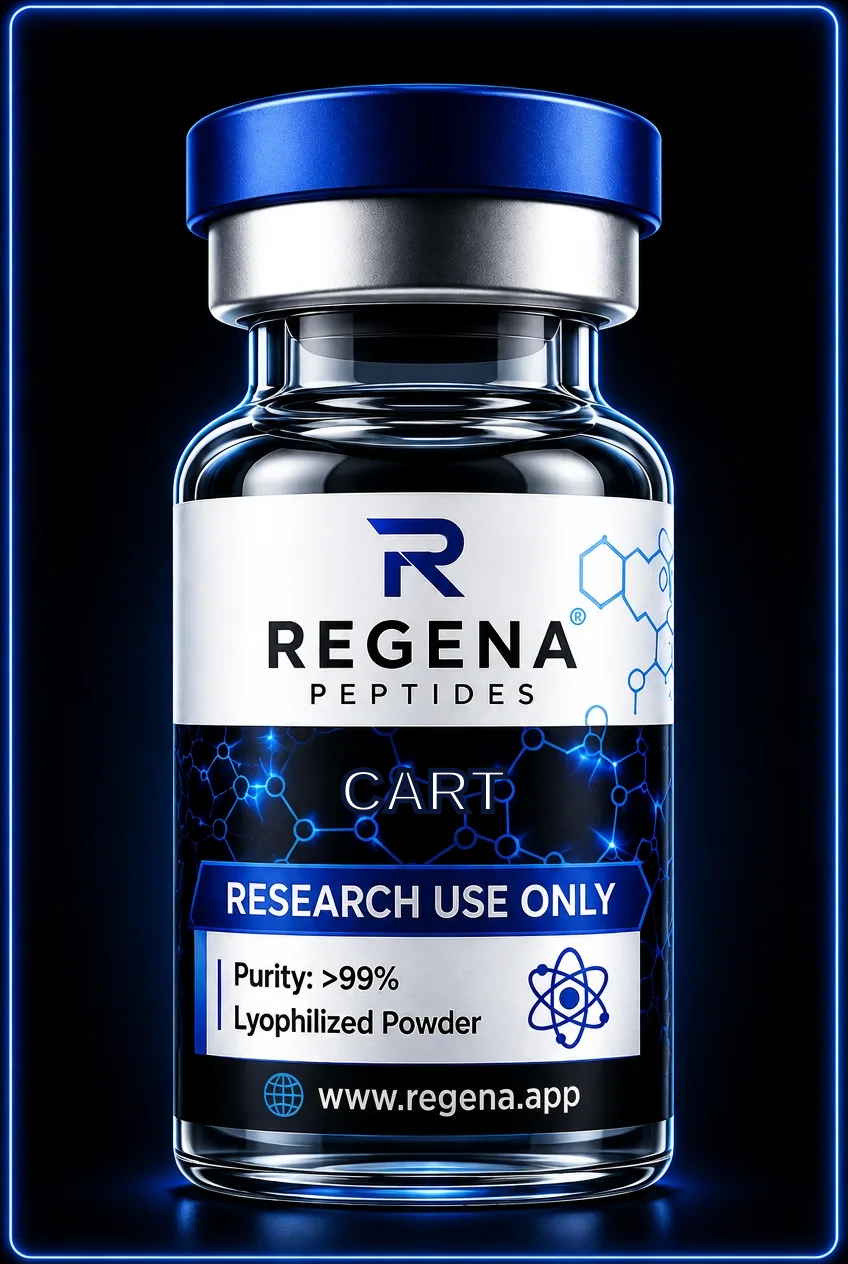
Other · Disulphide-rich CART-derived neuropeptide
CART (55-102)
Also known as CART(55–102); CARTp(55–102)
A 48-residue, disulphide-rich CART fragment used in studies of neuronal signalling and candidate receptor interactions.
- Length
- 48 amino acids
- Half-life
- Not well characterised
- Mechanism
- Correctly folded CART (55-102) produces receptor-associated signalling responses, including ERK activation in responsive experimental systems. GPR160 has been proposed as a CART receptor, but direct binding, fragment specificity and receptor attribution require validation in the chosen model.
- Studied in
- Neuronal cultures, receptor-expression systems and rodent neural-circuit models use CART (55-102) to investigate intracellular signalling, synaptic activity and neuroendocrine regulation.
About CART (55-102)
CART (55-102) is a 48-residue fragment conventionally numbered against the short rat CART precursor. The abbreviation derives from cocaine- and amphetamine-regulated transcript, identified through studies of stimulant-responsive gene expression in the 1990s. CART peptides are produced by processing the CARTPT-encoded precursor. This fragment contains the conserved cysteine-rich C-terminal domain, in which six cysteines form three intramolecular disulphide bonds that support the folded structure associated with biological activity.
Research using CART (55-102) spans neuronal excitability, intracellular kinase signalling and hypothalamic or reward-related circuitry. GPR160 has emerged as a proposed receptor in experimental literature, although the assignment should not be treated as universally established across CART fragments and assay systems. Correct oxidative folding is particularly important: an intact molecular mass alone cannot establish native disulphide connectivity. Comparisons between studies also require attention to precursor numbering, species sequence and the identity of the fragment tested.
Laboratory notes
- Request evidence supporting the expected disulphide pattern; intact-mass analysis cannot distinguish all disulphide isomers.
- Avoid reducing assay conditions unless deliberate disruption of the CART fold is part of the experiment.
- For GPR160-focused experiments, combine expression controls with receptor loss-of-function and rescue rather than relying solely on ERK phosphorylation.
Storage and reconstitution basics: storage guide.
Questions about CART (55-102)
What does the numbering 55-102 refer to?
It conventionally denotes residues 55 through 102 of the short rat CART precursor. Precursor lengths and numbering differ between isoforms and species, so the supplied sequence should be checked explicitly.
How many disulphide bonds does this fragment contain?
The six conserved cysteines form three intramolecular disulphide bonds in the native-like folded peptide.
Is GPR160 a fully settled receptor assignment?
GPR160 is a proposed CART receptor supported by experimental studies, but receptor specificity and direct ligand recognition should be verified for the particular fragment and model.
Is CART (55-102) for human use?
No. It is supplied strictly for in-vitro laboratory research and is not for human or animal consumption.
Related research peptides
All products are sold for laboratory research use only. Not for human consumption, not a medicine, not for diagnosing, treating or preventing any condition.