
Hormone · Synthetic Polypeptide
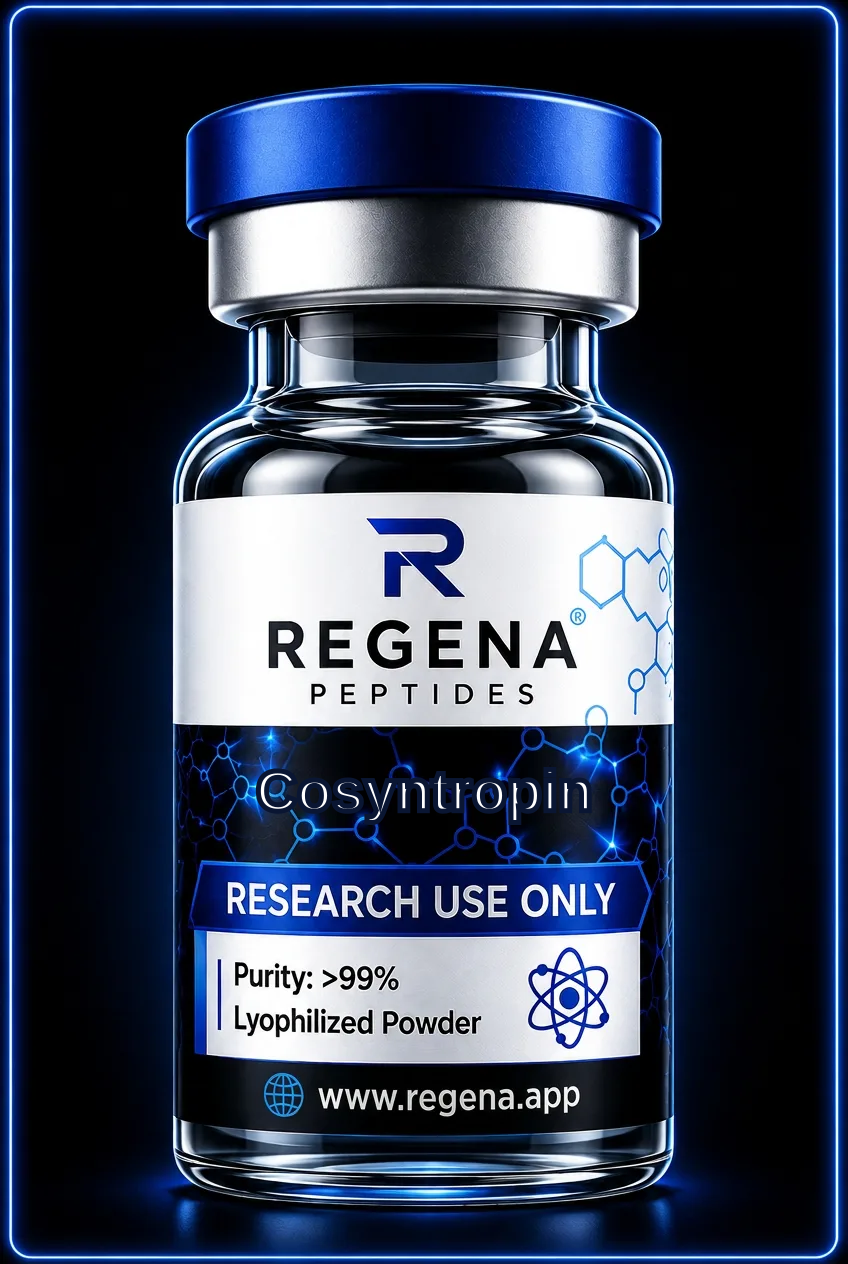
Cosyntropin
Also known as Tetracosactide, ACTH (1-24)
A synthetic 24-amino acid polypeptide corresponding to the N-terminal segment of ACTH, used in research to study adrenal function and steroidogenesis.
- Length
- 24 amino acids
- Half-life
- Approximately 15 minutes in plasma
- Mechanism
- It is the N-terminal 24-amino acid sequence of adrenocorticotropic hormone (ACTH) and acts as an agonist for melanocortin receptors, primarily MC2R.
- Studied in
- Laboratory studies use it to investigate steroidogenesis pathways and adrenal gland function in ex vivo tissue models.
About Cosyntropin
Cosyntropin is the biologically active N-terminal segment of adrenocorticotropic hormone (ACTH), comprising amino acids 1 through 24. This synthetic polypeptide binds to and activates melanocortin receptors (MCRs), exhibiting high affinity for the melanocortin-2 receptor (MC2R). Activation of MC2R in the adrenal cortex initiates a G-protein coupled signaling cascade that increases intracellular cAMP levels, which in turn stimulates the synthesis and release of glucocorticoids, mineralocorticoids, and adrenal androgens.
In a laboratory setting, cosyntropin serves as a precise tool for stimulating the adrenal cortex in ex vivo and in vitro models. Researchers employ it to investigate the integrity and responsiveness of the hypothalamic-pituitary-adrenal (HPA) axis under various experimental conditions. Its activity is specific to stimulating steroid hormone production, making it a standard reference compound for studies involving adrenal cell culture and organoid systems. It is also a reference compound with a clinical history.
Laboratory notes
- Cosyntropin is highly susceptible to proteolytic degradation; use protease inhibitors in biological samples.
- Reconstituted solutions should be handled with care to avoid adsorption to glass or plastic surfaces; low-protein-binding vials are recommended.
- Due to its rapid degradation in plasma, in vitro half-life studies require controlled conditions and specific assay methods.
Storage and reconstitution basics: storage guide.
Questions about Cosyntropin
What is the molecular basis of Cosyntropin's activity?
Cosyntropin is a synthetic analogue of the first 24 amino acids of ACTH, which are responsible for its full biological activity at the melanocortin-2 receptor (MC2R).
How does Cosyntropin differ from endogenous ACTH?
Cosyntropin contains the essential 1-24 sequence for MC2R agonism but lacks the C-terminal 15 amino acids (25-39) of full-length ACTH, which may influence plasma stability.
What is the primary use of Cosyntropin in research?
It is primarily used as a specific agonist to stimulate the adrenal cortex in experimental models, allowing for the study of steroidogenesis and HPA axis function.
Is Cosyntropin for human use?
No. It is supplied strictly for in-vitro laboratory research and is not for human or animal consumption.
Related research peptides
All products are sold for laboratory research use only. Not for human consumption, not a medicine, not for diagnosing, treating or preventing any condition.