
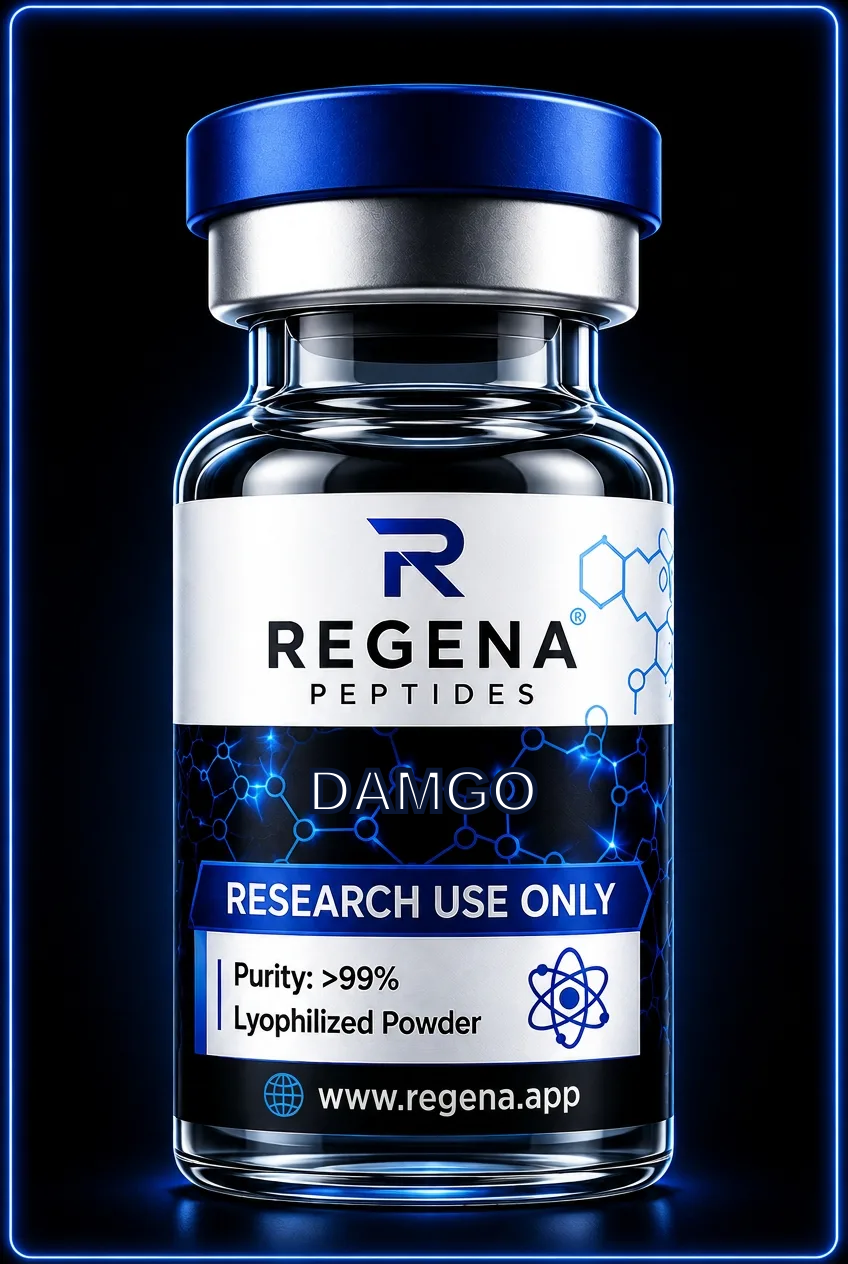
Other · Synthetic opioid peptide
DAMGO
Also known as [D-Ala2, N-Me-Phe4, Gly5-ol]-enkephalin
DAMGO is a synthetic enkephalin analog and a highly selective mu-opioid receptor agonist used as a standard tool in opioid system research.
- Length
- 5 amino acids (modified)
- Half-life
- Increased stability over native enkephalins, but precise in-vitro half-life is context-dependent.
- Mechanism
- It is a highly potent and selective agonist for the mu-opioid receptor (MOR).
- Studied in
- Utilised as a standard reference agonist in vitro and in vivo to study the pharmacology, distribution, and signaling pathways of mu-opioid receptors.
About DAMGO
DAMGO is a synthetic pentapeptide analog of enkephalin with the sequence Tyr-D-Ala-Gly-N-Me-Phe-Gly-ol. Its structural modifications, including a D-amino acid at position 2, a methylated phenylalanine at position 4, and an alcohol at the C-terminus, confer high resistance to enzymatic degradation compared to endogenous enkephalins.
These chemical alterations also provide high potency and exceptional selectivity for the mu-opioid receptor (MOR) over delta (DOR) and kappa (KOR) receptors. This specificity makes DAMGO an indispensable tool in laboratory settings for characterising MOR function, studying receptor binding, and exploring downstream signaling events like G-protein activation and adenylyl cyclase inhibition.
Laboratory notes
- Highly selective for the mu-opioid receptor, making it a gold standard for MOR-specific studies.
- Soluble in water or aqueous buffers; prepare fresh solutions or store frozen aliquots to ensure consistency.
- Modifications (D-Ala2, N-Me-Phe4, Gly5-ol) provide significant resistance to peptidase degradation.
Storage and reconstitution basics: storage guide.
Questions about DAMGO
What makes DAMGO a useful research compound?
Its high potency, exceptional selectivity for the mu-opioid receptor, and resistance to enzymatic breakdown make it a reliable and consistent reference agonist in experimental models.
Is DAMGO an endogenous peptide?
No, it is a synthetic analog of the endogenous opioid peptides known as enkephalins, specifically designed for increased stability and receptor selectivity.
What type of assays is DAMGO typically used in?
It is frequently used in radioligand binding assays, GTPγS binding assays to measure G-protein activation, cell-based calcium imaging, and electrophysiological recordings.
Is DAMGO for human use?
No. It is supplied strictly for in-vitro laboratory research and is not for human or animal consumption.
Related research peptides
All products are sold for laboratory research use only. Not for human consumption, not a medicine, not for diagnosing, treating or preventing any condition.