
Antimicrobial · Antimicrobial Peptide (AMP)
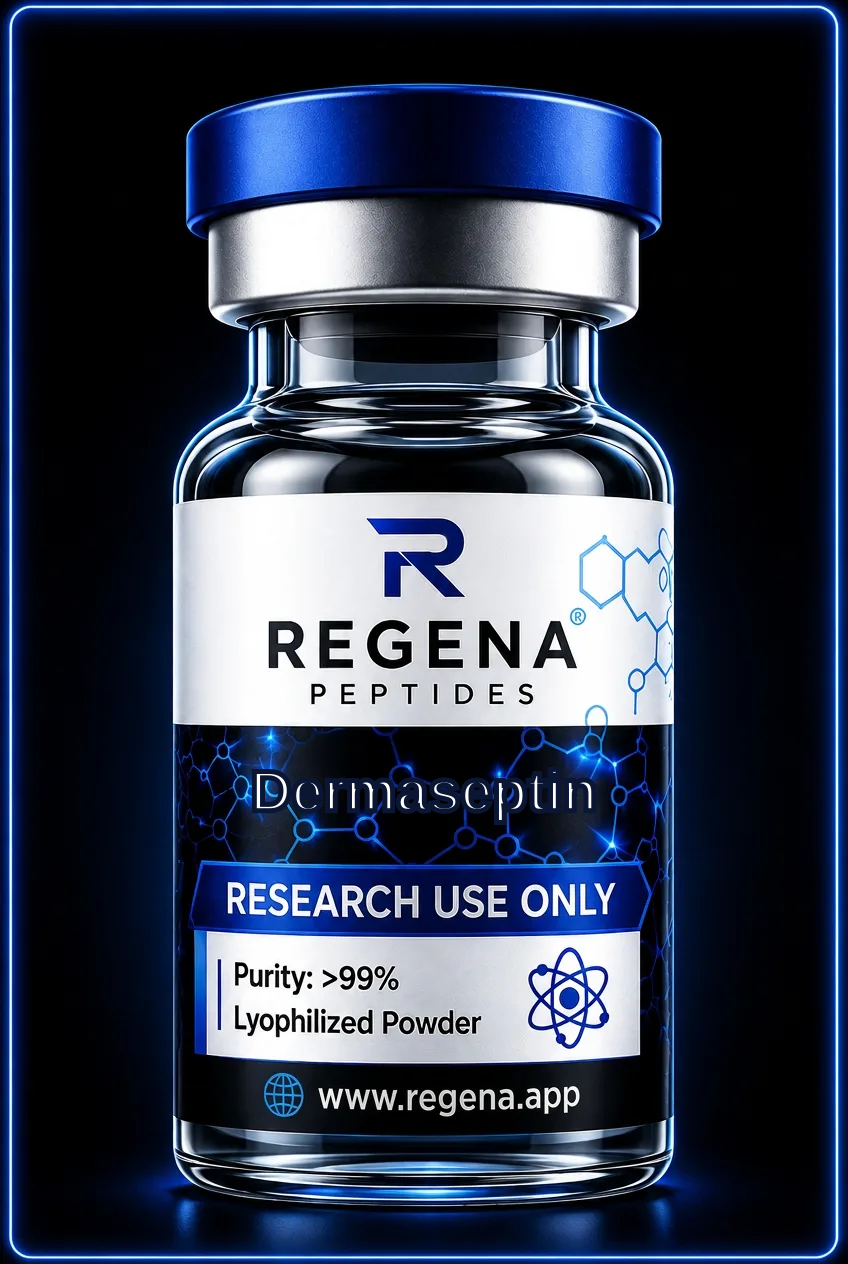
Dermaseptin
Also known as Dermaseptin-S1
A 34-residue AMP from frog skin that disrupts microbial membranes, used in-vitro to study antimicrobial mechanisms and pathogen susceptibility.
- Length
- 34 amino acids
- Half-life
- Not well characterised
- Mechanism
- Dermaseptin inserts into microbial lipid bilayers and forms pores or channels, leading to membrane depolarisation and leakage of cellular contents.
- Studied in
- Laboratory research examines its activity spectrum against bacteria, fungi, and protozoa, and investigates structure-activity relationships for designing novel antimicrobial agents.
About Dermaseptin
Dermaseptin is a member of a large family of antimicrobial peptides originally isolated from the skin secretions of phyllomedusine tree frogs. This specific variant, often Dermaseptin-S1, is a 34-amino-acid cationic peptide that adopts an amphipathic alpha-helical conformation upon interaction with membranes. This structure is key to its biological function.
Its mechanism of action is primarily lytic, involving the electrostatic attraction to negatively charged microbial membranes followed by insertion and disruption. In-vitro assays demonstrate that this process leads to rapid permeabilisation, dissipation of membrane potential, and cell death. It is a valuable tool for studying membrane-peptide interactions and screening for activity against a wide range of pathogens, including antibiotic-resistant bacterial strains.
Laboratory notes
- Dermaseptin's lytic activity can be measured using assays that detect membrane leakage, such as calcein or SYTOX Green release assays.
- Solubility and stability in aqueous solution can be limited; prepare fresh solutions from lyophilised stock or use a co-solvent like DMSO for initial solubilisation.
- Hemolytic activity against red blood cells should be assessed in parallel with antimicrobial assays to determine its selectivity for microbial vs. mammalian-like membranes.
Storage and reconstitution basics: storage guide.
Questions about Dermaseptin
What is an amphipathic alpha-helix?
It is a common secondary structure in peptides where one side of the helix contains hydrophobic (water-repelling) amino acids and the other side contains hydrophilic (water-attracting) amino acids. This arrangement facilitates insertion into cell membranes.
What is the natural source of Dermaseptin?
Dermaseptins are a family of peptides found in the skin secretions of tree frogs from the Phyllomedusinae subfamily, such as the waxy monkey tree frog.
How is Dermaseptin's activity typically quantified in a lab?
Standard methods include determining the Minimum Inhibitory Concentration (MIC) against a panel of microbes, or kinetic assays that measure membrane permeabilisation over time.
Is Dermaseptin for human use?
No. It is supplied strictly for in-vitro laboratory research and is not for human or animal consumption.
Related research peptides
All products are sold for laboratory research use only. Not for human consumption, not a medicine, not for diagnosing, treating or preventing any condition.