
Antimicrobial · Cysteine-rich peptide, Defensin
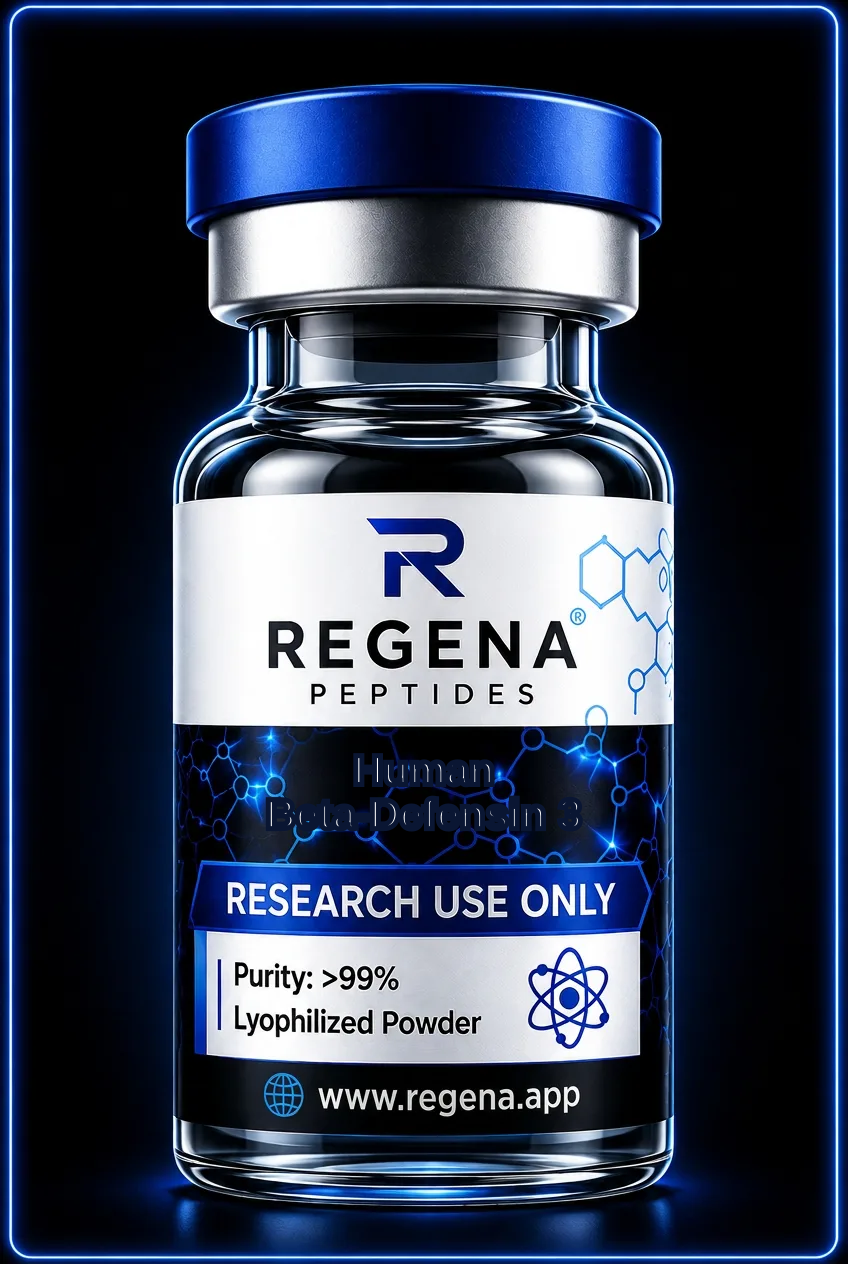
Human Beta-Defensin 3
Also known as HBD-3, DEFB3
A potent, inducible human defensin notable for its broad-spectrum, salt-insensitive antimicrobial activity.
- Length
- 45 amino acids
- Half-life
- Not well characterised
- Mechanism
- Its highly cationic nature enables potent, salt-insensitive disruption of microbial membranes and interaction with chemokine receptors to modulate immune cell activity.
- Studied in
- In vitro studies characterize its broad-spectrum antimicrobial activity against multidrug-resistant bacteria and its immunomodulatory effects on various cell types.
About Human Beta-Defensin 3
Human Beta-Defensin 3 (HBD-3) is an inducible antimicrobial peptide with a net positive charge that is significantly higher than HBD-1 and HBD-2. Its 45-amino-acid structure contains the characteristic six-cysteine array of the beta-defensin family, forming a stable, disulfide-bonded fold. HBD-3 expression is triggered in epithelial tissues by infectious and inflammatory signals.
A key feature of HBD-3 studied in the laboratory is its potent antimicrobial activity that, unlike many other defensins, is maintained even under high-salt conditions. This makes it a subject of interest for studying defense against resilient pathogens, including methicillin-resistant Staphylococcus aureus (MRSA). Research also explores its complex immunomodulatory roles, including its ability to signal through various cell surface receptors.
Laboratory notes
- HBD-3 exhibits strong binding to glass and some plastics; use low-protein-binding labware for all handling and storage.
- Unlike HBD-1 and HBD-2, its antimicrobial activity shows marked resistance to high concentrations of NaCl in vitro.
- The peptide's synthesis and oxidative folding are complex, making verification of purity and structure by HPLC and MS essential for reproducible results.
Storage and reconstitution basics: storage guide.
Questions about Human Beta-Defensin 3
What makes HBD-3 'salt-insensitive'?
Its high net positive charge (+11 at neutral pH) creates a strong electrostatic potential that can overcome the shielding effects of salt ions, allowing it to effectively bind and disrupt microbial membranes even in high-salt environments.
Does HBD-3 have functions beyond killing microbes?
Yes, it is considered a multifunctional peptide. Research investigates its roles in wound healing models, angiogenesis, and as a signaling molecule that can influence immune cell differentiation and migration.
Against which types of microbes is HBD-3 studied?
It is studied against a very broad spectrum, including gram-positive and gram-negative bacteria (including antibiotic-resistant strains), fungi like Candida albicans, and some enveloped viruses.
Is Human Beta-Defensin 3 for human use?
No. It is supplied strictly for in-vitro laboratory research and is not for human or animal consumption.
Related research peptides
All products are sold for laboratory research use only. Not for human consumption, not a medicine, not for diagnosing, treating or preventing any condition.