
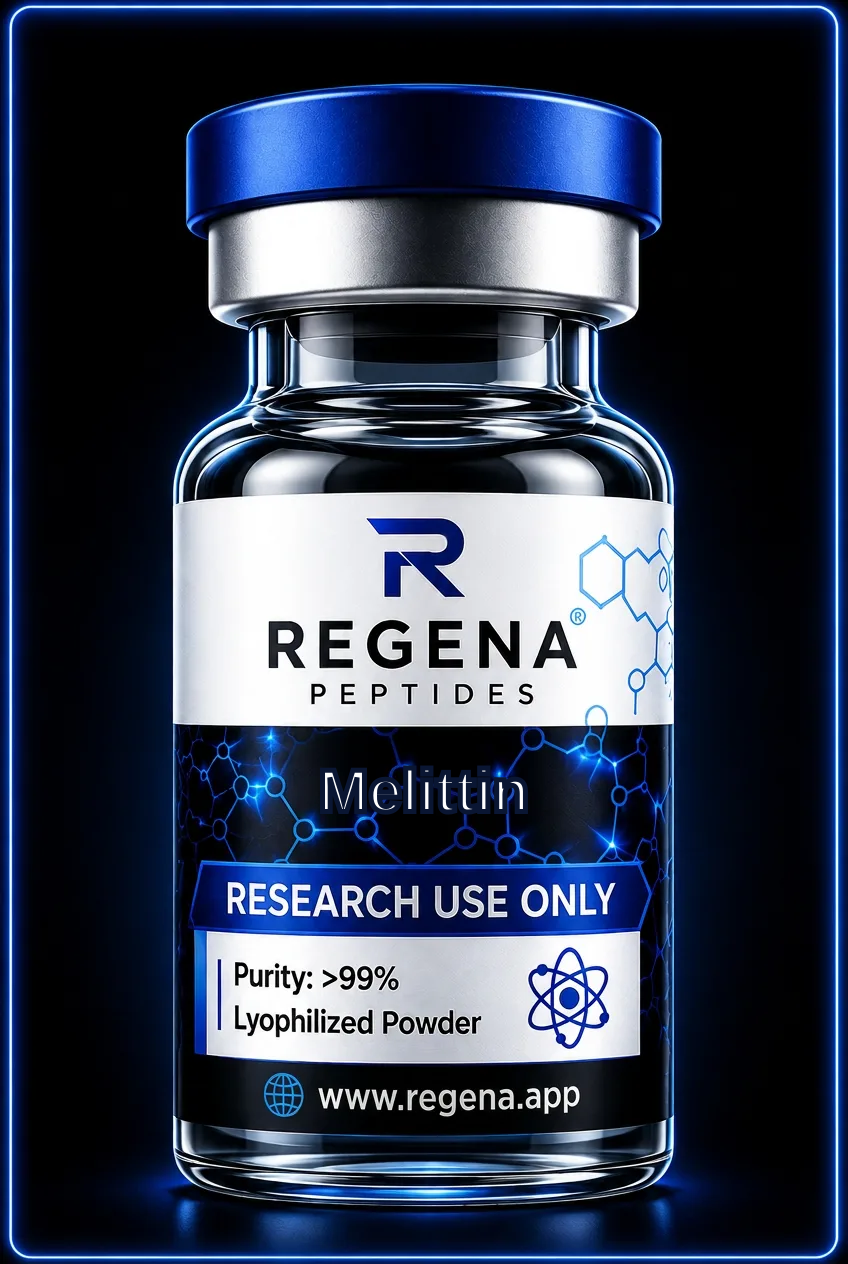
Antimicrobial · Linear alpha-helical peptide
Melittin
A potent cytolytic peptide from bee venom, used as a laboratory standard for studying membrane disruption and cell lysis.
- Length
- 26 amino acids
- Half-life
- Not well characterised
- Mechanism
- It is a potent, non-specific lytic peptide that assembles into toroidal pores in lipid bilayers, causing rapid membrane disruption and cell lysis.
- Studied in
- Due to its powerful but non-selective cytolytic activity, it is used as a model lytic peptide and a positive control in hemolysis and membrane permeability assays.
About Melittin
Melittin is the primary toxic component of honey bee (Apis mellifera) venom. The 26-amino acid peptide is a water-soluble tetramer in solution that dissociates into amphipathic alpha-helical monomers upon contact with lipid membranes. This structure is key to its potent, non-selective membrane-disrupting activity.
In the laboratory, melittin serves as a benchmark for lytic activity. Its ability to lyse red blood cells (hemolysis) makes it a common positive control in experiments designed to test the membrane selectivity of other experimental peptides. It is also widely used in biophysical studies with artificial lipid vesicles to understand the fundamental mechanisms of peptide-induced pore formation and membrane permeabilization.
Laboratory notes
- Extreme caution should be exercised during handling; melittin is a potent cytolytic agent and can damage all cell types, including mammalian cells.
- Use as a positive control in hemolysis assays to confirm that assay conditions are suitable for detecting membrane lysis.
- The peptide is highly basic and readily soluble in aqueous buffers.
Storage and reconstitution basics: storage guide.
Questions about Melittin
What does 'non-selective' mean for melittin?
Non-selective means that it does not distinguish between bacterial and mammalian cell membranes, causing lysis of both. This is in contrast to many other antimicrobial peptides that show some preference for microbial membranes.
What is a hemolysis assay?
A hemolysis assay is an experiment that measures the ability of a compound to rupture red blood cells. The release of hemoglobin is quantified by spectrophotometry, providing a measure of the compound's lytic activity against a mammalian cell type.
Why is melittin a tetramer in solution?
In aqueous solution, the hydrophobic parts of four melittin monomers self-associate to minimize their contact with water, forming a stable tetrameric structure. This complex dissociates upon encountering a lipid membrane.
Is Melittin for human use?
No. It is supplied strictly for in-vitro laboratory research and is not for human or animal consumption.
Related research peptides
All products are sold for laboratory research use only. Not for human consumption, not a medicine, not for diagnosing, treating or preventing any condition.