
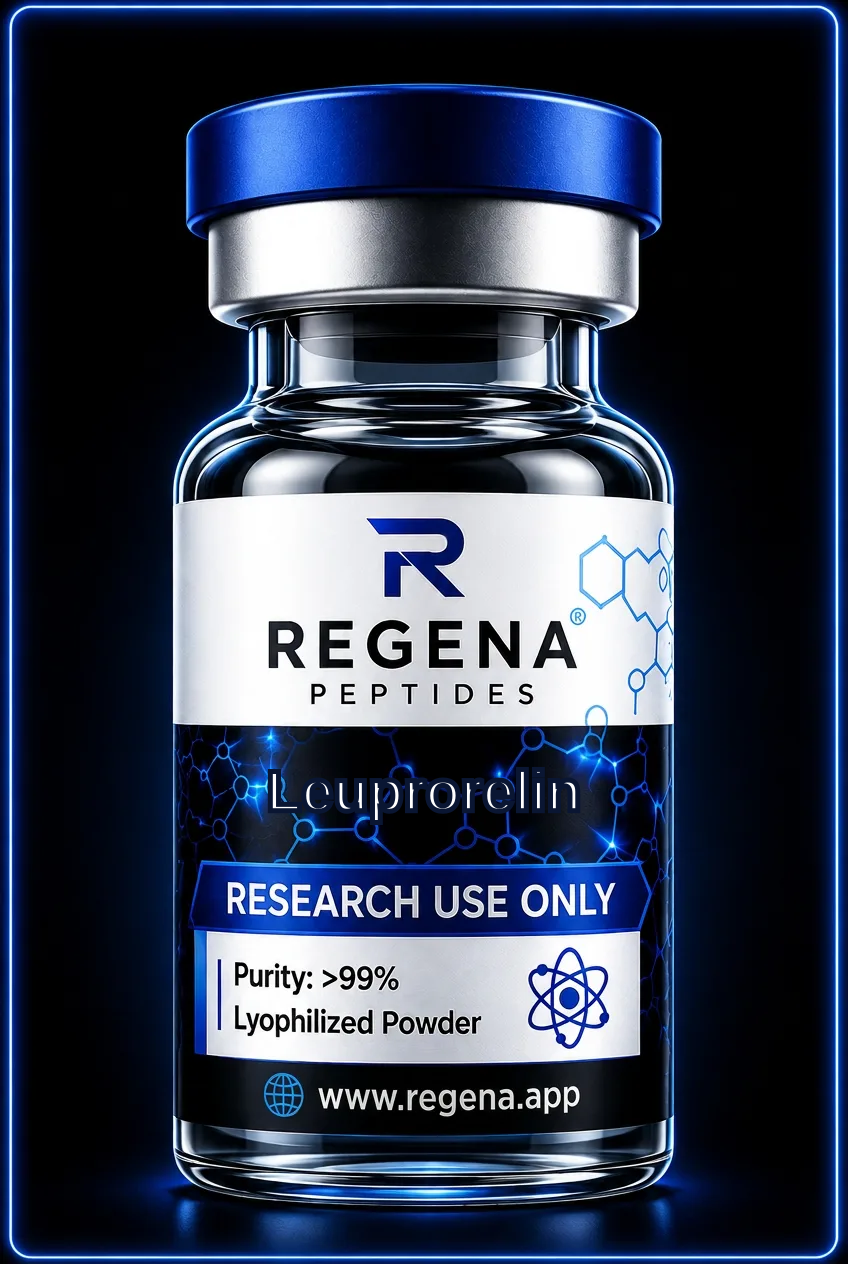
Hormone · Synthetic gonadotrophin-releasing hormone receptor agonist
Leuprorelin
Also known as Leuprolide; [D-Leu6,des-Gly10]-GnRH ethylamide
A D-leucine-substituted GnRH nonapeptide used in receptor pharmacology and experimental studies of gonadotroph adaptation.
- Length
- 9 amino acids
- Half-life
- Not well characterised
- Mechanism
- Leuprorelin binds and activates GnRHR, promoting phospholipase C-dependent calcium signalling and downstream gonadotroph responses. Persistent stimulation can induce functional desensitisation and changes in gonadotrophin subunit expression.
- Studied in
- Leuprorelin is studied in pituitary cultures, GnRHR-expressing cell lines and animal reproductive endocrine models to investigate agonist signalling and feedback adaptation.
About Leuprorelin
Leuprorelin, also called leuprolide in research literature, is a synthetic nonapeptide derived from native GnRH. Its sequence is pGlu-His-Trp-Ser-Tyr-D-Leu-Leu-Arg-Pro-NHEt, where pGlu denotes pyroglutamate and NHEt denotes the terminal ethylamide. Relative to the natural decapeptide, glycine-6 is replaced by D-leucine and the terminal glycinamide is replaced by an ethylamide attached to proline-9. These changes arose from structure–activity investigations seeking more stable and potent GnRH receptor agonists.
Laboratory studies use leuprorelin to separate immediate GnRH receptor activation from adaptations that emerge during prolonged stimulation. Early readouts include intracellular calcium and inositol phosphate production; later measurements can include gonadotrophin subunit transcripts and secreted hormone concentrations. A change in secretion alone does not identify the underlying mechanism, because synthesis, storage and stimulus–secretion coupling also contribute. Parallel viability and receptor-expression measurements help distinguish specific endocrine signalling from nonspecific assay effects.
Laboratory notes
- Specify whether experimental concentrations refer to peptide content or total salt mass, using the supplier's analytical documentation.
- Validate peptide integrity over the assay period in serum-containing media, where proteolysis and matrix binding may alter available material.
- For secretion assays, standardise sampling intervals and normalise results to an appropriate measure of viable cell content.
Storage and reconstitution basics: storage guide.
Questions about Leuprorelin
Are leuprorelin and leuprolide different peptides?
These names refer to the same peptide structure. Counterion, purity and peptide content must still be checked when comparing research materials.
What is the purpose of the D-leucine substitution?
Replacing glycine-6 with D-leucine alters peptide conformation and susceptibility to enzymatic cleavage, contributing to its distinct receptor agonist profile.
Why measure both transcripts and secreted gonadotrophins?
Transcript abundance reflects aspects of biosynthetic regulation, whereas secretion also depends on stored hormone and secretory machinery. The readouts describe different parts of the cellular response.
Is Leuprorelin for human use?
No. It is supplied strictly for in-vitro laboratory research and is not for human or animal consumption.
Related research peptides
All products are sold for laboratory research use only. Not for human consumption, not a medicine, not for diagnosing, treating or preventing any condition.