
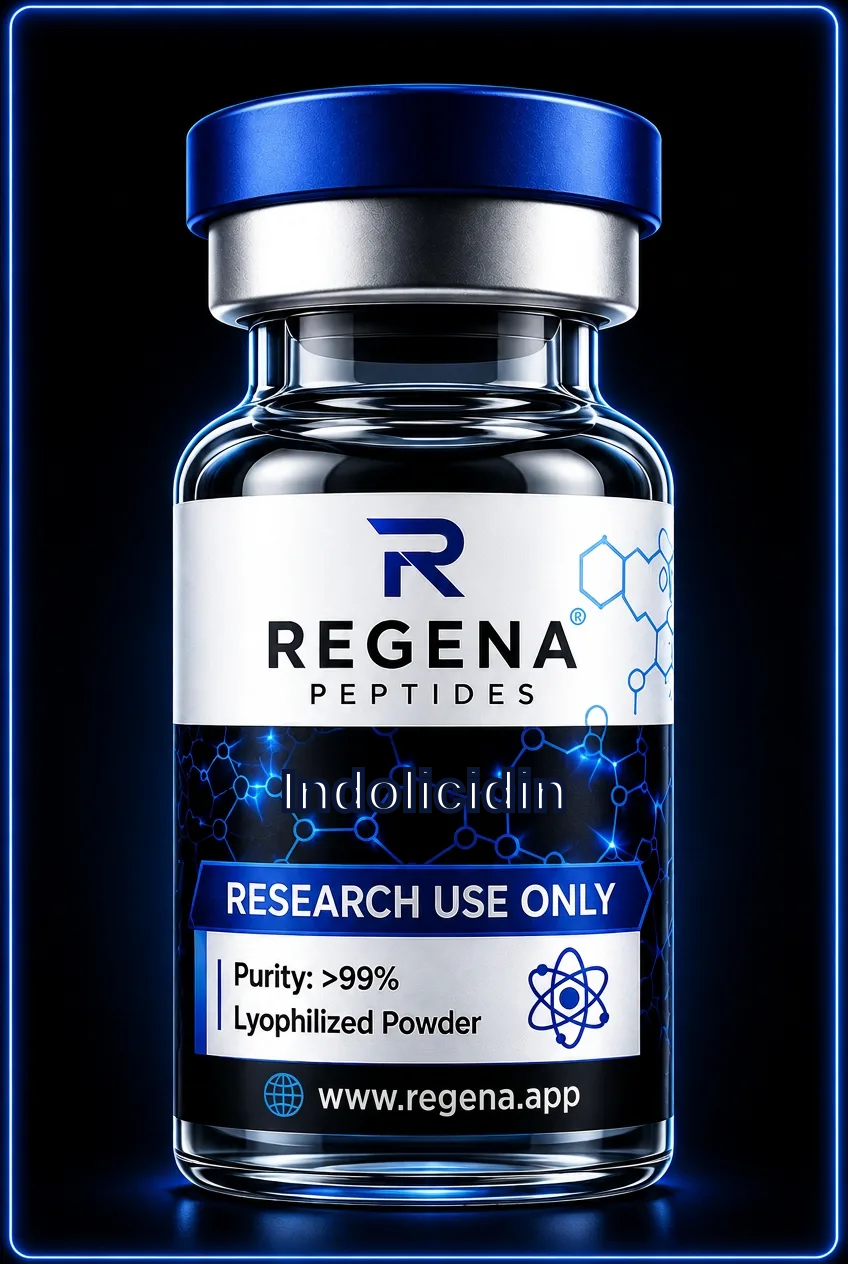
Antimicrobial · Cationic antimicrobial peptide (cathelicidin)
Indolicidin
Also known as CP-11
A 13-amino-acid peptide rich in tryptophan, studied in labs for its capacity to disrupt membranes and inhibit bacterial DNA synthesis.
- Length
- 13 amino acids
- Half-life
- Not well characterised
- Mechanism
- Interacts with and disrupts bacterial membranes, and can also translocate into the cytoplasm to inhibit DNA synthesis.
- Studied in
- Investigated in laboratory settings for its broad-spectrum antimicrobial activity and its dual mechanism involving membrane disruption and DNA synthesis inhibition.
About Indolicidin
Indolicidin is a 13-residue cationic peptide isolated from bovine neutrophils. It is notable for its unusually high content of tryptophan (five residues) and proline, which influences its structure and interactions. Unlike alpha-helical AMPs, Indolicidin adopts a unique, extended poly-L-proline II-like structure in solution.
Its mechanism of action is multifaceted. The peptide can disrupt the structure and function of bacterial membranes, but it also has the ability to translocate into the cell and bind to DNA, thereby inhibiting replication. This dual-action mechanism is a subject of ongoing in vitro research to understand its full potential and specificity.
Laboratory notes
- The high tryptophan content makes it suitable for quantification via UV absorbance at 280 nm.
- Its aggregation propensity can be influenced by buffer composition and pH; handle solutions with care.
- Peptide is sensitive to oxidation, particularly the tryptophan residues; store lyophilised powder under inert gas if possible.
Storage and reconstitution basics: storage guide.
Questions about Indolicidin
What is distinctive about Indolicidin's composition?
It has a very high proportion of tryptophan and proline residues, which is unusual for antimicrobial peptides.
What are its proposed mechanisms of action?
Research models suggest it acts by both disrupting bacterial cell membranes and inhibiting DNA synthesis within the cell.
What is the natural source of Indolicidin?
It is an endogenous peptide found within the cytoplasmic granules of bovine neutrophils.
Is Indolicidin for human use?
No. It is supplied strictly for in-vitro laboratory research and is not for human or animal consumption.
Related research peptides
All products are sold for laboratory research use only. Not for human consumption, not a medicine, not for diagnosing, treating or preventing any condition.