
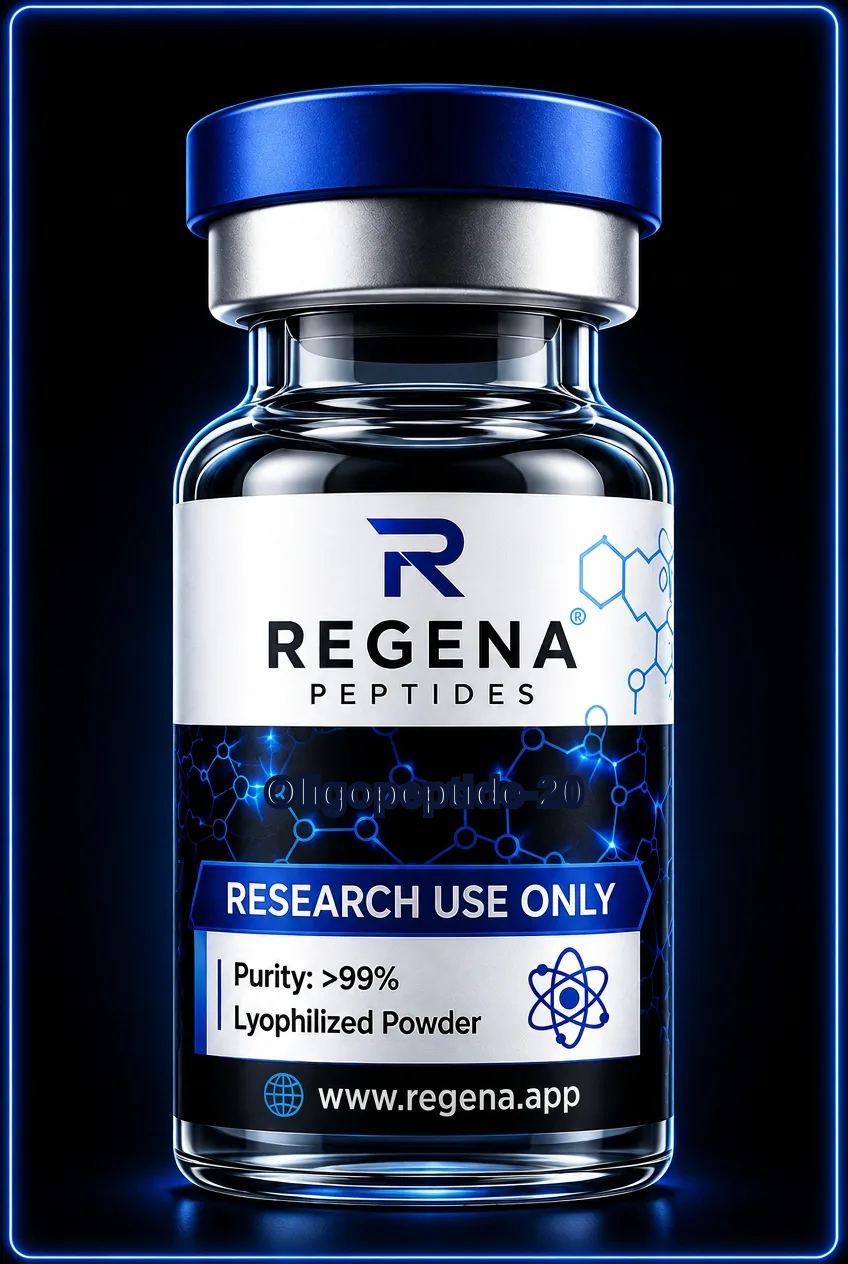
Cosmetic · Peptide ingredient designation; sequence requires verification
Oligopeptide-20
Also known as —
Peptide ingredient designation requiring sequence confirmation before receptor, mechanism or model-specific evidence can be assigned.
- Length
- Not reliably established from the supplied name
- Half-life
- Not well characterised
- Mechanism
- A sequence-specific mechanism or receptor target cannot be assigned confidently from this designation alone. Descriptions of cellular signalling require verification against the actual material and supporting primary experimental evidence.
- Studied in
- Identity-confirmed material can be assessed in keratinocyte or fibroblast cultures, but specific published models cannot be reliably attributed without a sequence-linked reference.
About Oligopeptide-20
Oligopeptide-20 is an ingredient-style designation, not a sequence that can be decoded from its numerical suffix. The name supplied here does not provide enough structural information to establish residue count, terminal modifications or a relationship to an endogenous signalling protein. A scientifically useful reference therefore begins with the manufacturer's sequence declaration, molecular formula and analytical identity data, rather than inferring properties from neighbouring peptide names.
No specific receptor interaction or discovery history can be attributed confidently without linking the material to a defined sequence and primary literature. Keratinocyte and fibroblast assays may provide exploratory measurements of proliferation, migration or extracellular-matrix markers, but those observations would not independently demonstrate receptor engagement. Mechanistic work should incorporate suitable controls, viability measurements and orthogonal pathway assays before assigning a signalling function to the verified research material.
Laboratory notes
- Obtain the sequence, terminal chemistry, counterion and certificate of analysis before selecting analytical acceptance criteria.
- Establish solubility and storage conditions for the verified structure; do not infer them from the ingredient number.
- For cell-based screening, control for endotoxin, vehicle effects and viability before interpreting signalling or gene-expression changes.
Storage and reconstitution basics: storage guide.
Questions about Oligopeptide-20
Does Oligopeptide-20 mean a twenty-residue peptide?
No. The numerical suffix is not a reliable indicator of sequence length.
Can a growth-factor receptor target be listed for this material?
Not without sequence-linked evidence of target engagement. A general signalling description does not establish a receptor target.
What information is needed to make this entry sequence-specific?
The amino-acid sequence, modifications, molecular mass, analytical identity data and primary references linked to that structure are needed.
Is Oligopeptide-20 for human use?
No. It is supplied strictly for in-vitro laboratory research and is not for human or animal consumption.
Related research peptides
All products are sold for laboratory research use only. Not for human consumption, not a medicine, not for diagnosing, treating or preventing any condition.