
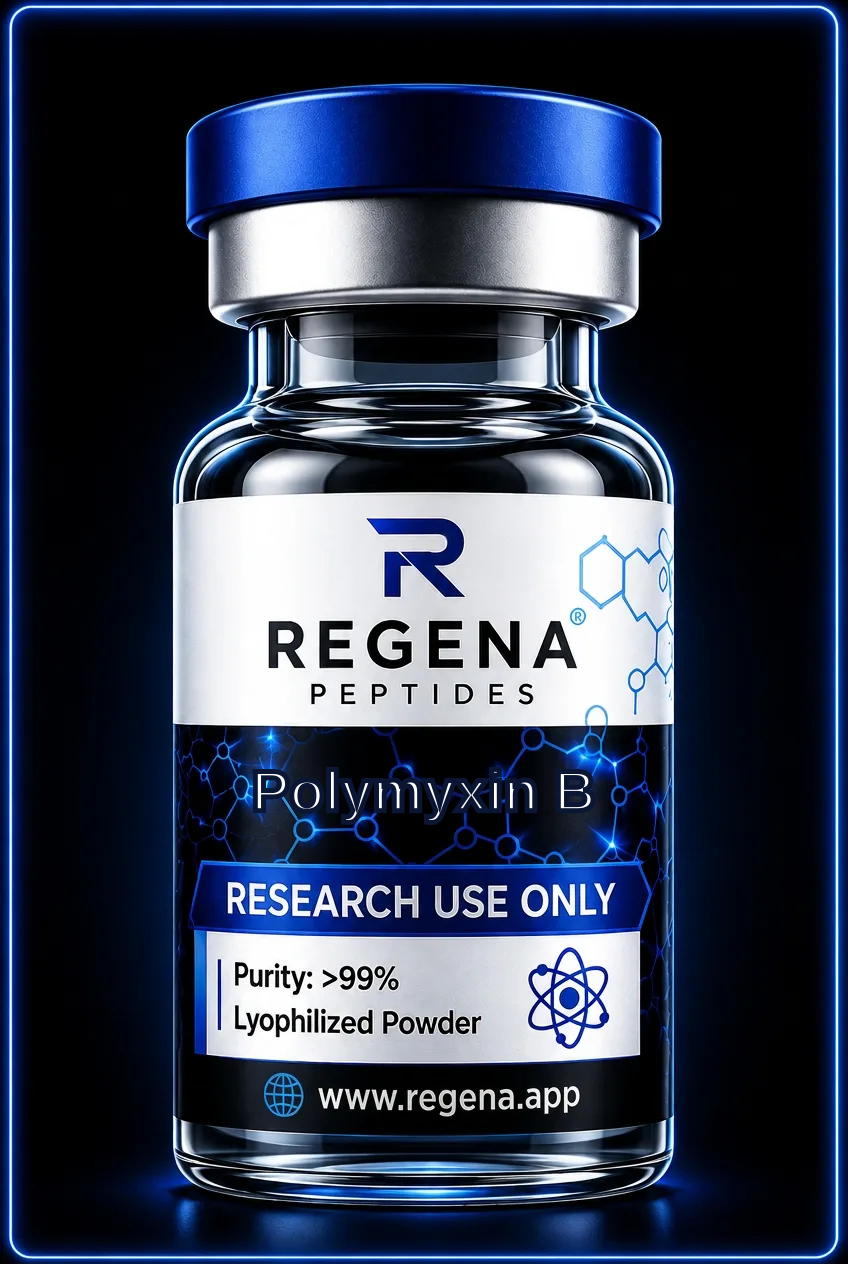
Antimicrobial · Cyclic lipopeptide
Polymyxin B
Also known as Polymyxin B Sulfate
A cyclic lipopeptide that targets and neutralizes bacterial lipopolysaccharide (LPS), used in research to study Gram-negative bacteria and control endotoxin.
- Length
- 10 amino acids
- Half-life
- System-dependent
- Mechanism
- It binds to the lipid A component of lipopolysaccharide (LPS) on the outer membrane of Gram-negative bacteria, disrupting membrane integrity.
- Studied in
- Research applications include its use as a selective agent against Gram-negative bacteria in cell culture and for neutralizing endotoxic LPS in vitro.
About Polymyxin B
Polymyxin B is a cationic polypeptide produced by Bacillus polymyxa. It is a mixture of Polymyxins B1 and B2, which differ by a single fatty acid component, and consists of a cyclic heptapeptide, a linear tripeptide side chain, and an N-terminal fatty acid tail. Polymyxin B is a reference compound with a clinical history.
The primary molecular target is the lipopolysaccharide (LPS) in the outer membrane of Gram-negative bacteria. Polymyxin B's positively charged diaminobutyric acid residues electrostatically interact with the negatively charged phosphate groups of lipid A, displacing divalent cations and disrupting the membrane's structure. This binding also neutralizes the endotoxic activity of LPS, making it a valuable reagent to prevent LPS-induced responses in vitro.
Laboratory notes
- Commonly supplied as a sulfate salt, which is readily soluble in water.
- Can be used to remove endotoxin contamination from protein or DNA solutions by binding to LPS.
- In cell culture, it can be added to media to prevent the growth of Gram-negative bacteria.
Storage and reconstitution basics: storage guide.
Questions about Polymyxin B
What is the primary target of Polymyxin B?
Its primary target is lipopolysaccharide (LPS), also known as endotoxin, a major component of the outer membrane of Gram-negative bacteria.
Why is Polymyxin B primarily effective against Gram-negative bacteria?
Its mechanism is dependent on binding to LPS, which is absent in Gram-positive bacteria, fungi, and mammalian cells.
Can Polymyxin B be used to decontaminate lab reagents?
Yes, it is widely used to neutralize or remove contaminating LPS from buffers, media, and other solutions used in sensitive cell-based assays.
Is Polymyxin B for human use?
No. It is supplied strictly for in-vitro laboratory research and is not for human or animal consumption.
Related research peptides
All products are sold for laboratory research use only. Not for human consumption, not a medicine, not for diagnosing, treating or preventing any condition.