
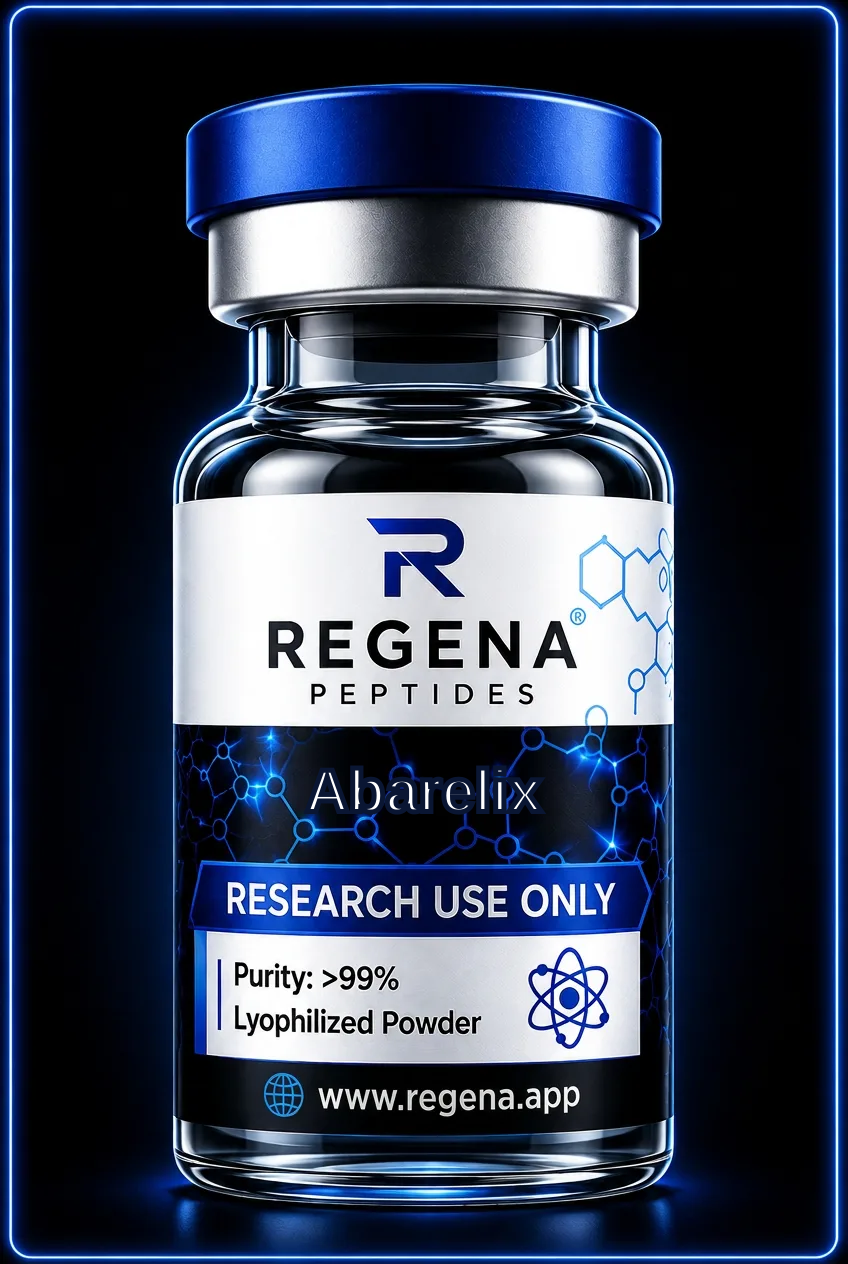
Hormone · GnRH antagonist
Abarelix
Also known as PPI-149, R-3827
A synthetic decapeptide, Abarelix is a direct-acting GnRH receptor antagonist used for research into pituitary hormone regulation.
- Length
- 10 amino acids
- Half-life
- Not well characterised in vitro
- Mechanism
- This synthetic decapeptide acts as a direct, competitive antagonist of the gonadotropin-releasing hormone (GnRH) receptor in the pituitary.
- Studied in
- It is used in endocrinology research models to study the effects of immediate GnRH signaling blockade on the hypothalamic-pituitary-gonadal axis.
About Abarelix
Abarelix is a synthetic decapeptide engineered with multiple non-natural amino acid substitutions. These modifications to the native GnRH structure result in a molecule that binds to the GnRH receptor but fails to activate it, thereby acting as a competitive antagonist. The structural changes also confer enhanced stability compared to the endogenous hormone.
This molecule is a reference compound with a clinical history. Its mechanism of action is the direct and immediate blockade of pituitary GnRH receptors, which prevents the release of luteinizing hormone (LH) and follicle-stimulating hormone (FSH). Unlike GnRH agonists, which cause an initial surge in hormone release, antagonists like Abarelix induce a rapid suppression, making them useful research tools for studying the consequences of acute pituitary-gonadal axis shutdown in vitro.
Laboratory notes
- Contains several non-natural amino acids, which are key to its antagonist activity and stability.
- As a direct antagonist, it does not cause the initial hormone flare-up seen with GnRH agonists.
- Useful as a control in experiments designed to study the signaling cascade of the GnRH receptor.
Storage and reconstitution basics: storage guide.
Questions about Abarelix
Is Abarelix a GnRH agonist or antagonist?
Abarelix is a direct competitive antagonist. It binds to the GnRH receptor and blocks it without causing activation.
How does its mechanism differ from a GnRH agonist like Sermorelin?
Sermorelin is a GHRH agonist, not GnRH. Compared to a GnRH agonist, Abarelix causes an immediate suppression of LH and FSH by blocking the receptor. A GnRH agonist initially stimulates the receptor, causing a surge in hormones before downregulation occurs.
What is the primary effect of Abarelix in a pituitary cell culture?
In a culture of gonadotroph cells, adding Abarelix will block GnRH-stimulated release of luteinizing hormone (LH) and follicle-stimulating hormone (FSH).
Is Abarelix for human use?
No. It is supplied strictly for in-vitro laboratory research and is not for human or animal consumption.
Related research peptides
All products are sold for laboratory research use only. Not for human consumption, not a medicine, not for diagnosing, treating or preventing any condition.