
Metabolic · ENHO-encoded regulatory peptide
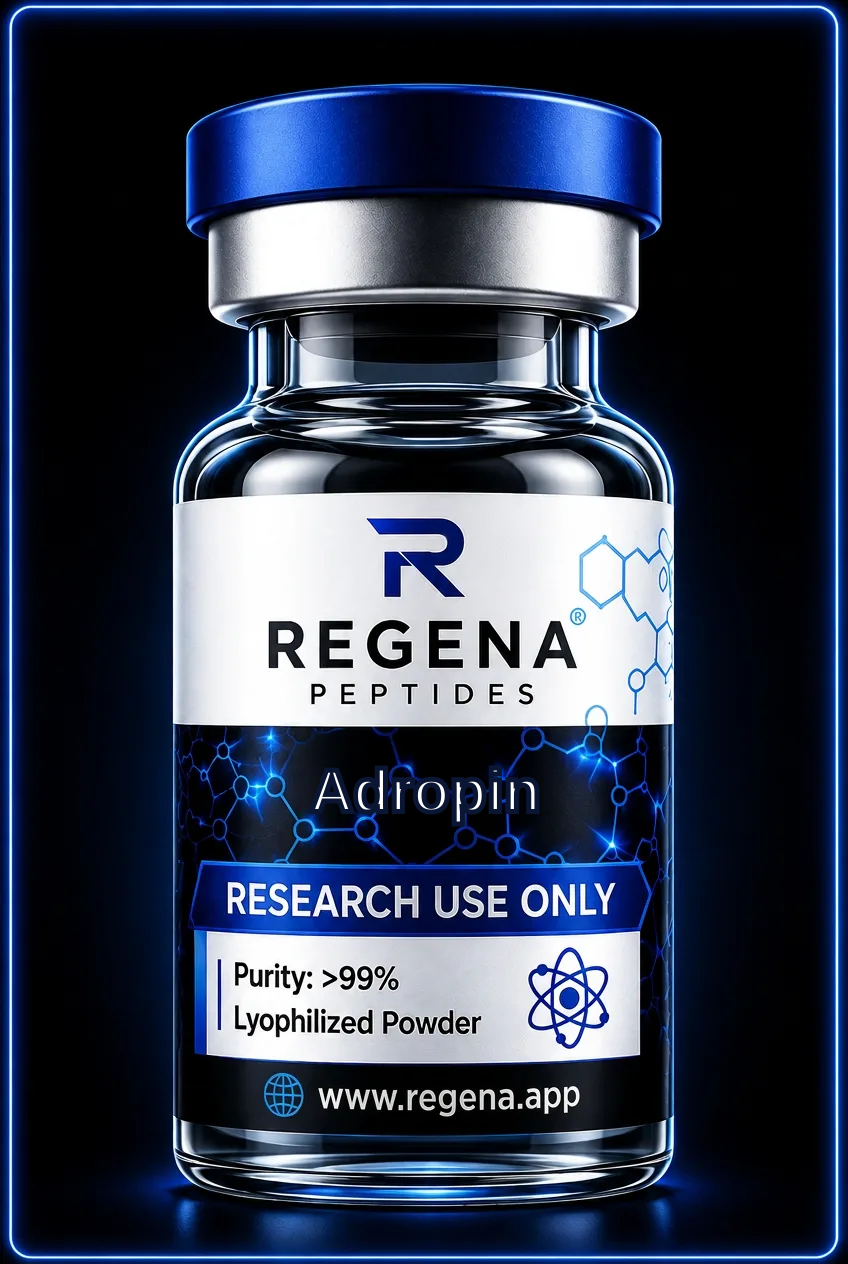
Adropin
Also known as ENHO-derived peptide; adropin (34–76), for the commonly studied fragment
An ENHO-encoded peptide studied in metabolic and endothelial models, commonly supplied as the 43-residue fragment adropin (34–76).
- Length
- 76 amino acids; commonly studied fragment: 43 amino acids
- Half-life
- Not well characterised
- Mechanism
- Adropin-associated responses include changes in metabolic and endothelial signalling, with AMPK, Akt and endothelial nitric oxide synthase implicated in selected models. GPR19 has been proposed as a receptor or signalling mediator, but direct receptor assignment remains unresolved.
- Studied in
- Hepatocyte, muscle-cell and endothelial cultures, alongside Enho-modified mouse models, are used to investigate substrate utilisation and signalling associated with adropin.
About Adropin
Adropin was described in 2008 following investigation of genes associated with nutritional state and energy regulation. It is encoded by ENHO and comprises 76 amino acids in its full-length form. Many experimental preparations instead contain residues 34–76, a 43-residue C-terminal fragment frequently described as the putative secreted form. The relationship between this synthetic fragment, endogenous processing and membrane-associated forms is not completely resolved, making explicit sequence identification particularly important for research comparisons.
Cellular studies explore links between adropin-associated signalling and pathways governing substrate selection, mitochondrial function and endothelial nitric oxide production. GPR19 is frequently discussed as a candidate mediator, although evidence does not establish an uncontested direct ligand–receptor relationship. Some experiments also implicate interactions with other membrane-associated proteins. Results from synthetic adropin fragments, ENHO overexpression and gene deletion address different biological questions and should be distinguished rather than treated as equivalent measures of peptide activity.
Laboratory notes
- Specify whether the material is full-length adropin or residues 34–76; the names are often used interchangeably despite different structures.
- Validate dissolution and recovery in the chosen assay buffer, using low-binding vessels where adsorption affects measured concentrations.
- Include orthogonal pathway controls when studying GPR19, because a downstream response alone does not demonstrate direct receptor binding.
Storage and reconstitution basics: storage guide.
Questions about Adropin
Why are both 76 and 43 amino acids reported for adropin?
ENHO encodes a 76-residue protein, while many laboratory studies use the synthetic C-terminal fragment spanning residues 34–76, which contains 43 residues.
Is GPR19 an established adropin receptor?
GPR19 is a proposed mediator, but definitive direct binding and receptor assignment remain unresolved. Assay descriptions should retain this uncertainty.
Does ENHO overexpression test the same thing as a synthetic fragment?
Not necessarily. Overexpression can affect full-length protein abundance, localisation and processing, whereas a synthetic fragment tests the behaviour of a defined isolated sequence.
Is Adropin for human use?
No. It is supplied strictly for in-vitro laboratory research and is not for human or animal consumption.
Related research peptides
All products are sold for laboratory research use only. Not for human consumption, not a medicine, not for diagnosing, treating or preventing any condition.