
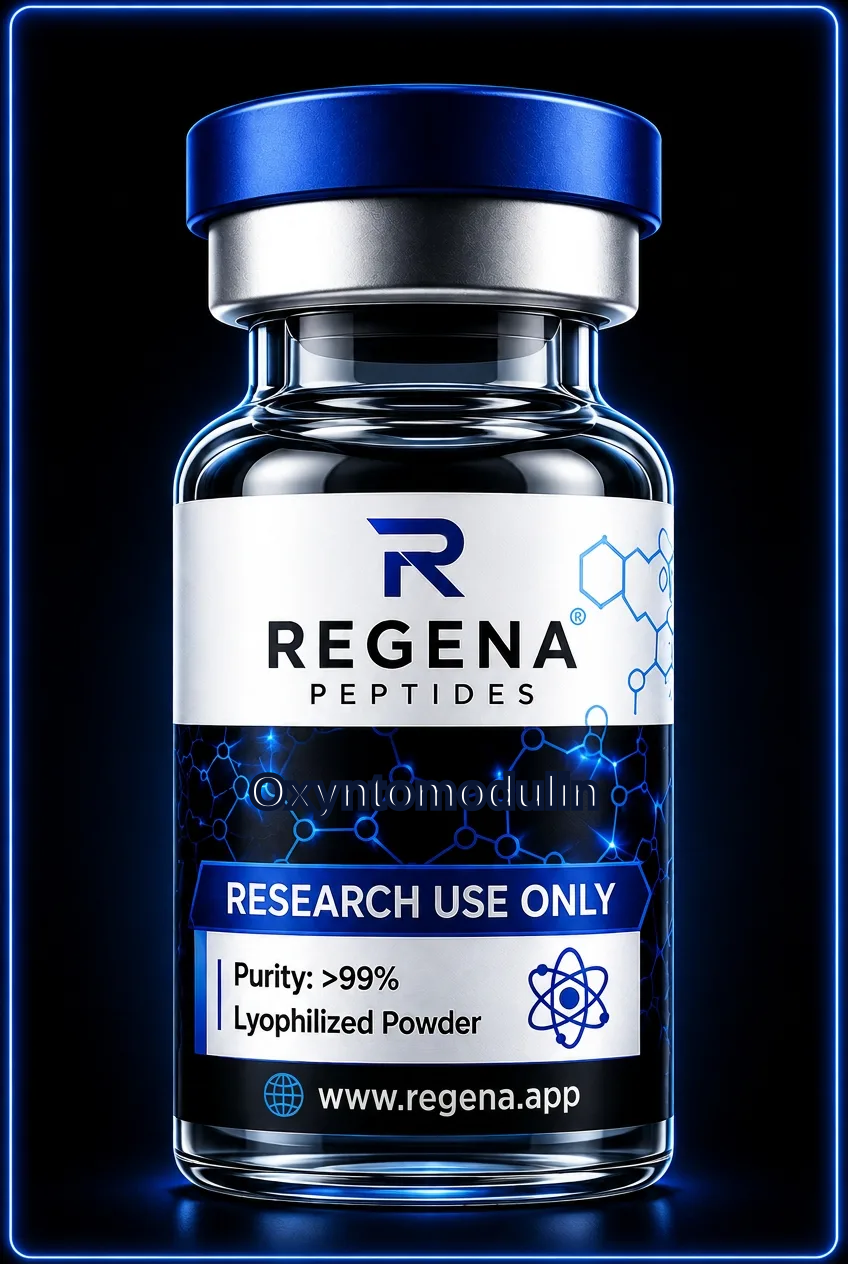
Metabolic · Peptide hormone
Oxyntomodulin
Also known as OXM
Oxyntomodulin is an endogenous dual-agonist peptide for GLP-1 and glucagon receptors, used to investigate metabolic control pathways.
- Length
- 37 amino acids
- Half-life
- Approx. 12 minutes
- Mechanism
- Acts as a dual agonist for both the glucagon-like peptide-1 receptor (GLP-1R) and the glucagon receptor (GCGR).
- Studied in
- Studied in metabolic research to understand the integrated effects of GLP-1 and glucagon receptor co-activation on glucose homeostasis and energy expenditure.
About Oxyntomodulin
Oxyntomodulin is a 37-amino acid peptide hormone derived from the preproglucagon gene and co-secreted with GLP-1 from intestinal L-cells. It contains the full 29-amino acid sequence of glucagon followed by an eight-amino acid C-terminal extension. This unique structure allows it to bind to and activate both the GLP-1 receptor and the glucagon receptor.
The dual agonism of oxyntomodulin makes it a compound of significant interest in metabolic research, and it is a reference compound with a clinical history. Laboratory studies use oxyntomodulin to explore the synergistic or opposing effects of simultaneous GLP-1R and GCGR activation in various tissues, including the pancreas, liver, and brain. This peptide helps elucidate the complex interplay between these two critical metabolic signalling systems.
Laboratory notes
- As a dual agonist, experimental design should include controls with selective GLP-1R and GCGR agonists/antagonists to dissect its complex mechanism.
- Oxyntomodulin is susceptible to degradation by DPP-IV; consider this for in vivo model design or use DPP-IV inhibitors in vitro.
- Reconstitution should be performed with a slightly acidic buffer (e.g., pH 4.0-5.0) to improve solubility and stability, then adjusted if needed for the assay.
Storage and reconstitution basics: storage guide.
Questions about Oxyntomodulin
Is oxyntomodulin a GLP-1 analogue?
No, it is a distinct endogenous peptide that activates the GLP-1 receptor, but it also activates the glucagon receptor. Its structure is based on glucagon, not GLP-1.
What is meant by 'dual agonist'?
This term indicates that the molecule can bind to and activate two different types of receptors, in this case, the GLP-1 receptor and the glucagon receptor.
Where is oxyntomodulin produced endogenously?
It is produced in and secreted from the enteroendocrine L-cells of the small and large intestine in response to nutrient ingestion.
Is Oxyntomodulin for human use?
No. It is supplied strictly for in-vitro laboratory research and is not for human or animal consumption.
Related research peptides
All products are sold for laboratory research use only. Not for human consumption, not a medicine, not for diagnosing, treating or preventing any condition.