
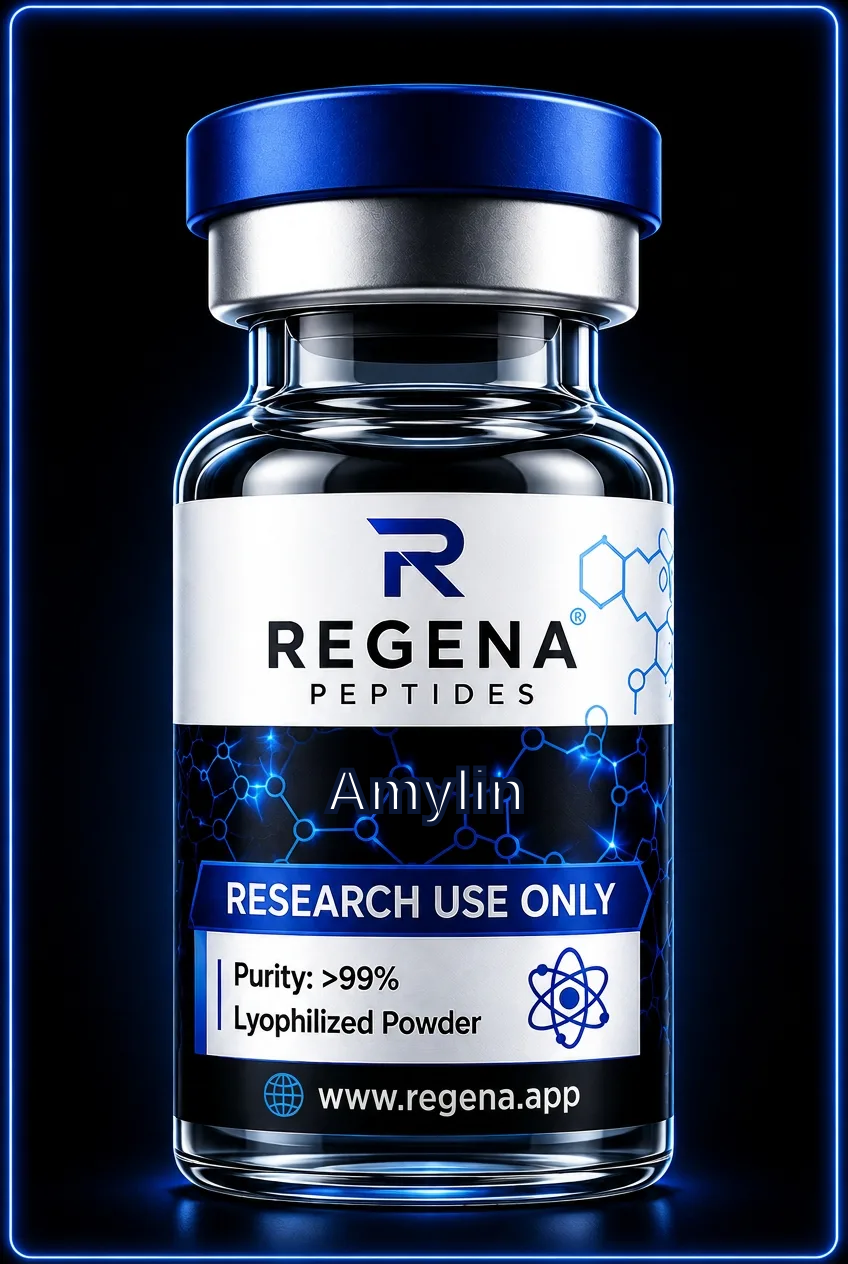
Metabolic · Peptide hormone
Amylin
Also known as Islet Amyloid Polypeptide (IAPP)
Amylin is a 37-amino-acid peptide hormone co-secreted with insulin, involved in glucose homeostasis research and prone to amyloid formation.
- Length
- 37 amino acids
- Half-life
- Approximately 13 minutes in human plasma (in vitro)
- Mechanism
- Acts on amylin receptors, which are complexes of the calcitonin receptor with receptor activity-modifying proteins (RAMPs).
- Studied in
- Studied in laboratory models to understand its role in glycemic regulation, gastric emptying, and satiety signaling.
About Amylin
Amylin, also known as Islet Amyloid Polypeptide (IAPP), is a 37-residue peptide hormone co-localised and co-secreted with insulin by pancreatic β-cells. The human form of amylin contains a specific amino acid sequence (residues 20-29) that gives it a high propensity to aggregate and form amyloid fibrils. This characteristic is a subject of intense investigation in models of pancreatic function.
The peptide functions through specific amylin receptors, which are heterodimers of the calcitonin receptor and one of three receptor activity-modifying proteins (RAMPs). Its activation is linked to several processes in research models, including the suppression of postprandial glucagon secretion and modulation of gastric emptying rates. It is also a reference compound with a clinical history.
Laboratory notes
- Human amylin is highly amyloidogenic; use of non-aggregating analogs (e.g., rat amylin) is common in solution-based assays to avoid confounding results.
- Reconstitution in solvents like hexafluoroisopropanol (HFIP) before final dilution into aqueous buffer can help minimise aggregation.
- For cell-based assays, freshly prepared solutions are highly recommended to avoid artifacts from oligomerisation or fibril formation.
Storage and reconstitution basics: storage guide.
Questions about Amylin
What is the relationship between amylin and insulin?
Amylin and insulin are co-secreted from pancreatic beta-cells and work in complementary ways in experimental models of glucose regulation.
Why is human amylin prone to aggregation?
The specific amino acid sequence in human amylin, particularly residues 20-29, confers a high propensity to form beta-sheet structures that aggregate into amyloid fibrils.
How do amylin receptors differ?
Amylin receptors are formed by the calcitonin receptor (CTR) combining with different RAMPs (RAMP1, 2, or 3), creating receptor subtypes with distinct binding affinities and tissue distributions.
Is Amylin for human use?
No. It is supplied strictly for in-vitro laboratory research and is not for human or animal consumption.
Related research peptides
All products are sold for laboratory research use only. Not for human consumption, not a medicine, not for diagnosing, treating or preventing any condition.