
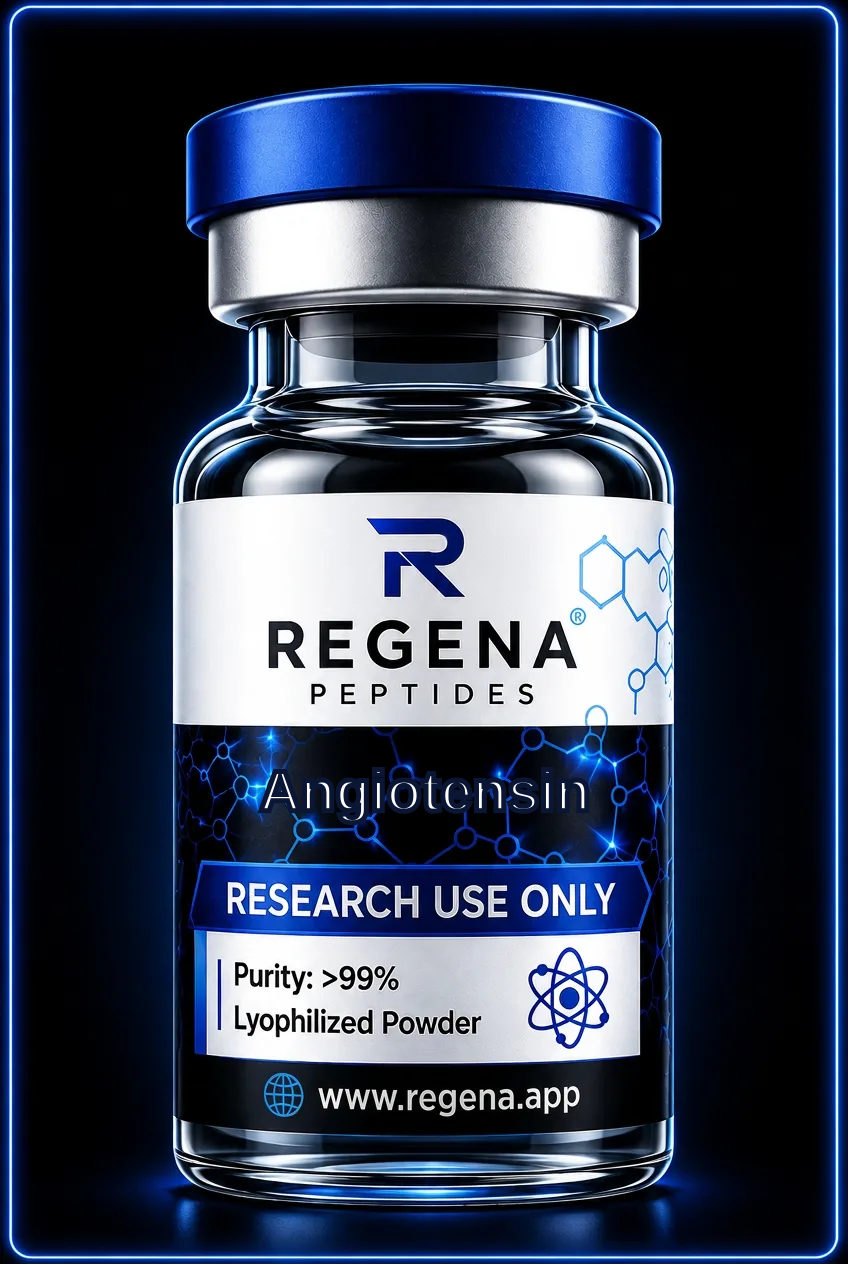
Cardiovascular · Heptapeptide hormone
Angiotensin (1-7)
Also known as Ang-(1-7)
A heptapeptide of the renin-angiotensin system that acts on the Mas receptor, studied in models of cardiovascular and renal function.
- Length
- 7 amino acids
- Half-life
- Rapidly metabolised in plasma
- Mechanism
- Functions as a primary agonist for the Mas receptor, a G protein-coupled receptor, generally producing actions that counter-regulate the classical renin-angiotensin system (RAS).
- Studied in
- Studied in cardiovascular and renal models to investigate its vasodilatory, anti-proliferative, anti-hypertrophic, and anti-fibrotic effects.
About Angiotensin (1-7)
Angiotensin (1-7) is a seven-amino-acid peptide that is an active component of the renin-angiotensin system (RAS). It is formed from Angiotensin I or Angiotensin II through the action of various peptidases, including angiotensin-converting enzyme 2 (ACE2). This peptide represents the primary effector of the 'protective' or 'alternative' axis of the RAS.
Unlike Angiotensin II, which primarily acts on AT1 receptors to mediate vasoconstriction and cell growth, Ang-(1-7) binds to and activates the Mas receptor. This interaction typically leads to opposing physiological responses, such as vasodilation and inhibition of fibrosis. This counter-regulatory role makes it a significant tool in laboratory research exploring cardiovascular and renal homeostasis.
Laboratory notes
- Its actions are often studied in comparison to Angiotensin II to understand the balance of the two major RAS axes.
- Due to its rapid degradation by peptidases in vivo and in plasma samples, experiments often require the use of peptidase inhibitors for accurate quantification or to prolong activity.
- Commonly used in isolated organ bath experiments to measure its direct effect on vascular tone in arterial rings.
Storage and reconstitution basics: storage guide.
Questions about Angiotensin (1-7)
How is Angiotensin (1-7) related to Angiotensin II?
Angiotensin II can be a precursor to Angiotensin (1-7) via enzymatic cleavage. Functionally, Ang-(1-7) often opposes the actions of Angiotensin II, creating a regulatory balance within the renin-angiotensin system.
What is the Mas receptor?
The Mas receptor is a G protein-coupled receptor (GPCR) that is specifically activated by Angiotensin (1-7). Its activation initiates signaling cascades distinct from those of the classical Angiotensin II AT1 and AT2 receptors.
How is this peptide handled and stored?
Lyophilized Ang-(1-7) should be stored at -20°C. Once reconstituted in an appropriate buffer, it should be aliquoted and stored frozen to minimize degradation from repeated freeze-thaw cycles.
Is Angiotensin (1-7) for human use?
No. It is supplied strictly for in-vitro laboratory research and is not for human or animal consumption.
Related research peptides
All products are sold for laboratory research use only. Not for human consumption, not a medicine, not for diagnosing, treating or preventing any condition.