
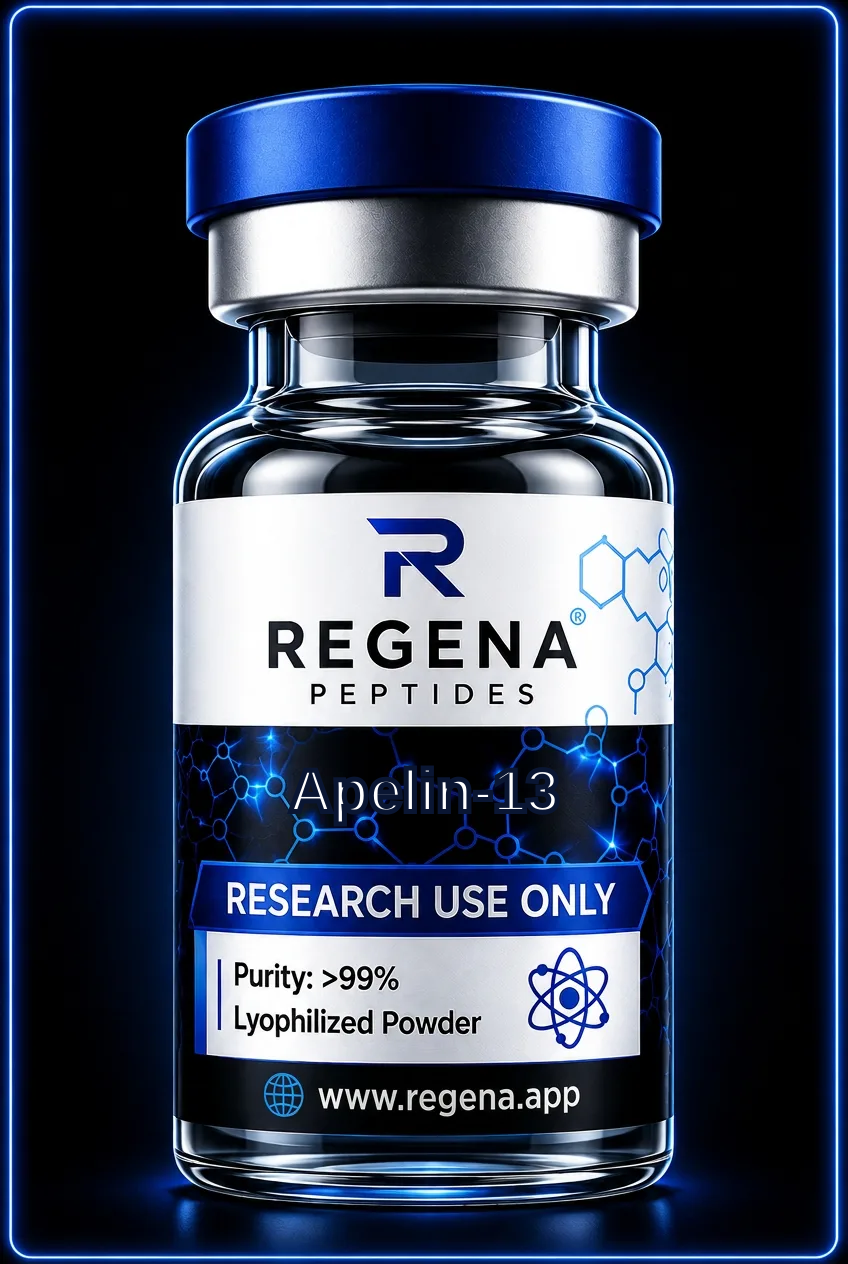
Cardiovascular · Neuropeptide
Apelin-13
Also known as pGlu-Apelin-13
A 13-amino-acid endogenous ligand for the APJ receptor, used in research on cardiovascular function and fluid balance.
- Length
- 13 amino acids
- Half-life
- Less than 5 minutes in plasma
- Mechanism
- Functions as an endogenous ligand for the G protein-coupled APJ receptor (APLNR), modulating cardiovascular, metabolic, and neurological functions.
- Studied in
- Investigated in laboratory models for its effects on cardiac contractility (inotropism), blood pressure regulation, and fluid homeostasis.
About Apelin-13
Apelin-13 is one of the most abundant and active isoforms of the apelin peptide family, which are all derived from a 77-amino-acid precursor protein called preproapelin. This specific fragment consists of 13 amino acids and is often found with a pyroglutamyl modification at its N-terminus, which enhances its stability against degradation by aminopeptidases.
It exerts its biological effects by binding to and activating the APJ receptor, a G protein-coupled receptor. The apelin/APJ system is a key regulator of cardiovascular function, known to induce vasodilation and increase cardiac output. For these reasons, Apelin-13 is widely used as a research tool to probe the physiology and pathophysiology of the cardiovascular system in vitro and in vivo.
Laboratory notes
- The pyroglutamyl (pGlu) modification on the N-terminal glutamine residue protects the peptide from rapid enzymatic degradation, increasing its functional half-life in experimental systems.
- Other major apelin isoforms include Apelin-36 and Apelin-17, which may have different pharmacokinetic profiles.
- It is a potent inotrope and vasodilator, effects which can be directly measured in isolated heart (Langendorff) preparations and vascular ring assays.
Storage and reconstitution basics: storage guide.
Questions about Apelin-13
What is the difference between Apelin-13 and Apelin-36?
Apelin-13 and Apelin-36 are different isoforms cleaved from the same precursor protein. While both activate the APJ receptor, their difference in size and structure may lead to variations in receptor binding kinetics, tissue distribution, and degradation rates.
What is the APJ receptor?
The APJ receptor, also known as APLNR, is a G protein-coupled receptor that was initially an 'orphan' receptor until apelin was identified as its endogenous ligand. It is highly expressed in the heart, blood vessels, and central nervous system.
Why is the pyroglutamyl modification important?
The conversion of the N-terminal glutamine to pyroglutamic acid makes the peptide resistant to cleavage by aminopeptidases, which are enzymes that degrade peptides from the N-terminus. This modification increases its stability in biological samples and in vivo.
Is Apelin-13 for human use?
No. It is supplied strictly for in-vitro laboratory research and is not for human or animal consumption.
Related research peptides
All products are sold for laboratory research use only. Not for human consumption, not a medicine, not for diagnosing, treating or preventing any condition.