
Hormone · Synthetic competitive gonadotrophin-releasing hormone receptor antagonist
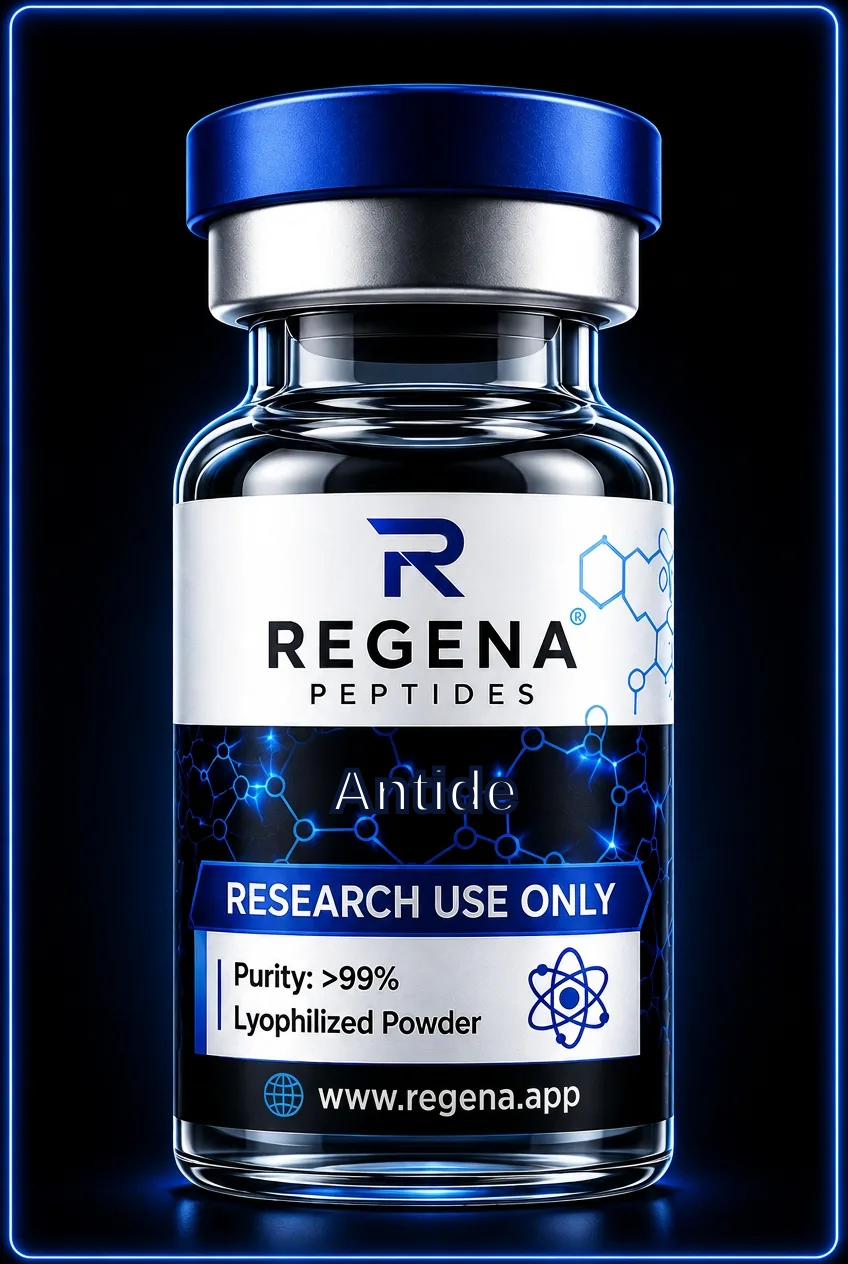
Antide
Also known as —
A modified GnRH decapeptide antagonist used to dissect receptor blockade, gonadotroph signalling and endocrine feedback.
- Length
- 10 amino acids
- Half-life
- Not well characterised
- Mechanism
- Antide competitively occupies GnRHR, preventing GnRH-dependent receptor activation and downstream phospholipase C–calcium signalling. Its antagonism does not require the initial receptor stimulation associated with GnRH agonists.
- Studied in
- Receptor-binding assays, pituitary cell cultures and animal endocrine models use antide to investigate competitive GnRH blockade and feedback-dependent gonadotrophin regulation.
About Antide
Antide is a synthetic decapeptide developed through GnRH antagonist structure–activity programmes. Rather than preserving the native agonist sequence, it incorporates multiple D-amino acids and non-proteinogenic residues, together with an acetylated N-terminus and amidated C-terminus. Distinctive features include nicotinoyl-modified lysine residues at positions 5 and 6 and an isopropyl-substituted lysine at position 8. These modifications support receptor binding while preventing the productive activation characteristic of the natural hormone.
Antide provides a pharmacological contrast to agonists because its immediate effect in a responsive assay is inhibition of GnRH-driven signalling. Binding-displacement experiments examine receptor affinity, while functional antagonist assays quantify changes in GnRH concentration–response relationships. Pituitary cultures connect receptor blockade with gonadotrophin secretion, and animal models incorporate endocrine feedback. Antagonist potency is assay-dependent: agonist concentration, equilibration time, receptor expression and peptide availability can all affect the apparent degree of inhibition.
Laboratory notes
- Use batch-specific solubility guidance and check for precipitation after dilution into the final assay buffer.
- Include an agonist-only control, an antide-only condition and a range of GnRH concentrations when characterising antagonism.
- Verify modified-residue identity using appropriate analytical documentation; routine mass confirmation cannot resolve every stereochemical or positional difference.
Storage and reconstitution basics: storage guide.
Questions about Antide
Is antide an agonist that later causes desensitisation?
No. Antide is a receptor antagonist that blocks GnRH-dependent activation rather than relying on sustained agonist stimulation.
What are its distinctive lysine modifications?
Antide contains nicotinoyl-modified lysine residues at positions 5 and 6, with D stereochemistry at position 6, and an isopropyl-substituted lysine at position 8.
Is one inhibitory concentration sufficient to establish competitive antagonism?
No. A single inhibition measurement is insufficient. GnRH concentration–response curves across several antagonist concentrations, with suitable equilibration and controls, provide stronger mechanistic evidence.
Is Antide for human use?
No. It is supplied strictly for in-vitro laboratory research and is not for human or animal consumption.
Related research peptides
All products are sold for laboratory research use only. Not for human consumption, not a medicine, not for diagnosing, treating or preventing any condition.