
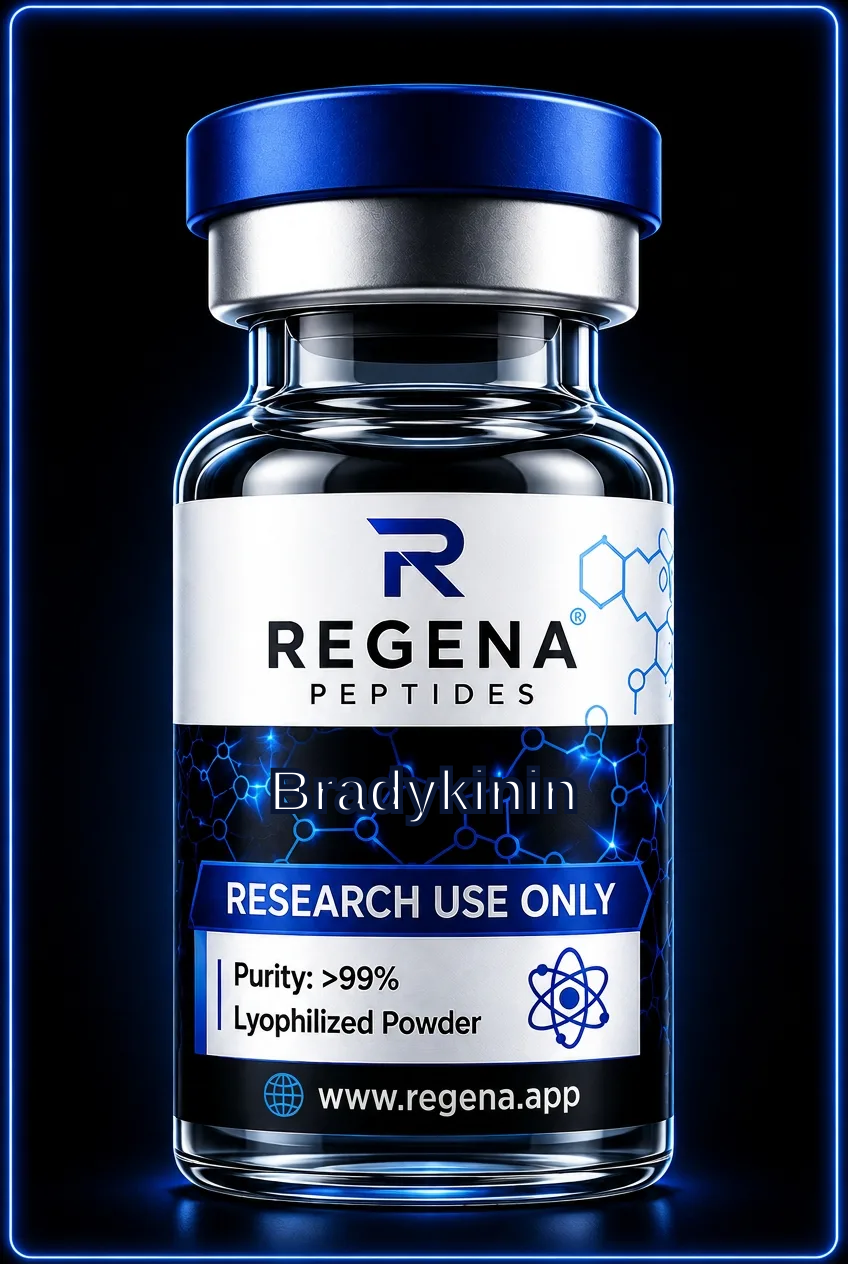
Cardiovascular · Nonapeptide
Bradykinin
A short-lived nonapeptide used in lab research to investigate vasodilation, inflammation, and pain signaling via B1 and B2 receptors.
- Length
- 9 amino acids
- Half-life
- Less than 30 seconds (in plasma)
- Mechanism
- Acts on bradykinin B1 and B2 receptors, which are GPCRs, to produce vasodilation, increased vascular permeability, and pain receptor sensitization.
- Studied in
- Employed in laboratory models to study mechanisms of inflammation, pain signaling, vasodilation, and the function of the kallikrein-kinin system.
About Bradykinin
Bradykinin is a 9-amino acid peptide that is a potent mediator of inflammation. It is generated locally in tissues from its precursor, kininogen, by the action of enzymes called kallikreins. Its powerful but transient effects make it a key molecule in processes like tissue injury and immune responses.
The peptide exerts its effects by binding to two G-protein coupled receptors, the constitutively expressed B2 receptor and the inducible B1 receptor. In research, bradykinin is used as a tool to induce inflammatory responses, such as vasodilation in vascular preparations and paw edema in animal models. It is also fundamental to studies of the kallikrein-kinin system and its interaction with other systems like the renin-angiotensin system, as ACE is a primary enzyme responsible for bradykinin's degradation.
Laboratory notes
- Extremely short plasma half-life due to rapid degradation by kininases, including angiotensin-converting enzyme (ACE).
- For experiments requiring sustained action, co-administration with a peptidase inhibitor may be necessary.
- Prepare solutions fresh for each experiment as the peptide is unstable in aqueous solution.
Storage and reconstitution basics: storage guide.
Questions about Bradykinin
What are the main receptors for bradykinin?
Bradykinin acts on two main receptor subtypes: the B2 receptor, which is typically expressed constitutively, and the B1 receptor, which is often induced by inflammation or tissue injury.
Why is bradykinin's half-life so short?
It is rapidly broken down and inactivated by enzymes called kininases, most notably angiotensin-converting enzyme (ACE), which are abundant in plasma and tissues like the lungs.
What physiological processes is bradykinin used to study?
It is a standard tool for investigating vasodilation, vascular permeability, inflammation, and nociceptor (pain receptor) activation in a variety of in vitro and in vivo models.
Is Bradykinin for human use?
No. It is supplied strictly for in-vitro laboratory research and is not for human or animal consumption.
Related research peptides
All products are sold for laboratory research use only. Not for human consumption, not a medicine, not for diagnosing, treating or preventing any condition.