
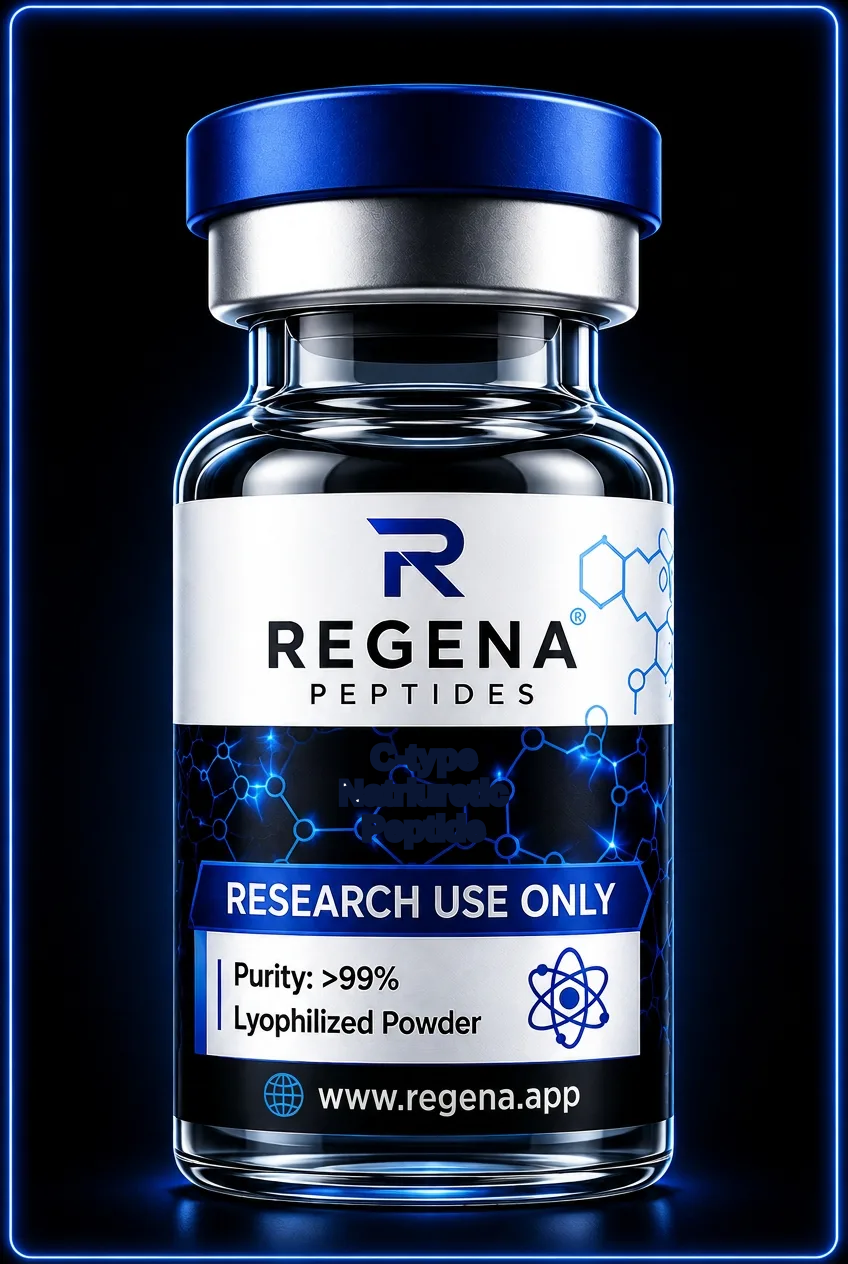
Cardiovascular · Natriuretic Peptide
C-type Natriuretic Peptide (CNP)
A 22-amino-acid peptide in the natriuretic family, primarily signaling through NPR-B for research into skeletal development and vascular homeostasis.
- Length
- 22 amino acids
- Half-life
- Approx. 2-3 minutes (plasma)
- Mechanism
- CNP primarily signals through the natriuretic peptide receptor-B (NPR-B), increasing intracellular cyclic guanosine monophosphate (cGMP) levels.
- Studied in
- Laboratory models investigate its role in skeletal development, vascular homeostasis, and tissue fibrosis.
About C-type Natriuretic Peptide (CNP)
C-type Natriuretic Peptide (CNP) is a 22-amino-acid member of the natriuretic peptide family, which also includes atrial natriuretic peptide (ANP) and brain natriuretic peptide (BNP). Its structure contains a 17-amino-acid ring formed by a disulfide bond between two cysteine residues. Unlike ANP and BNP, which are primarily studied for systemic effects, CNP is produced mainly by endothelial cells and exerts more localized, paracrine effects.
Its biological activity is mediated through specific binding to natriuretic peptide receptor-B (NPR-B), a guanylyl cyclase-coupled receptor. Activation of NPR-B leads to the conversion of GTP to cGMP, which acts as a second messenger. This pathway is a subject of investigation in studies of endothelial function, bone growth, and vasodilation.
Laboratory notes
- CNP is susceptible to degradation by neutral endopeptidase (NEP); co-incubation with a NEP inhibitor may be required for certain ex-vivo assays.
- Due to its disulfide bridge, ensure complete reconstitution in an appropriate aqueous buffer before use; gentle swirling or brief sonication may assist dissolution.
- Store lyophilised peptide at -20°C or colder; reconstituted solutions should be used promptly or aliquoted and frozen to avoid multiple freeze-thaw cycles.
Storage and reconstitution basics: storage guide.
Questions about C-type Natriuretic Peptide (CNP)
What is the primary receptor for CNP?
CNP preferentially binds to and activates the natriuretic peptide receptor-B (NPR-B), with lower affinity for NPR-A.
How does CNP differ from ANP and BNP in research models?
In laboratory studies, CNP demonstrates more pronounced effects on bone growth and vascular smooth muscle relaxation, whereas ANP and BNP are primarily studied for their natriuretic and diuretic effects.
What is the standard form of CNP supplied?
This product is the 22-amino-acid form, CNP-22, which is the primary biologically active form.
Is C-type Natriuretic Peptide (CNP) for human use?
No. It is supplied strictly for in-vitro laboratory research and is not for human or animal consumption.
Related research peptides
All products are sold for laboratory research use only. Not for human consumption, not a medicine, not for diagnosing, treating or preventing any condition.