
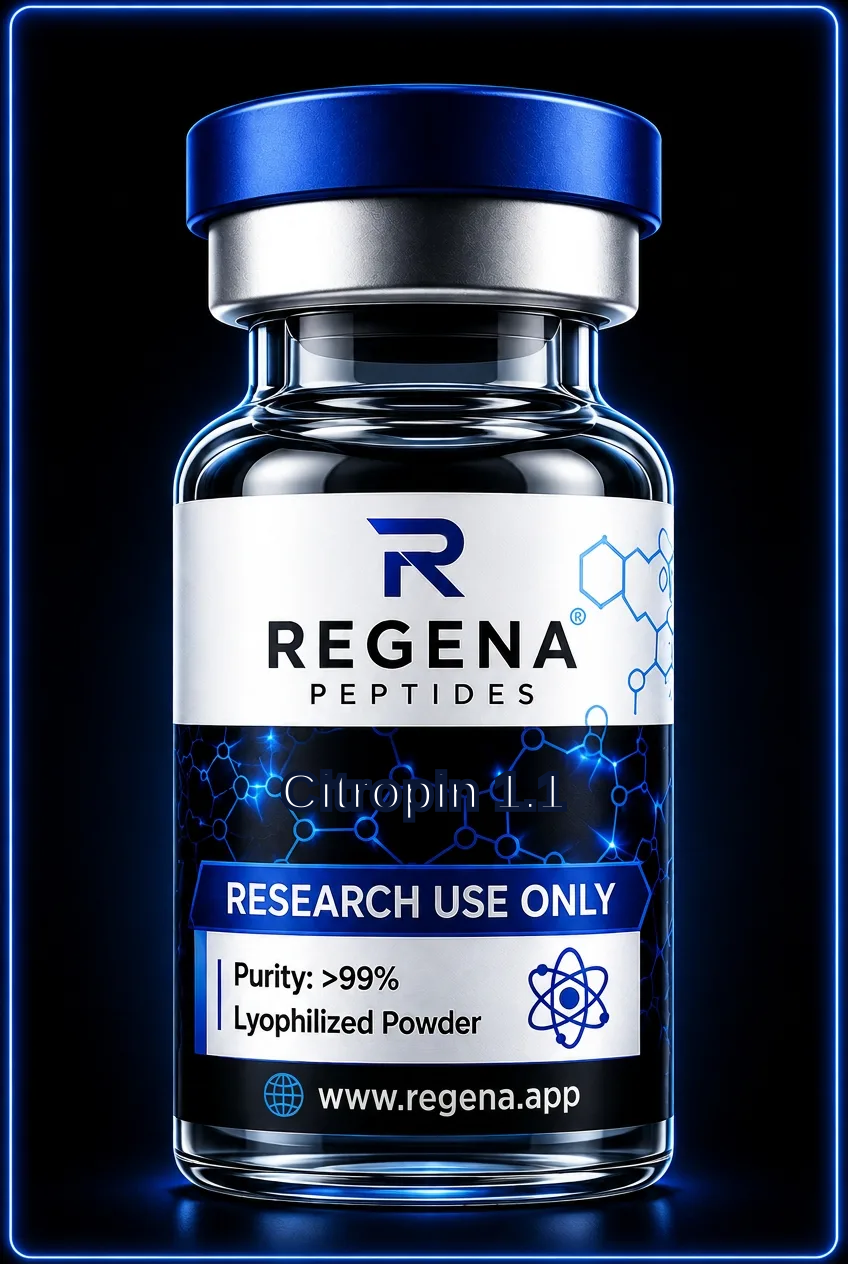
Antimicrobial · Linear cationic peptide
Citropin 1.1
A 16-amino acid antimicrobial peptide from the Litoria citropa frog, studied for its membrane-active properties and broad-spectrum activity.
- Length
- 16 amino acids
- Half-life
- Not well characterised
- Mechanism
- Citropin 1.1 functions by disrupting the integrity of microbial membranes, potentially through a carpet-like mechanism or by forming toroidal pores.
- Studied in
- In vitro research focuses on its antimicrobial spectrum, its synergistic effects with other compounds, and its lytic activity against various cell types.
About Citropin 1.1
Isolated from the Blue Mountains tree frog, Litoria citropa, Citropin 1.1 is a small, 16-residue host defense peptide. It is a member of the citropin family, characterized by a highly cationic nature and a lack of cysteine residues. The sequence is GLFDVIKKVASVIGGL-NH2.
Its mode of action involves direct interaction with the anionic phospholipids of bacterial membranes. Upon binding, it aggregates on the membrane surface and disrupts its structure, leading to increased permeability and cell death. Research models explore its efficacy against bacteria and fungi, as well as its hemolytic potential.
Laboratory notes
- The C-terminal amidation is a key structural feature for its biological activity and stability against carboxypeptidases.
- Due to its amphipathic nature, it may require organic co-solvents like acetonitrile or DMSO for solubilisation at high concentrations.
- Verify sequence and purity via HPLC and mass spectrometry upon receipt for quality control.
Storage and reconstitution basics: storage guide.
Questions about Citropin 1.1
What is the source of Citropin 1.1?
It is a naturally occurring peptide found in the glandular secretions of the Australian tree frog Litoria citropa.
How many amino acids does Citropin 1.1 contain?
Citropin 1.1 is composed of a 16-amino acid sequence and is C-terminally amidated.
What kind of mechanism is proposed for its action?
The proposed mechanisms include the 'carpet model', where the peptide disrupts the membrane without forming stable pores, and the 'toroidal pore' model.
Is Citropin 1.1 for human use?
No. It is supplied strictly for in-vitro laboratory research and is not for human or animal consumption.
Related research peptides
All products are sold for laboratory research use only. Not for human consumption, not a medicine, not for diagnosing, treating or preventing any condition.