
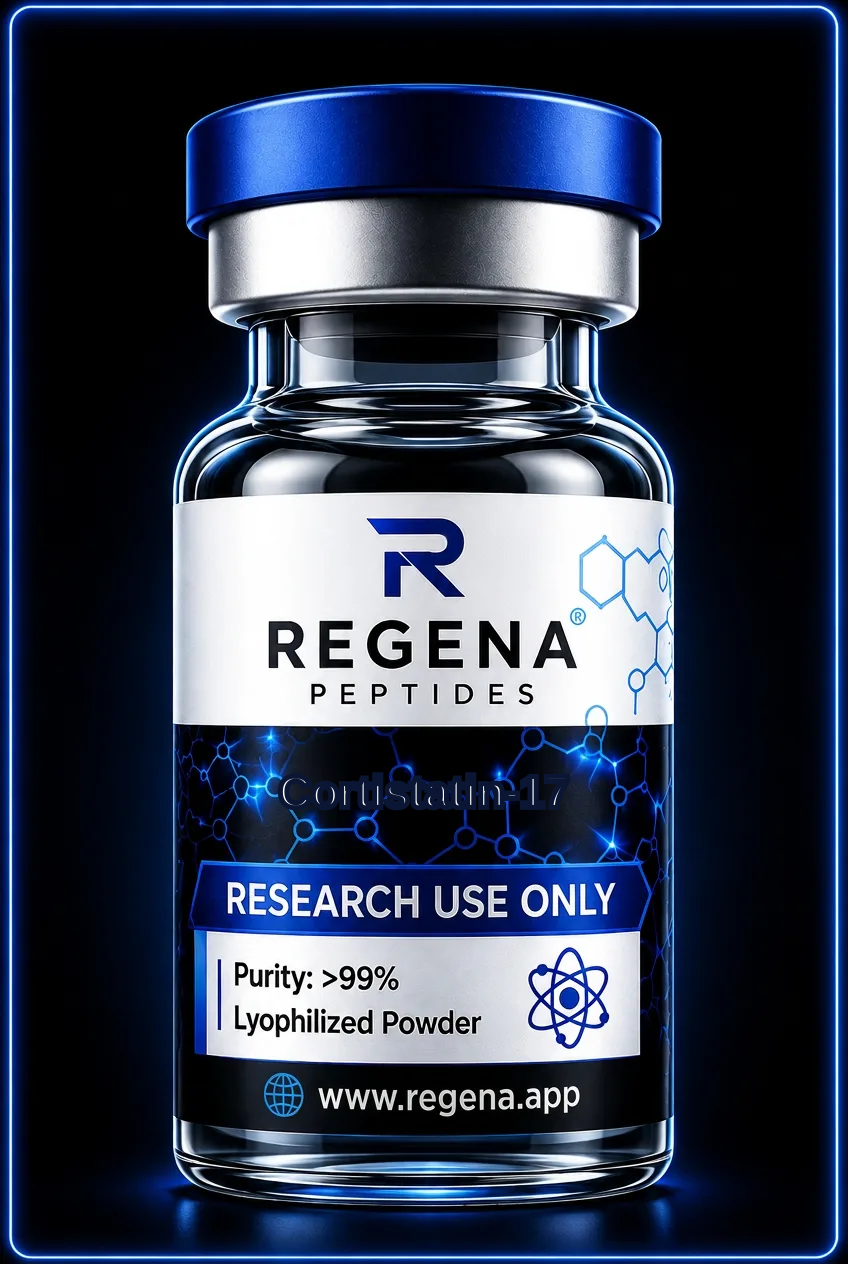
Other · Disulphide-cyclised somatostatin-related neuropeptide
Cortistatin-17
Also known as CST-17; CORT-17
Human cortistatin sequence studied in somatostatin receptor assays and comparative neuroendocrine signalling.
- Length
- 17 amino acids
- Half-life
- Not well characterised
- Mechanism
- Cortistatin-17 binds and activates somatostatin receptors SSTR1–SSTR5, engaging predominantly Gi/o-linked signalling. Interactions with the growth hormone secretagogue receptor have also been reported, although their functional significance is less firmly established and depends on the experimental system.
- Studied in
- Receptor-transfected cells, endocrine cell systems and immune-cell cultures use Cortistatin-17 to examine receptor pharmacology and context-dependent signalling.
About Cortistatin-17
Cortistatin-17 is a mature peptide derived from the human cortistatin precursor encoded by CORT. Its sequence is DRMPCRNFFWKTFSSCK, and an intramolecular disulphide bond links Cys5 to Cys16. Identification of the human precursor followed the original characterisation of cortistatin in rat cortex. The 17-residue form preserves the somatostatin-related cyclic region while differing from rat Cortistatin-14 in both length and sequence, so the two should not be treated as interchangeable analytical standards.
Experimental characterisation centres on somatostatin receptor binding and downstream signalling, including cyclic AMP responses in defined receptor-expression systems. Endocrine and immune-cell studies examine how receptor expression changes the response to this ligand. Reports of interactions beyond the somatostatin receptor family require careful distinction between binding observations and demonstrated functional signalling. Comparisons with somatostatin, receptor-negative cells and selective receptor perturbations help establish which molecular target accounts for an observed laboratory response.
Laboratory notes
- Confirm the 17-residue sequence and Cys5–Cys16 disulphide configuration using appropriate batch characterisation.
- Document endogenous receptor expression in endocrine or immune-cell assays, as mixed receptor populations complicate interpretation.
- For proposed non-SSTR activity, include orthogonal binding and functional assays rather than relying on a single readout.
Storage and reconstitution basics: storage guide.
Questions about Cortistatin-17
Is Cortistatin-17 simply Cortistatin-14 with three extra residues?
No. The conventional human 17-residue and rat 14-residue sequences also differ within the corresponding peptide region.
Which receptor family is best established for Cortistatin-17?
The somatostatin receptor family, SSTR1–SSTR5, has the clearest established pharmacological relationship.
Does receptor binding prove functional activation?
No. Binding establishes an interaction under the assay conditions; activation requires a separate functional readout and suitable receptor controls.
Is Cortistatin-17 for human use?
No. It is supplied strictly for in-vitro laboratory research and is not for human or animal consumption.
Related research peptides
All products are sold for laboratory research use only. Not for human consumption, not a medicine, not for diagnosing, treating or preventing any condition.