
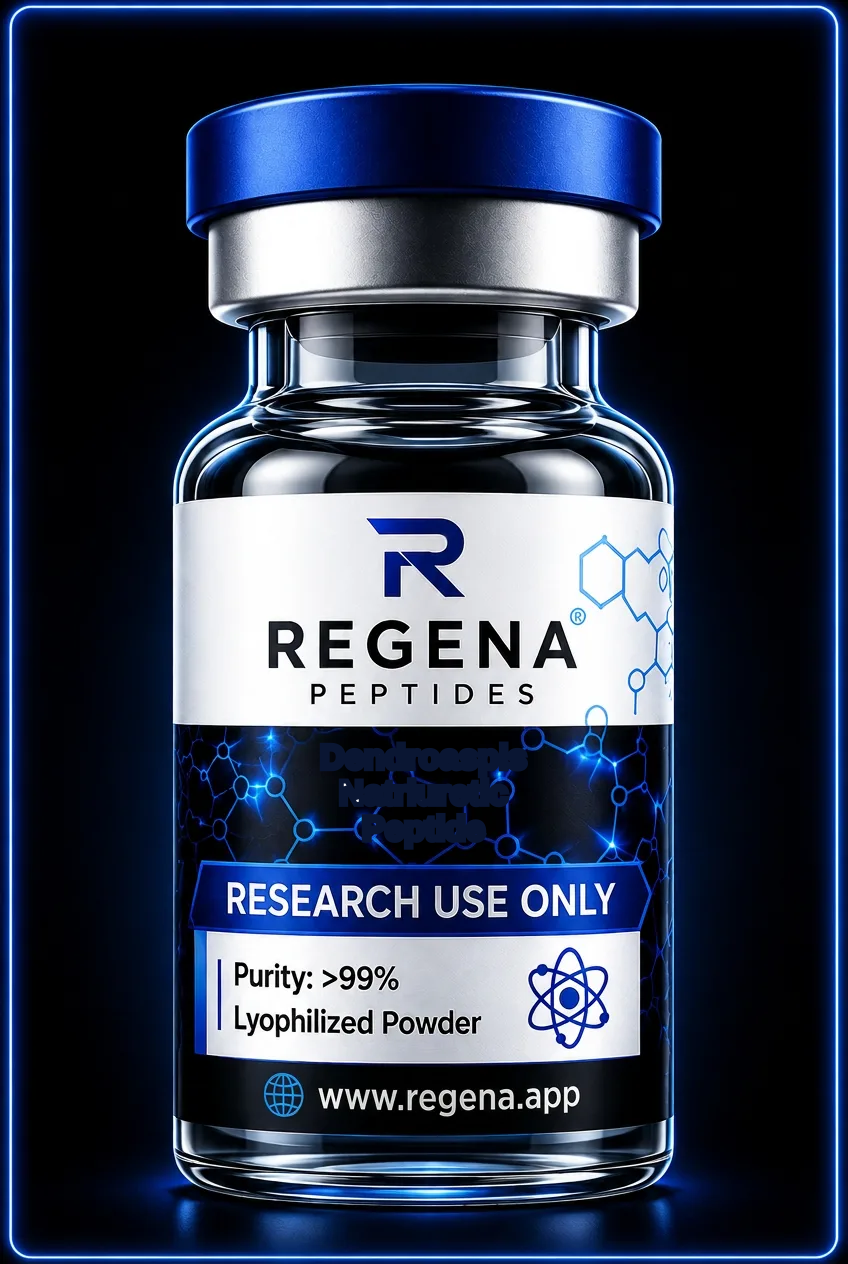
Cardiovascular · Venom-derived natriuretic peptide
Dendroaspis Natriuretic Peptide (DNP)
Also known as DNP; dendroaspis natriuretic peptide
A 38-residue green mamba venom peptide that activates guanylyl cyclase-A and supports research into natriuretic peptide signalling.
- Length
- 38 amino acids
- Half-life
- Not well characterised
- Mechanism
- DNP activates natriuretic peptide receptor-A, also called guanylyl cyclase-A, promoting intracellular cGMP production. Its disulphide-constrained ring supports receptor activation, while its terminal extensions influence its biochemical and pharmacological properties.
- Studied in
- Receptor-expressing cells, isolated vascular tissues and animal renal and cardiovascular models are used to study DNP-dependent cGMP signalling and peptide degradation.
About Dendroaspis Natriuretic Peptide (DNP)
DNP was isolated from the venom of the green mamba, Dendroaspis angusticeps, and described in the early 1990s. Its 38-residue sequence contains the characteristic 17-residue disulphide-bonded ring of natriuretic peptides, flanked by N-terminal and C-terminal extensions. The relatively long C-terminal tail distinguishes it from several mammalian family members. This architecture makes DNP a useful comparative molecule for investigating how conserved ring structures and variable terminal regions contribute to receptor recognition.
The principal established signalling target is guanylyl cyclase-A, encoded by NPR1 and also known as NPR-A. Activation increases cGMP, which can be quantified directly in receptor-expression systems or linked to downstream responses in isolated tissues. DNP has also been examined for differences in proteolytic susceptibility relative to mammalian natriuretic peptides. Reports of DNP-like immunoreactivity in mammalian samples require caution because antibody recognition alone does not establish the presence of the authentic venom peptide.
Laboratory notes
- Verify the oxidised monomer and intramolecular disulphide bond; reduced or intermolecularly linked material may behave differently.
- Use receptor-defined cells and account for phosphodiesterase activity when interpreting cGMP accumulation.
- Confirm peptide identity by mass spectrometry when investigating DNP-like immunoreactivity in biological samples.
Storage and reconstitution basics: storage guide.
Questions about Dendroaspis Natriuretic Peptide (DNP)
What distinguishes DNP structurally from mammalian natriuretic peptides?
It retains the conserved disulphide-bonded ring but has distinctive terminal sequences, including a comparatively long C-terminal extension.
Which receptor is the main target in functional assays?
NPR-A, or guanylyl cyclase-A, is the principal established receptor for DNP-driven cGMP production.
Does DNP-like immunoreactivity identify an endogenous mammalian DNP?
Not by itself. Cross-reactive molecules can produce immunoassay signals, so orthogonal sequence or mass-spectrometric evidence is needed.
Is Dendroaspis Natriuretic Peptide (DNP) for human use?
No. It is supplied strictly for in-vitro laboratory research and is not for human or animal consumption.
Related research peptides
All products are sold for laboratory research use only. Not for human consumption, not a medicine, not for diagnosing, treating or preventing any condition.