
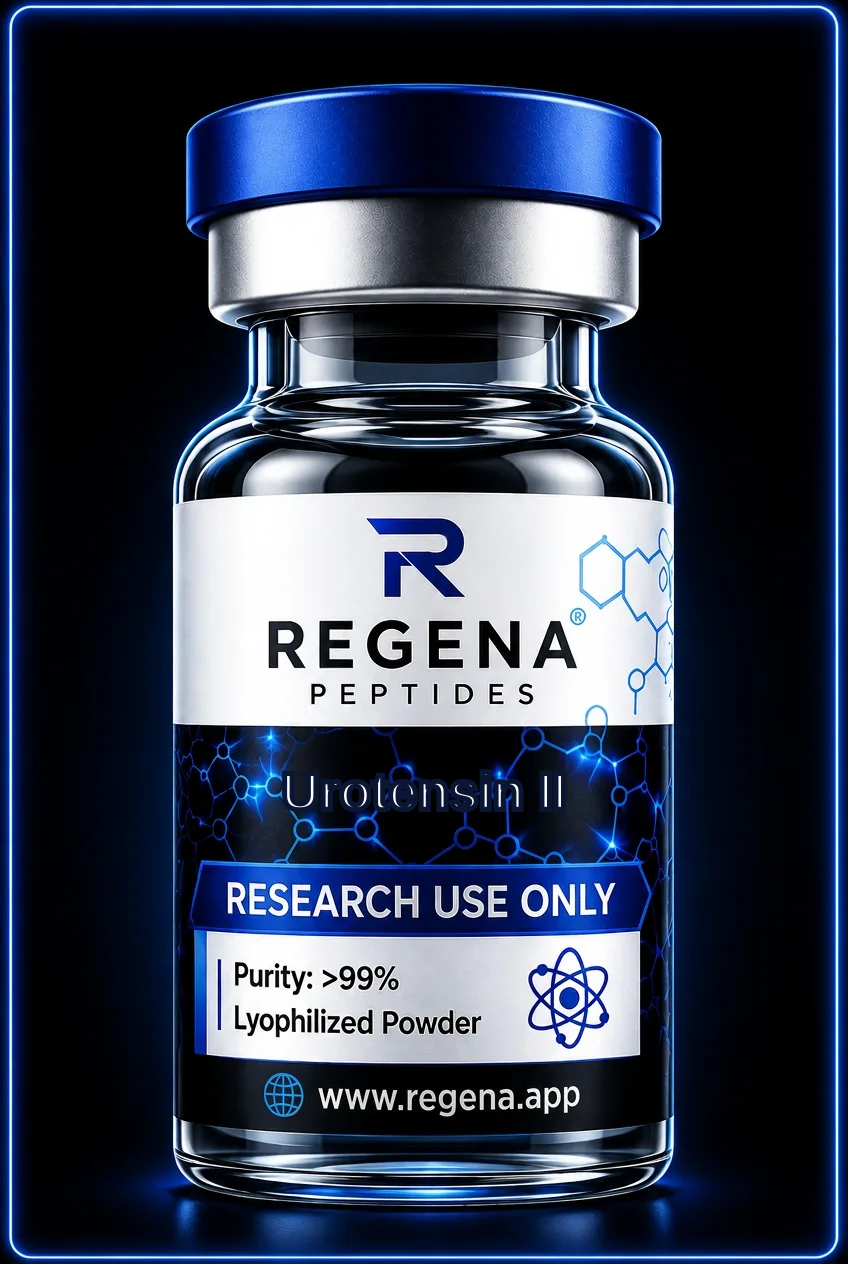
Cardiovascular · Cyclic peptide
Urotensin II
Also known as U-II
Urotensin II is a cyclic peptide ligand for the GPR14 receptor, studied in lab models for its potent effects on vascular and renal systems.
- Length
- 11 amino acids
- Half-life
- Approximately 10 minutes in human plasma
- Mechanism
- Urotensin II is the endogenous ligand for the G protein-coupled receptor GPR14, also known as the urotensin receptor (UT).
- Studied in
- Laboratory investigations focus on its potent vasoconstrictive properties and its role in models of cardiovascular and renal function.
About Urotensin II
Urotensin II is a cyclic peptide hormone, originally isolated from fish urophysis. The human form is composed of 11 amino acids and features a disulfide bridge between Cys5 and Cys10, creating a cyclic structure essential for its biological activity. This structural motif is conserved across various species, though the peptide sequence can vary.
It acts as a high-affinity ligand for the urotensin receptor (UT), a G protein-coupled receptor. Activation of the UT receptor initiates intracellular signaling cascades, primarily through the Gq/11 pathway, leading to an increase in intracellular calcium and subsequent cellular responses, such as smooth muscle contraction. Research models explore its effects in cardiovascular, renal, and central nervous systems.
Laboratory notes
- Urotensin II is highly susceptible to oxidative degradation; handle with inert gas and use antioxidant-containing buffers.
- Due to its potent vasoconstrictor activity, in-vitro vessel contractility assays require precise concentration control.
- Solubility is best achieved in dilute acidic solutions, such as 0.1% acetic acid, before further dilution in aqueous buffers.
Storage and reconstitution basics: storage guide.
Questions about Urotensin II
What is the primary receptor for Urotensin II?
Urotensin II binds with high affinity to the G protein-coupled receptor GPR14, also designated as the urotensin receptor (UT).
Is the cyclic structure critical for its function?
Yes, the disulfide bridge forming the cyclic hexapeptide loop is considered essential for receptor binding and subsequent biological activity.
What is a common application in laboratory research?
It is frequently used as a tool compound in isolated organ bath experiments to study vascular smooth muscle contraction and cardiovascular physiology.
Is Urotensin II for human use?
No. It is supplied strictly for in-vitro laboratory research and is not for human or animal consumption.
Related research peptides
All products are sold for laboratory research use only. Not for human consumption, not a medicine, not for diagnosing, treating or preventing any condition.