
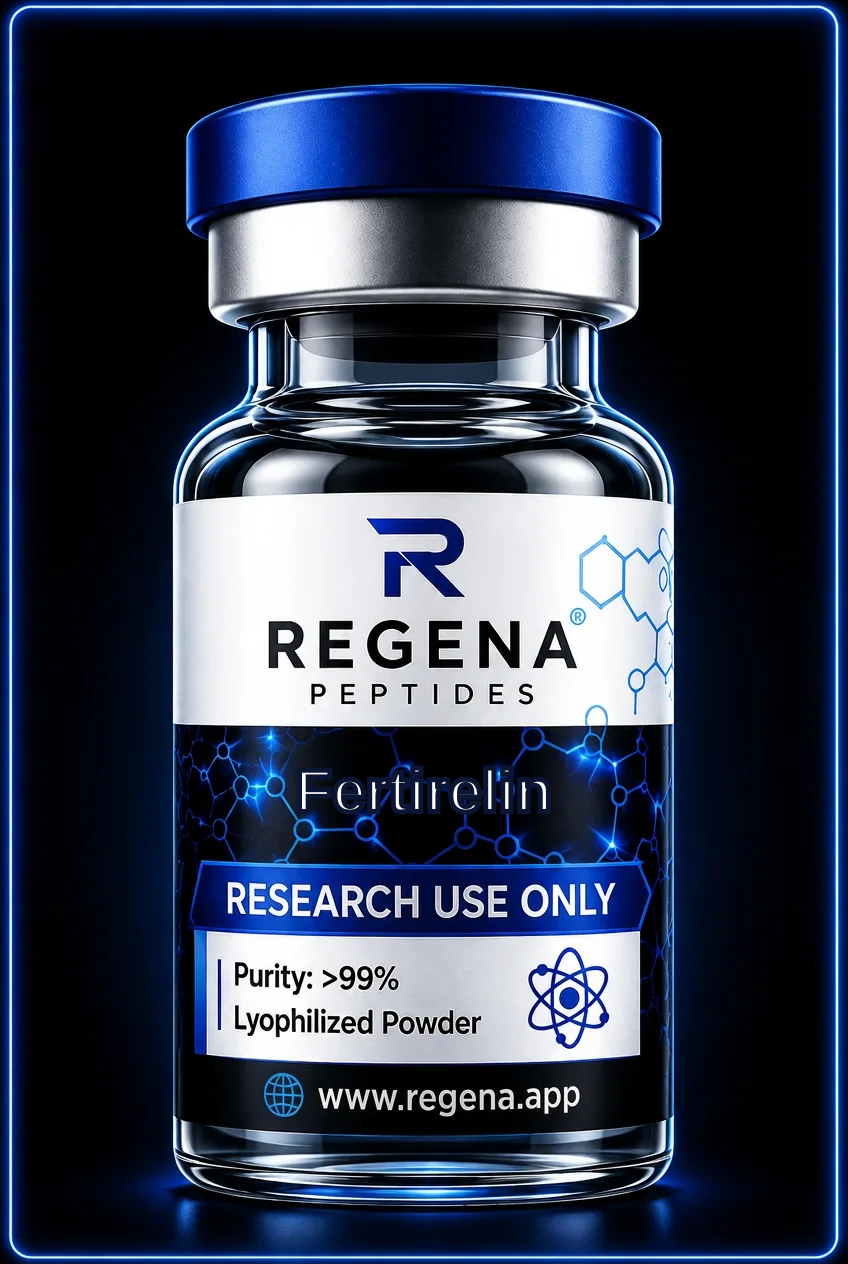
Hormone · Synthetic gonadotrophin-releasing hormone receptor agonist
Fertirelin
Also known as —
A C-terminally modified GnRH nonapeptide retaining native glycine at position 6, used in receptor and pituitary signalling research.
- Length
- 9 amino acids
- Half-life
- Not well characterised
- Mechanism
- Fertirelin acts as a GnRHR agonist, activating Gq/11-linked phospholipase C signalling and intracellular calcium mobilisation. In responsive gonadotroph models, this signalling stimulates luteinising hormone and follicle-stimulating hormone secretion.
- Studied in
- Pituitary preparations, receptor-based assays and animal reproductive-endocrine models study fertirelin's agonist activity and the functional consequences of GnRH C-terminal modification.
About Fertirelin
Fertirelin is a relatively conservative structural analogue of mammalian GnRH. It retains the native sequence through proline at position 9, including glycine at position 6, but replaces the terminal glycinamide with an N-ethylamide group. The resulting molecule contains nine amino acid residues rather than ten. Its design reflects early GnRH structure–activity work investigating how modifications at the C-terminus affect agonist activity while preserving the hormone's N-terminal receptor-activating region.
Unlike several other synthetic GnRH agonists, fertirelin does not introduce a D-amino acid at position 6. This makes it a useful structural comparator when examining contributions from C-terminal modification versus substitutions within the peptide backbone. Laboratory endpoints include receptor-mediated calcium signalling, phosphoinositide turnover and gonadotrophin secretion from pituitary preparations. Interpretation requires attention to peptide degradation and assay duration, because measured functional activity reflects both receptor pharmacology and peptide persistence in the experimental medium.
Laboratory notes
- Verify the nonapeptide sequence and proline N-ethylamide terminus against the supplier's analytical documentation.
- Assess peptide stability in serum-containing or protease-rich assay media rather than assuming stability from the stock solution.
- Compare with native GnRH and a position-6-modified analogue when investigating structure–activity relationships.
Storage and reconstitution basics: storage guide.
Questions about Fertirelin
Does fertirelin contain a D-amino acid at position 6?
No. Fertirelin retains glycine at position 6; glycine is achiral.
What is its main structural change from GnRH?
The native terminal glycinamide is replaced by an N-ethylamide attached to proline at position 9, producing a nine-residue analogue.
Why measure peptide stability alongside receptor activity?
Degradation can reduce the amount of intact peptide available during an assay. A weaker functional response may therefore reflect loss of peptide rather than lower intrinsic receptor activity.
Is Fertirelin for human use?
No. It is supplied strictly for in-vitro laboratory research and is not for human or animal consumption.
Related research peptides
All products are sold for laboratory research use only. Not for human consumption, not a medicine, not for diagnosing, treating or preventing any condition.