
Hormone · Neuropeptide
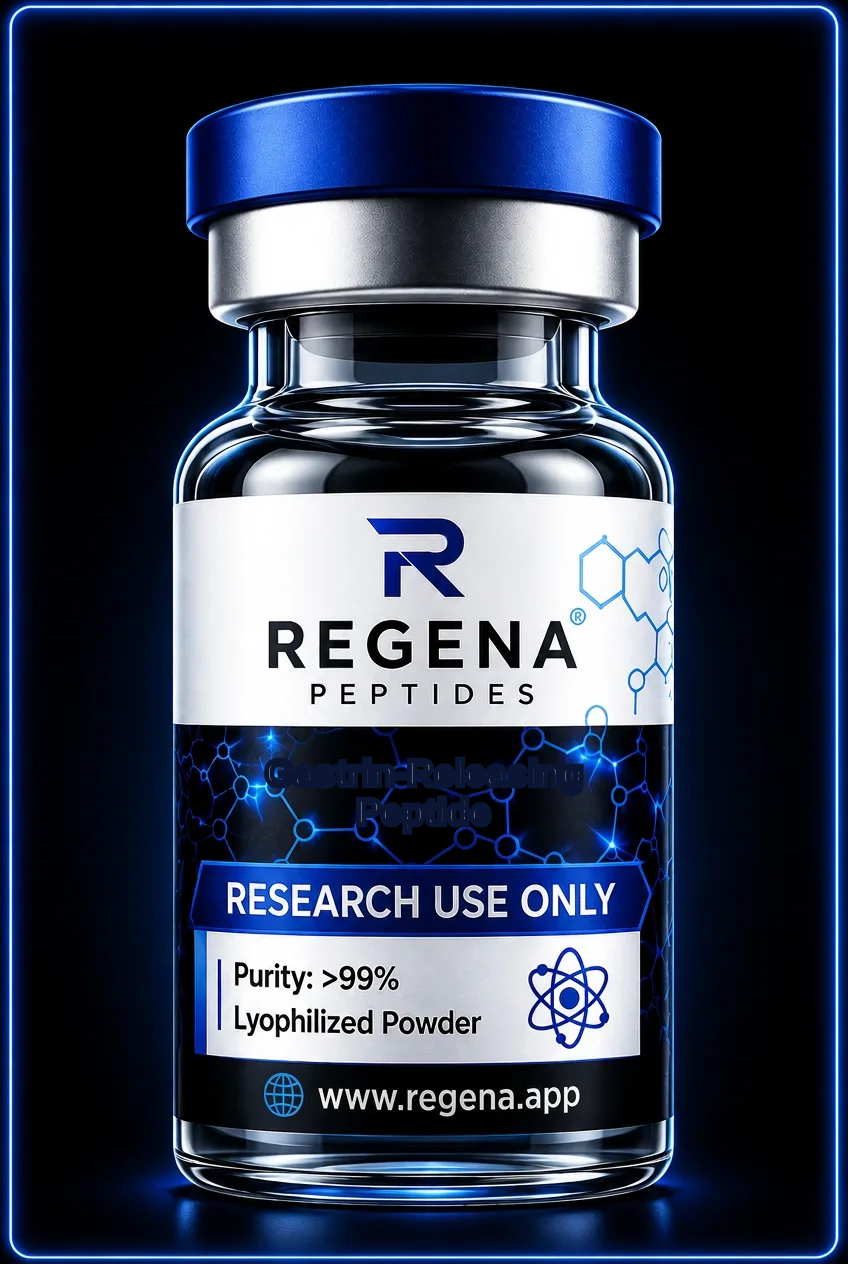
Gastrin-Releasing Peptide (GRP)
Also known as Mammalian Bombesin
A 27-amino acid neuropeptide and BB2R agonist used in laboratory models to investigate gastrointestinal function and neuromodulation.
- Length
- 27 amino acids
- Half-life
- Approximately 2-4 minutes in plasma
- Mechanism
- GRP functions as an agonist of the G protein-coupled bombesin receptor subtype 2 (BB2R), also known as the GRP receptor (GRPR).
- Studied in
- Research applications include studying its role in gastric acid secretion, gut motility, and neuronal signaling in both central and peripheral nervous systems.
About Gastrin-Releasing Peptide (GRP)
Gastrin-Releasing Peptide (GRP) is a 27-amino acid peptide, first isolated from the porcine stomach, and is the mammalian equivalent of the amphibian peptide bombesin. The C-terminal decapeptide sequence is highly conserved and is responsible for its full biological activity. GRP is expressed in neurons of the central nervous system and neuroendocrine cells of the gastrointestinal tract.
Its biological effects are mediated through high-affinity binding to the GRP receptor (GRPR/BB2), a Gq-coupled receptor that activates the phospholipase C signaling pathway. In laboratory preparations, GRP stimulation leads to the release of gastrin, regulation of smooth muscle contraction, and modulation of pancreatic enzyme secretion. It is also utilized in neuroscience research to probe its functions as a neurotransmitter or neuromodulator.
Laboratory notes
- GRP is readily soluble in aqueous solutions.
- For consistent results in cell-based assays, use fresh solutions, as the peptide can be susceptible to peptidase degradation.
- The C-terminal methioninamide is essential for receptor binding and activation.
Storage and reconstitution basics: storage guide.
Questions about Gastrin-Releasing Peptide (GRP)
What is the difference between GRP and Bombesin?
GRP is the mammalian homolog of bombesin, an amphibian peptide. They share a highly conserved C-terminal sequence and both bind to bombesin family receptors, but GRP binds with higher affinity to the GRPR (BB2) receptor.
How should I store reconstituted GRP?
After reconstitution, it is recommended to prepare single-use aliquots and store them at -20°C or colder to maintain peptide integrity.
Is this product suitable for human administration?
No. This peptide is sold as a high-purity chemical for laboratory research purposes only. It is not for human or veterinary use.
Is Gastrin-Releasing Peptide (GRP) for human use?
No. It is supplied strictly for in-vitro laboratory research and is not for human or animal consumption.
Related research peptides
All products are sold for laboratory research use only. Not for human consumption, not a medicine, not for diagnosing, treating or preventing any condition.