
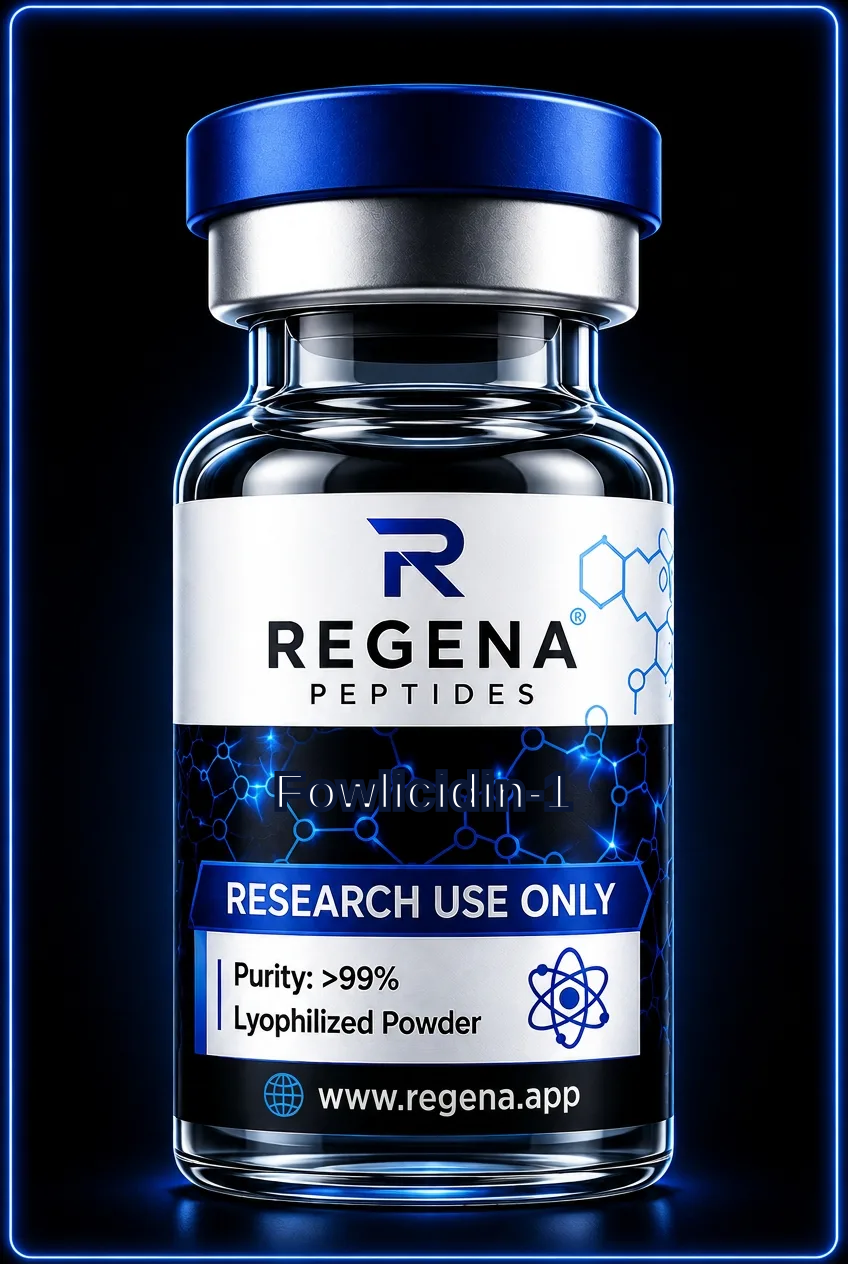
Antimicrobial · Avian cathelicidin antimicrobial peptide
Fowlicidin-1
Also known as Gallinacin-3
Fowlicidin-1 is a 26-amino-acid chicken cathelicidin studied for its ability to disrupt bacterial membranes and neutralize lipopolysaccharide (LPS).
- Length
- 26 amino acids
- Half-life
- Not well characterised
- Mechanism
- It disrupts bacterial membranes through pore formation and can also bind to bacterial lipopolysaccharide (LPS), neutralizing its endotoxic effects.
- Studied in
- Laboratory investigations examine its bactericidal activity, particularly against Gram-negative bacteria, and its capacity to neutralize endotoxins in vitro.
About Fowlicidin-1
Fowlicidin-1 is a cathelicidin-family antimicrobial peptide found in chickens (Gallus gallus). The mature peptide consists of 26 amino acids and is processed from a larger pro-peptide precursor. As a component of the avian innate immune system, it provides a model for studying host defense peptides in non-mammalian vertebrates.
The peptide exhibits a potent and rapid bactericidal effect, primarily by forming pores in microbial membranes. A key area of its research is its strong affinity for lipopolysaccharide (LPS), the major component of the outer membrane of Gram-negative bacteria. This binding can both facilitate membrane disruption and neutralize the endotoxic activity of LPS in various in vitro assay systems.
Laboratory notes
- Fowlicidin-1 is highly cationic and may adhere to negatively charged surfaces like standard glass or plastic; use low-protein-binding tubes.
- For LPS neutralization assays, pre-incubation of the peptide with LPS is a common experimental step.
- Store lyophilized powder at -20°C and reconstituted solutions in small aliquots at -80°C to avoid freeze-thaw cycles.
Storage and reconstitution basics: storage guide.
Questions about Fowlicidin-1
What is a cathelicidin?
Cathelicidins are a family of antimicrobial peptides found in vertebrates, characterized by a conserved N-terminal 'cathelin' domain and a variable C-terminal antimicrobial peptide domain, like Fowlicidin-1.
Is Fowlicidin-1 more active against certain types of bacteria?
In vitro studies frequently report high activity against Gram-negative bacteria, which is attributed to its strong interaction with LPS.
How does its structure relate to its function?
It forms an amphipathic α-helix in membrane-mimicking environments, which allows it to insert into and destabilize the lipid bilayer of bacterial cells.
Is Fowlicidin-1 for human use?
No. It is supplied strictly for in-vitro laboratory research and is not for human or animal consumption.
Related research peptides
All products are sold for laboratory research use only. Not for human consumption, not a medicine, not for diagnosing, treating or preventing any condition.