
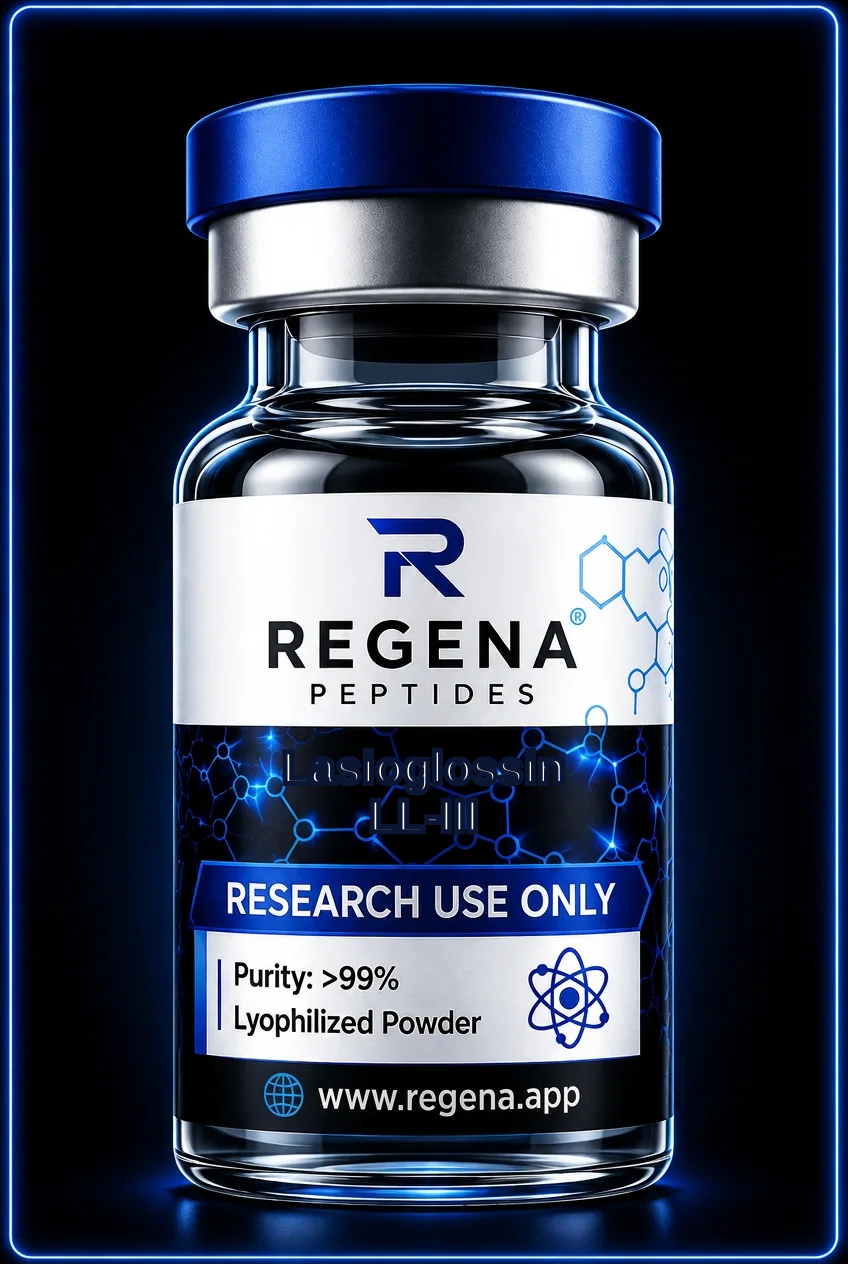
Antimicrobial · Insect antimicrobial peptide
Lasioglossin LL-III
Lasioglossin LL-III is a short, 13-amino-acid antimicrobial peptide from bee venom, studied for its potent membrane-disrupting activity in vitro.
- Length
- 13 amino acids
- Half-life
- Not well characterised
- Mechanism
- It disrupts microbial membranes by forming an alpha-helical structure that inserts into and permeabilizes the lipid bilayer.
- Studied in
- In vitro studies investigate its broad-spectrum antimicrobial activity and its cytolytic effects on various cell types, including bacterial and cancer cell lines.
About Lasioglossin LL-III
Lasioglossin LL-III is a short antimicrobial peptide originally identified in the venom of the halictid bee Lasioglossum laticeps. Its sequence is only 13 amino acids long, making it one of the shorter linear AMPs studied. Its simple structure and potent activity make it a useful model for investigating structure-function relationships in membrane-active peptides.
This peptide exhibits broad-spectrum activity in vitro by physically disrupting cell membranes. Upon contact with a lipid bilayer, it folds into an amphipathic alpha-helix, which allows it to create pores or carpet the membrane, leading to rapid cell lysis. Due to its non-specific lytic nature, its effects on both microbial and eukaryotic cells are often compared in laboratory research.
Laboratory notes
- As a short, highly cationic peptide, it is prone to adsorbing to labware; use low-adhesion microplates and pipette tips.
- Reconstitute with high-purity water or a weak acid solution (e.g., 0.1% acetic acid) to ensure complete solubilization.
- Activity can be highly sensitive to salt concentration in the assay buffer.
Storage and reconstitution basics: storage guide.
Questions about Lasioglossin LL-III
What is the source of Lasioglossin LL-III?
It is a synthetic peptide based on a sequence discovered in the venom of the Lasioglossum laticeps bee.
Why is its short length notable?
Its small size makes it a simple model for peptide synthesis and for studying the minimal structural requirements for antimicrobial membrane activity.
What does 'amphipathic' mean in this context?
It means the alpha-helical structure has a hydrophobic (water-repelling) face and a hydrophilic (water-attracting) face, allowing it to sit at the interface of the cell membrane's lipid and water environment.
Is Lasioglossin LL-III for human use?
No. It is supplied strictly for in-vitro laboratory research and is not for human or animal consumption.
Related research peptides
All products are sold for laboratory research use only. Not for human consumption, not a medicine, not for diagnosing, treating or preventing any condition.