
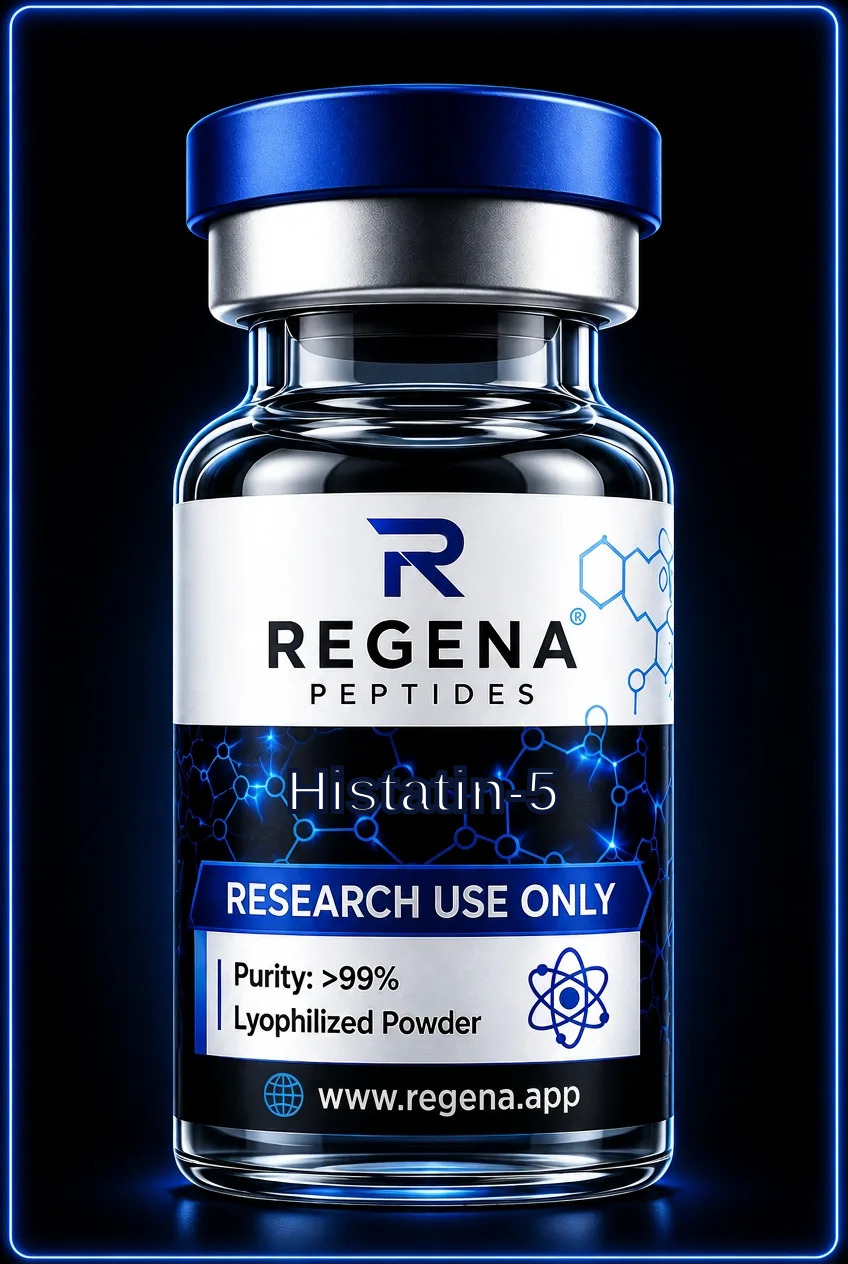
Antimicrobial · Salivary peptide
Histatin-5
Also known as Hst-5
A human salivary peptide of 24 amino acids, Histatin-5 is studied for its unique, non-lytic antifungal mechanism targeting fungal mitochondria.
- Length
- 24 amino acids
- Half-life
- Not well characterised
- Mechanism
- After being transported into fungal cells, it targets mitochondria, leading to the generation of reactive oxygen species (ROS) and cell death.
- Studied in
- Research focuses on its potent antifungal activity, particularly against Candida albicans, and its non-lytic, intracellular mechanism of action.
About Histatin-5
Histatin-5 is a 24-amino-acid, histidine-rich cationic peptide found in human saliva. It is part of the histatin family of proteins, which are key components of the innate immune defense system in the oral cavity. Unlike many other antimicrobial peptides, its primary role investigated in research is antifungal.
Its mechanism of action against fungi like Candida albicans is distinct from membrane disruption. Histatin-5 is actively transported into the fungal cytoplasm, where it localizes to the mitochondria and disrupts their function, triggering the production of reactive oxygen species (ROS) and initiating a cell death cascade. This intracellular targeting makes it a valuable tool for studying non-lytic antimicrobial pathways.
Laboratory notes
- Histatin-5 contains multiple histidine residues, making its net charge highly dependent on pH; buffer choice is critical for experiments.
- Its antifungal activity is often assayed in low-ionic-strength buffers, as salts can inhibit its uptake by fungal cells.
- Metal ions like copper(II) and zinc(II) can bind to histatins and modulate their activity, a factor to consider in media composition.
Storage and reconstitution basics: storage guide.
Questions about Histatin-5
Is Histatin-5's mechanism lytic?
No, its primary mechanism is non-lytic. It enters the fungal cell and targets intracellular organelles, specifically the mitochondria.
Where are histatins naturally found?
They are a family of proteins secreted by the parotid and submandibular glands into human saliva, contributing to oral homeostasis.
Why is the high histidine content significant?
The imidazole rings of the histidine residues are crucial for its metal-binding properties and contribute to its cationic nature at physiological pH.
Is Histatin-5 for human use?
No. It is supplied strictly for in-vitro laboratory research and is not for human or animal consumption.
Related research peptides
All products are sold for laboratory research use only. Not for human consumption, not a medicine, not for diagnosing, treating or preventing any condition.