
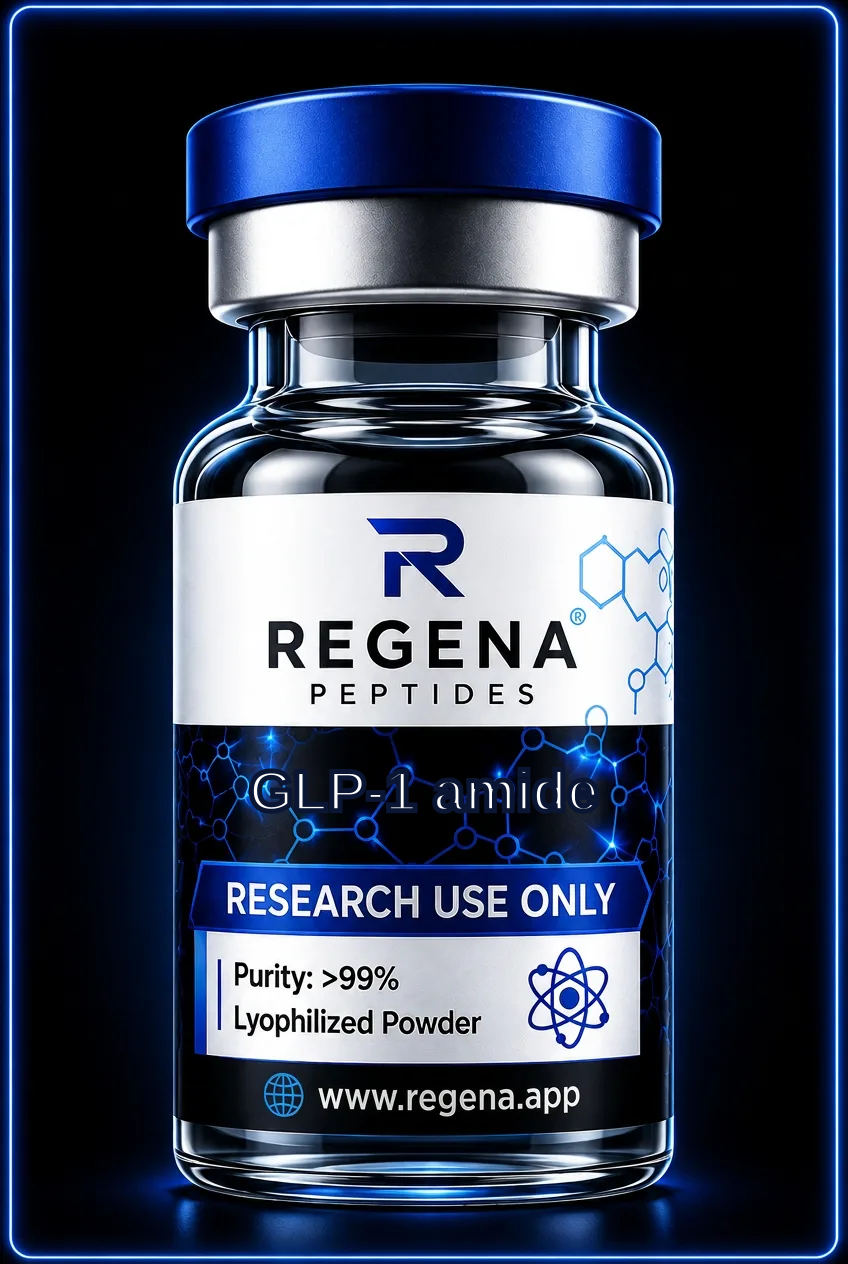
Metabolic · Peptide hormone
GLP-1 (7-36) amide
The primary active form of endogenous GLP-1, this incretin hormone is a GLP-1R agonist used in fundamental metabolic research.
- Length
- 30 amino acids
- Half-life
- Very short, approximately 2 minutes in plasma.
- Mechanism
- This endogenous incretin hormone is a potent agonist for the glucagon-like peptide-1 receptor (GLP-1R).
- Studied in
- It is a standard reference compound for studying glucose-dependent insulin secretion, beta-cell function, and the regulation of appetite and gastric emptying.
About GLP-1 (7-36) amide
Glucagon-like peptide-1 (7-36) amide is a 30-amino acid peptide hormone processed from the proglucagon gene. Secreted by intestinal L-cells in response to nutrient ingestion, it is a key component of the incretin system. It represents the major circulating, biologically active form of GLP-1 in humans.
The peptide is a reference compound with a clinical history. As a potent agonist for the GLP-1 receptor (GLP-1R), a class B G-protein coupled receptor, its activation stimulates insulin synthesis and secretion in a glucose-dependent manner. Its extremely short in vivo half-life, due to rapid degradation by the enzyme dipeptidyl peptidase-4 (DPP-4), has been a major focus of laboratory investigation aimed at developing more stable analogues.
Laboratory notes
- Rapidly degraded by DPP-4; for cell culture studies using serum, or for in vivo work, consider co-administration with a DPP-4 inhibitor.
- Reconstitute in sterile water or a suitable buffer like PBS. Verify solubility and clarity before use.
- Store lyophilised peptide at -20°C. For reconstituted aliquots, short-term storage at 4°C is possible, but -20°C or -80°C is recommended for long-term stability.
Storage and reconstitution basics: storage guide.
Questions about GLP-1 (7-36) amide
What is GLP-1 (7-36) amide?
It is the primary biologically active, endogenous form of glucagon-like peptide-1, an incretin hormone that regulates insulin secretion.
Why is its plasma half-life so short?
It is rapidly inactivated by the enzyme dipeptidyl peptidase-4 (DPP-4), which cleaves the first two N-terminal amino acids.
What is the primary function studied in the laboratory?
Its main role investigated in vitro is the glucose-dependent stimulation of insulin secretion from pancreatic beta-cells via the GLP-1 receptor.
Is GLP-1 (7-36) amide for human use?
No. It is supplied strictly for in-vitro laboratory research and is not for human or animal consumption.
Related research peptides
All products are sold for laboratory research use only. Not for human consumption, not a medicine, not for diagnosing, treating or preventing any condition.