
Antimicrobial · Cysteine-rich peptide, Defensin
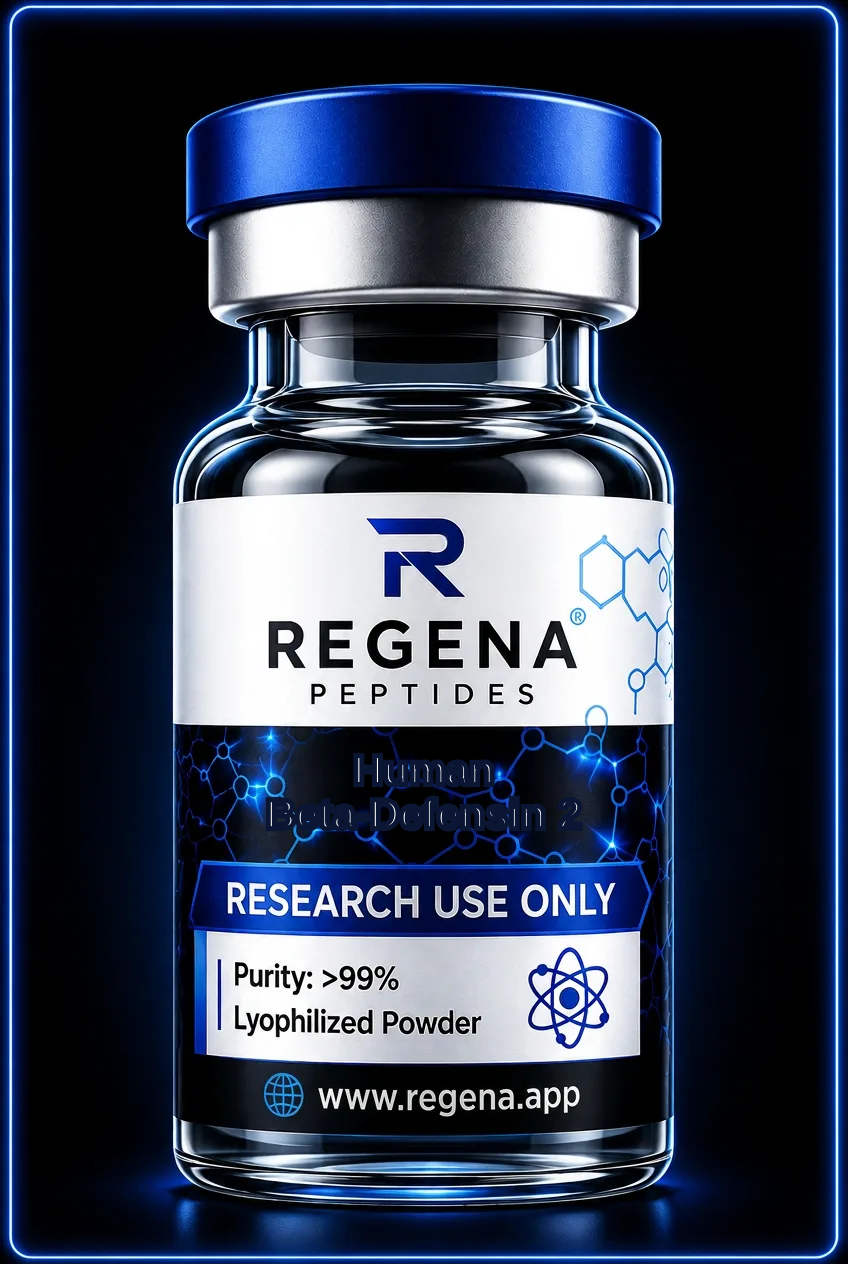
Human Beta-Defensin 2
Also known as HBD-2, DEFB4A
An inducible human defensin with potent antimicrobial and chemoattractant properties studied in models of infection and inflammation.
- Length
- 41 amino acids
- Half-life
- Not well characterised
- Mechanism
- This cationic peptide disrupts microbial membranes and acts as a chemoattractant for immune cells like memory T-cells and dendritic cells via the CCR6 receptor.
- Studied in
- Research focuses on its inducible expression in response to inflammatory stimuli and its dual antimicrobial and immunomodulatory functions in vitro.
About Human Beta-Defensin 2
Human Beta-Defensin 2 (HBD-2) is a key effector molecule of the innate immune system, induced in epithelial cells upon exposure to microbial products or pro-inflammatory cytokines. Like other beta-defensins, it possesses a conserved six-cysteine motif forming three disulfide bridges, which defines its folded structure and is essential for its biological activities.
In contrast to the constitutively expressed HBD-1, HBD-2 is a hallmark of the active inflammatory response. Laboratory studies use HBD-2 to examine its potent, salt-sensitive bactericidal activity, particularly against gram-negative bacteria. Furthermore, its function as a ligand for the chemokine receptor CCR6 is investigated using cell migration assays to understand its role in recruiting immune cells to sites of inflammation.
Laboratory notes
- The correct formation of three disulfide bonds is critical for both antimicrobial and chemotactic functions.
- When performing chemotaxis assays, use BSA-coated labware to minimize non-specific binding of the peptide.
- Store solutions containing HBD-2 in low-adsorption polypropylene tubes to prevent loss of material due to surface adhesion.
Storage and reconstitution basics: storage guide.
Questions about Human Beta-Defensin 2
What does 'inducible' mean for HBD-2?
Inducible means its production is significantly upregulated from low or undetectable baseline levels in response to specific signals, such as the presence of bacteria or inflammatory molecules like IL-1β and TNF-α.
What is a chemoattractant?
A chemoattractant is a substance that attracts motile cells, such as immune cells, to a specific location through a process called chemotaxis. HBD-2 attracts cells expressing the CCR6 receptor.
Why is its activity salt-sensitive?
The antimicrobial action of many cationic peptides relies on electrostatic attraction to negatively charged bacterial membranes. High salt concentrations can shield these charges, weakening the interaction and reducing the peptide's efficacy.
Is Human Beta-Defensin 2 for human use?
No. It is supplied strictly for in-vitro laboratory research and is not for human or animal consumption.
Related research peptides
All products are sold for laboratory research use only. Not for human consumption, not a medicine, not for diagnosing, treating or preventing any condition.