
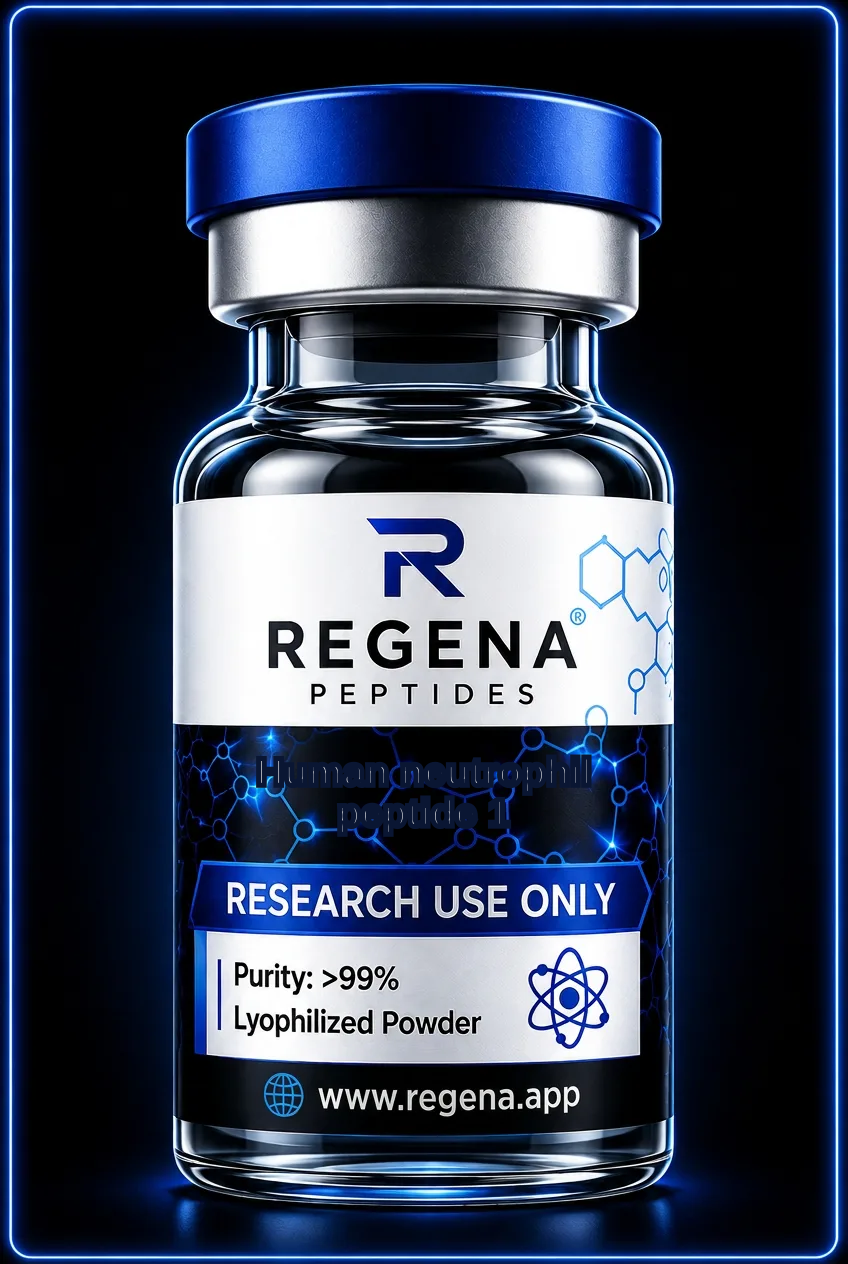
Antimicrobial · Disulphide-stabilised mammalian α-defensin
Human neutrophil peptide 1 (HNP-1)
Also known as HNP-1; human α-defensin 1
A 30-residue neutrophil α-defensin used to investigate disulphide-dependent structure, microbial membranes and lipid II binding.
- Length
- 30 amino acids
- Half-life
- Not well characterised
- Mechanism
- HNP-1 associates with microbial membranes and other molecular targets through its cationic, disulphide-stabilised structure, producing context-dependent membrane disruption and antimicrobial effects in laboratory assays. No single receptor accounts for its activity; binding to bacterial lipid II has also been demonstrated.
- Studied in
- Bacterial and fungal cultures, lipid vesicles, lipid II-binding assays and cell-based innate-immunity models investigate HNP-1 structure–activity relationships.
About Human neutrophil peptide 1 (HNP-1)
HNP-1 is one of the closely related α-defensins isolated from human neutrophils and characterised in the 1980s. The mature peptide contains 30 amino acids, begins with alanine and is encoded by DEFA1-family genes, including DEFA1 and DEFA1B. It accumulates in neutrophil azurophilic granules after precursor processing. Six cysteines form three intramolecular disulphide bonds, creating the compact, predominantly β-sheet structure characteristic of mammalian α-defensins and supporting their distinctive molecular interaction surfaces.
The canonical α-defensin disulphide connectivity is Cys I–VI, II–IV and III–V, with cysteines numbered by sequence position. HNP-1 can dimerise, and its oligomeric behaviour contributes to several proposed membrane-interaction mechanisms. Research also identifies bacterial lipid II as a binding target, showing that activity cannot always be reduced to nonspecific membrane damage. Salt concentration, microbial species and assay composition strongly influence experimental results, while receptor-dependent cellular observations require separate validation in each model.
Laboratory notes
- Verify native disulphide connectivity where possible; intact mass alone does not distinguish correctly folded peptide from disulphide isomers.
- Control ionic strength and protein content when comparing antimicrobial assays, since both can substantially alter measured activity.
- Include peptide-only blanks and endotoxin controls in cellular assays to identify optical interference and contaminant-driven responses.
Storage and reconstitution basics: storage guide.
Questions about Human neutrophil peptide 1 (HNP-1)
How does HNP-1 differ from HNP-2 and HNP-3?
HNP-1 starts with alanine. HNP-3 has aspartate at the corresponding position, while HNP-2 lacks this first residue and contains 29 amino acids.
Is lipid II a receptor for HNP-1?
Lipid II is a bacterial cell-wall precursor and demonstrated binding target, not a conventional signalling receptor. Its contribution depends on the experimental system.
Why is folding verification important?
Different disulphide arrangements can share the same intact molecular mass but differ in structure and assay behaviour. Native connectivity is important for interpretable comparisons. HNP-1 is for research use only.
Is Human neutrophil peptide 1 (HNP-1) for human use?
No. It is supplied strictly for in-vitro laboratory research and is not for human or animal consumption.
Related research peptides
All products are sold for laboratory research use only. Not for human consumption, not a medicine, not for diagnosing, treating or preventing any condition.