
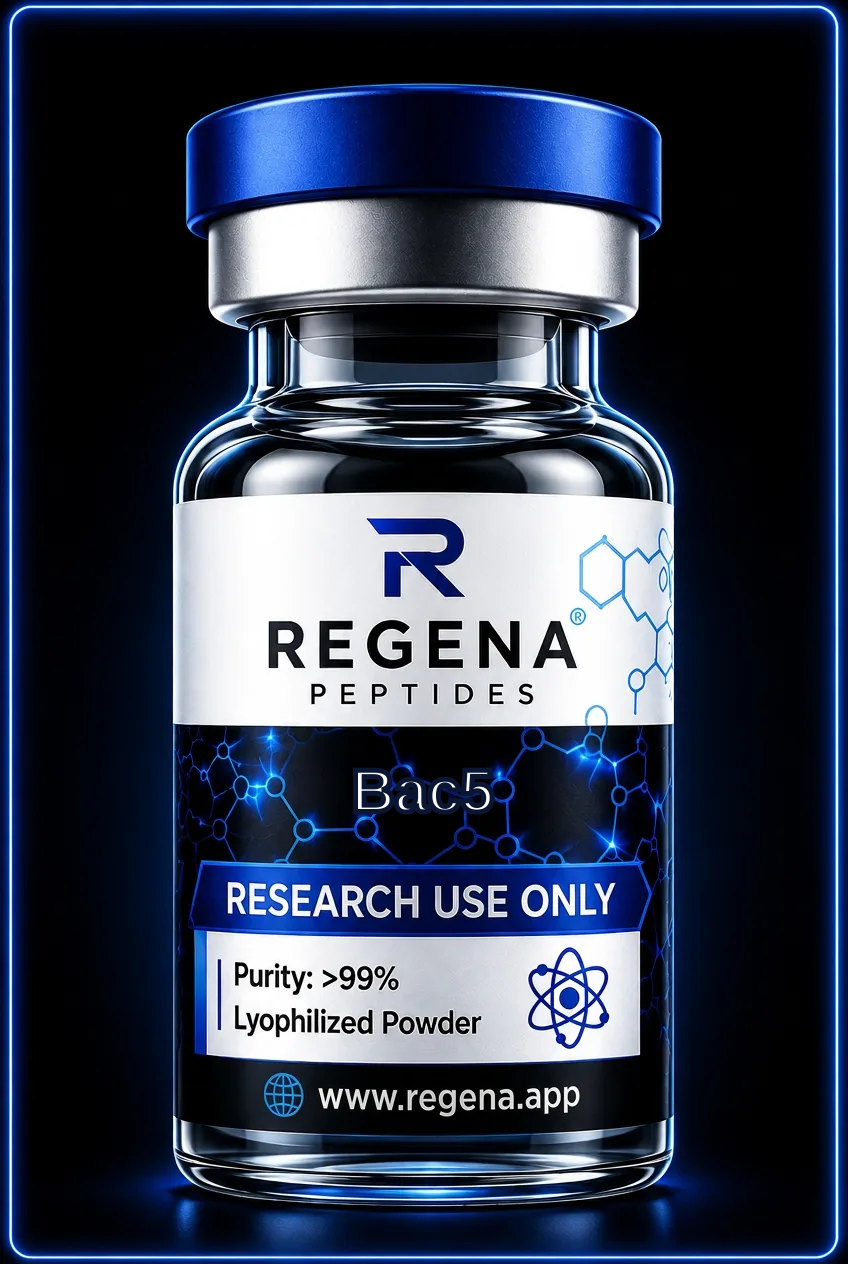
Antimicrobial · Proline-rich cathelicidin-derived antimicrobial peptide
Bac5
Also known as Bactenecin 5
A 43-residue bovine cathelicidin whose proline-rich sequence supports studies of bacterial transport and translation inhibition.
- Length
- 43 amino acids
- Half-life
- Not well characterised
- Mechanism
- Bac5-derived peptides inhibit bacterial protein synthesis through interactions with the ribosome following cellular uptake. Studies of N-terminal fragments support an exit-tunnel-associated mechanism, with SbmA contributing to uptake in susceptible bacterial models.
- Studied in
- Cell-free bacterial translation assays and genetically defined bacterial strains examine how Bac5 sequence length influences uptake and ribosomal inhibition.
About Bac5
Bac5 was identified among the antimicrobial components of bovine neutrophil granules and belongs to the cathelicidin family. The mature peptide comprises 43 amino acids, with a sequence strongly enriched in proline and arginine. It is generated from a larger precursor rather than synthesised biologically as an isolated short chain. This origin links Bac5 to other neutrophil cathelicidins, although its sequence and experimental properties distinguish it from Bac7 and the structurally different peptide bactenecin.
Experiments with Bac5 and its N-terminal fragments investigate non-lytic interference with bacterial protein synthesis. Ribosome-focused studies support binding within the exit-tunnel region, while bacterial genetics implicates uptake pathways such as SbmA in susceptible organisms. Fragment length can change both intracellular access and target engagement, making the exact construct a central experimental variable. Comparisons across bacterial species also require caution because envelope permeability and transporter availability can differ substantially between otherwise similar laboratory strains.
Laboratory notes
- Document the complete sequence, terminal groups and whether the preparation is full-length Bac5 or a truncated construct.
- Keep medium composition and ionic strength consistent across comparisons, since both can alter apparent peptide activity.
- Combine cell-free translation assays with whole-cell uptake controls; ribosomal inhibition alone does not establish bacterial entry.
Storage and reconstitution basics: storage guide.
Questions about Bac5
How does Bac5 differ from Bac7?
Both are bovine proline-rich cathelicidins, but mature Bac5 contains 43 residues and mature Bac7 contains 60. Their fragments and sequence-dependent properties must be evaluated separately.
Can fragment data be applied directly to full-length Bac5?
Not without qualification. Truncation can alter uptake, ribosome interactions and susceptibility to proteolysis.
Why compare cell-free and whole-cell assays?
Cell-free assays test translation inhibition without the bacterial envelope barrier, whereas whole-cell assays also depend on peptide stability and intracellular access.
Is Bac5 for human use?
No. It is supplied strictly for in-vitro laboratory research and is not for human or animal consumption.
Related research peptides
All products are sold for laboratory research use only. Not for human consumption, not a medicine, not for diagnosing, treating or preventing any condition.