
Hormone · C-terminal KISS1-derived RFamide peptide
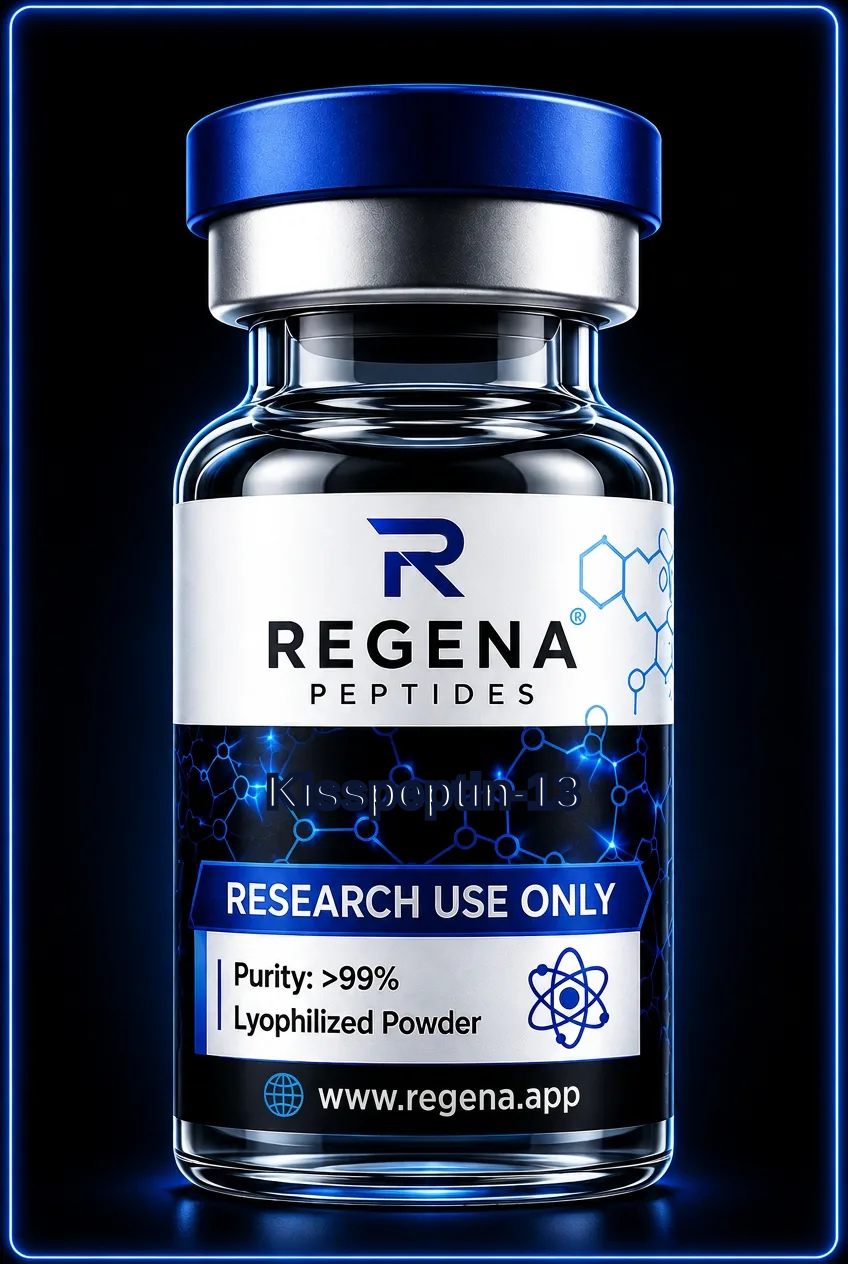
Kisspeptin-13
Also known as KP-13; KISS1-derived peptide 13
A 13-residue KISS1-derived fragment containing the amidated receptor-binding core used to investigate kisspeptin signalling.
- Length
- 13 amino acids
- Half-life
- Not well characterised
- Mechanism
- Kisspeptin-13 contains the C-terminal pharmacophore that activates KISS1R, formerly called GPR54. This receptor predominantly couples to Gq/11, engaging phospholipase C, intracellular calcium mobilisation and downstream signalling.
- Studied in
- Recombinant KISS1R assays and neuroendocrine model systems can examine receptor activation by this fragment, although fragment-specific evidence is less extensive than for kisspeptin-10 or kisspeptin-54.
About Kisspeptin-13
Kisspeptin-13 corresponds to the final 13 residues of human kisspeptin-54, with the sequence LPNYNWNSFGLRF-NH2. Its amidated C-terminal phenylalanine is part of the RFamide motif characteristic of kisspeptins. The KISS1 gene was originally identified through metastasis-suppression research in 1996; subsequent receptor studies connected its peptide products with GPR54, now designated KISS1R. The 13-residue fragment retains the established ten-residue receptor-activating core of human kisspeptin.
Unlike kisspeptin-10, kisspeptin-13 is not among the most extensively characterised kisspeptin fragments, so findings from other lengths should not automatically be assigned to it. Its principal experimental rationale is comparison of N-terminal extension while preserving the amidated C-terminal pharmacophore. Calcium mobilisation, inositol phosphate accumulation and receptor-dependent signalling assays can assess activity, with matched peptide controls helping distinguish sequence effects from differences in purity, degradation or assay conditions.
Laboratory notes
- Confirm the sequence and C-terminal amidation on the batch certificate; a free-acid analogue is not chemically equivalent.
- Prepare aliquots using a solvent compatible with the supplier's solubility data and the intended assay; minimise repeated freeze–thaw cycles.
- Include receptor-negative cells and a characterised kisspeptin reference when evaluating KISS1R-dependent signalling.
Storage and reconstitution basics: storage guide.
Questions about Kisspeptin-13
How does kisspeptin-13 differ from kisspeptin-10?
It adds Leu-Pro-Asn to the N-terminus of the human kisspeptin-10 sequence while retaining the same amidated C-terminal core.
Is kisspeptin-13 a well-established endogenous processing product?
Its sequence is derived from KISS1, but endogenous processing into this exact length is less firmly established than for commonly described fragments such as kisspeptin-10, -13 should therefore be identified by its supplied sequence rather than assumed biological origin.
Which receptor should a functional assay test?
KISS1R is the primary target. Calcium or inositol phosphate readouts in receptor-expressing cells are suitable starting points for research characterisation.
Is Kisspeptin-13 for human use?
No. It is supplied strictly for in-vitro laboratory research and is not for human or animal consumption.
Related research peptides
All products are sold for laboratory research use only. Not for human consumption, not a medicine, not for diagnosing, treating or preventing any condition.