
Antimicrobial · Cysteine-rich, disulphide-stabilised antimicrobial peptide
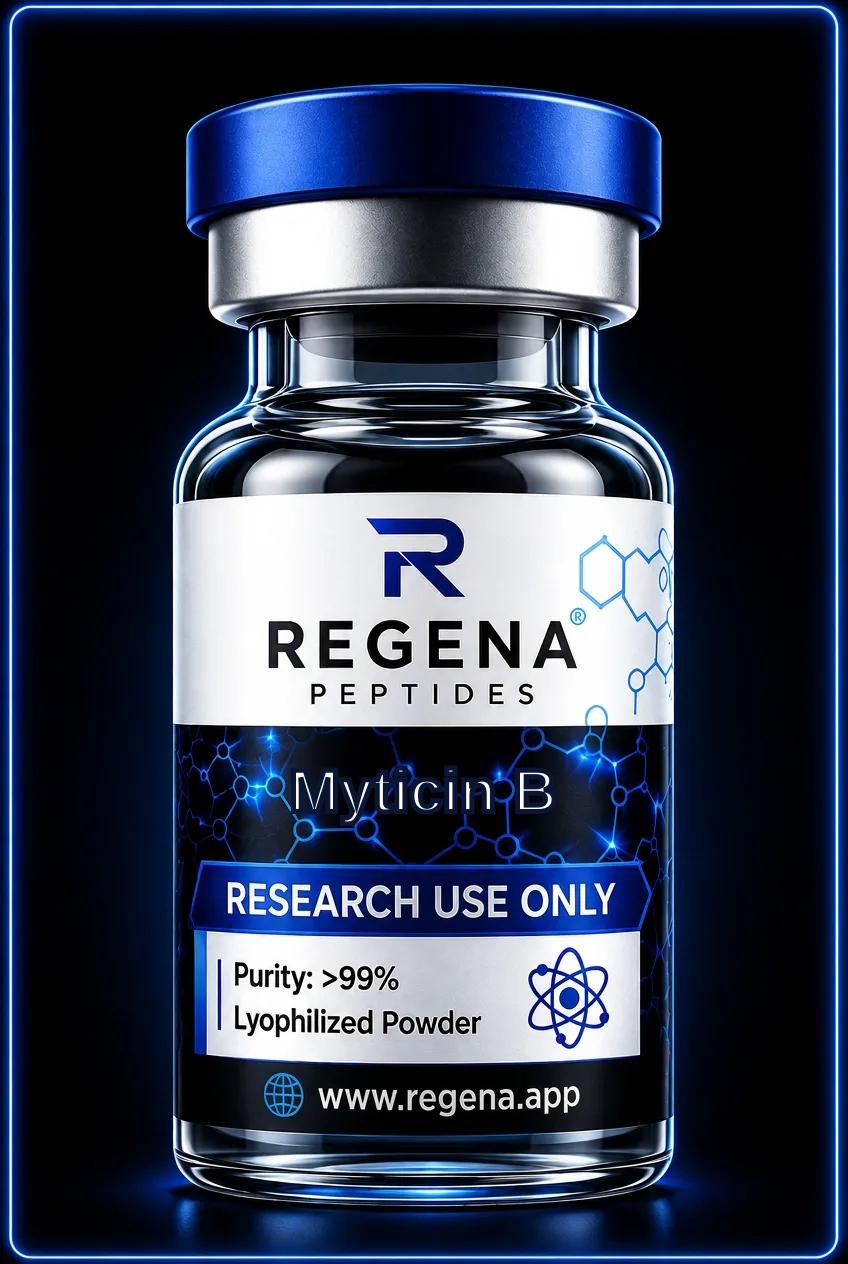
Myticin B
Also known as Myt B
A mussel-derived, four-disulphide peptide used to study innate defence and structure-dependent antimicrobial activity.
- Length
- 40 amino acids
- Half-life
- Not well characterised
- Mechanism
- Myticin B is a cationic, disulphide-stabilised peptide with antimicrobial activity, but its detailed molecular mechanism remains incompletely resolved. No definitive receptor or enzyme target has been established specifically for myticin B.
- Studied in
- Mussel haemocyte studies, microbial culture assays and synthetic or recombinant peptide experiments investigate myticin B expression, folding and antimicrobial specificity.
About Myticin B
Myticin B was identified among antimicrobial peptides from the Mediterranean mussel, Mytilus galloprovincialis. It is produced as a larger precursor that is processed to a mature peptide of 40 amino acids. Eight cysteine residues form four intramolecular disulphide bonds, creating a constrained structure rather than a simple linear helix. Its occurrence in mussel haemocytes places it within the molecular repertoire studied in bivalve innate defence and host–microbe interactions.
Experimental work examines antimicrobial specificity alongside the effects of correct oxidative folding. A preparation with the expected sequence but incorrect disulphide pairing may not reproduce the properties of the native peptide. Expression studies and activity assays also answer different questions: transcript abundance does not directly establish peptide concentration or function. Findings for other myticin family members, particularly myticin C, should not automatically be assigned to myticin B without direct evidence.
Laboratory notes
- Confirm oxidation state and, where required, disulphide connectivity; intact mass alone cannot distinguish all disulphide isomers.
- Avoid reducing agents when assessing the native folded peptide, unless reduction is an intentional experimental variable.
- Check that primers, antibodies and sequence annotations distinguish myticin B from closely related myticin family members.
Storage and reconstitution basics: storage guide.
Questions about Myticin B
How many disulphide bonds does mature myticin B contain?
Its eight cysteine residues form four intramolecular disulphide bonds in the native mature peptide.
Can findings for myticin C be used to describe myticin B?
Not without supporting experiments. Related myticins differ in sequence, and reported functions are not necessarily shared across the family.
Does myticin B have an established receptor?
No definitive receptor has been established specifically for myticin B, and its molecular mechanism remains less resolved than its sequence and disulphide-rich architecture.
Is Myticin B for human use?
No. It is supplied strictly for in-vitro laboratory research and is not for human or animal consumption.
Related research peptides
All products are sold for laboratory research use only. Not for human consumption, not a medicine, not for diagnosing, treating or preventing any condition.