
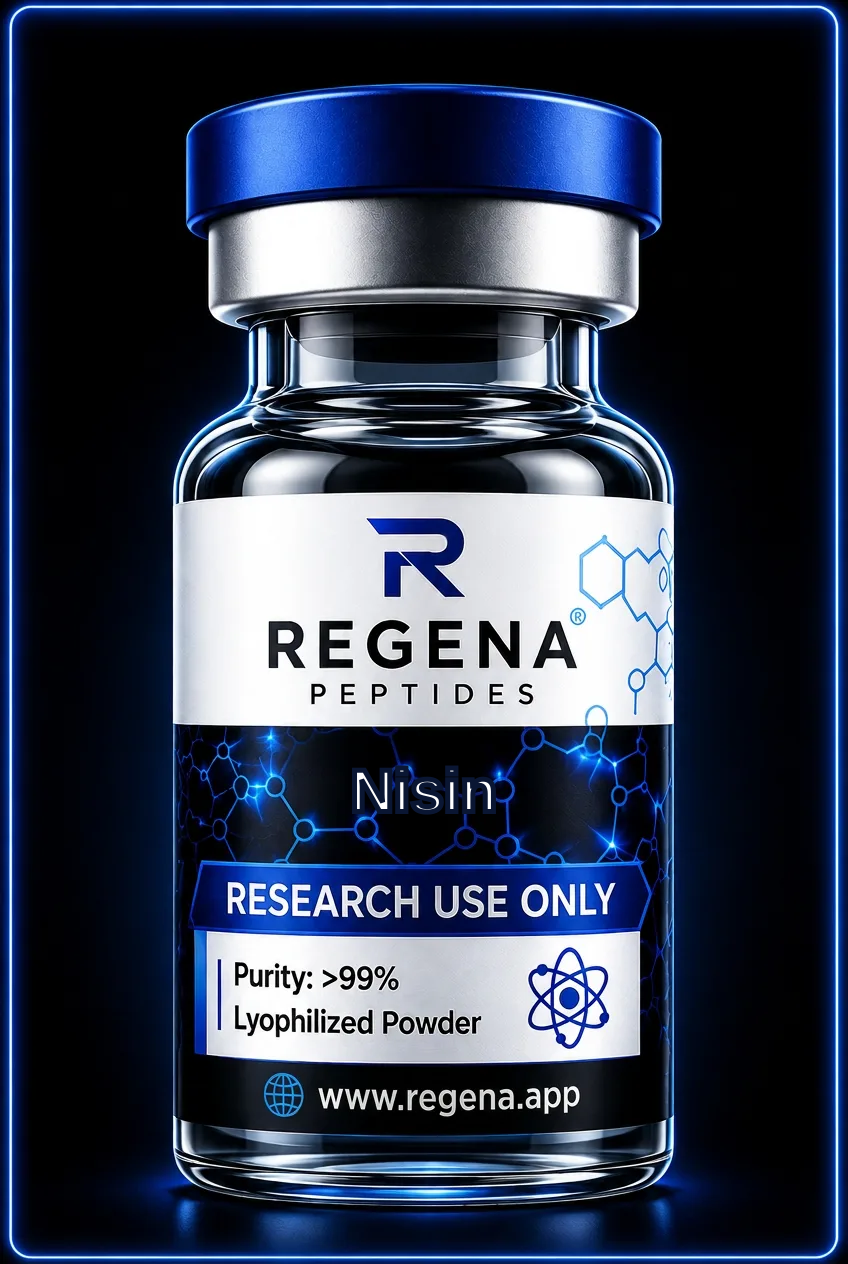
Antimicrobial · Lantibiotic bacteriocin
Nisin
Also known as Nisin A
A 34-amino-acid polycyclic bacteriocin that targets Lipid II to inhibit cell wall synthesis and form pores in Gram-positive bacteria.
- Length
- 34 amino acids
- Half-life
- Not well characterised
- Mechanism
- Binds to Lipid II, a precursor in bacterial cell wall synthesis, thereby inhibiting cell wall formation and using Lipid II to form pores in the membrane.
- Studied in
- Studied for its potent activity against Gram-positive bacteria and its dual mechanism of action involving both cell wall synthesis inhibition and pore formation.
About Nisin
Nisin is a polycyclic antibacterial peptide produced by the bacterium Lactococcus lactis. It belongs to the class of bacteriocins known as lantibiotics, characterized by the presence of unusual amino acids like lanthionine and methyllanthionine. These form intramolecular thioether bridges that create its complex, multi-ring structure.
Its bactericidal activity is highly specific and potent, primarily against Gram-positive bacteria. Nisin employs a dual mechanism: it binds to Lipid II, a crucial component of the cell wall synthesis pathway, preventing cell wall construction. This nisin-Lipid II complex then aggregates to form pores in the cell membrane, leading to rapid cell death.
Laboratory notes
- Nisin has low solubility at neutral pH but is more soluble and stable under acidic conditions (pH < 4).
- Its activity is largely restricted to Gram-positive bacteria due to the outer membrane of Gram-negative bacteria acting as a barrier.
- While commonly used in the food industry as a preservative, its research-grade version is a valuable tool for microbiology studies.
Storage and reconstitution basics: storage guide.
Questions about Nisin
What class of peptide is Nisin?
Nisin is a lantibiotic, a type of bacteriocin containing characteristic thioether cross-links.
What is Nisin's molecular target?
Its primary target is Lipid II, a precursor molecule essential for peptidoglycan synthesis in the bacterial cell wall.
Why is its activity limited to certain bacteria?
Its primary activity is against Gram-positive bacteria, as the outer membrane of Gram-negative bacteria generally prevents Nisin from reaching its target, Lipid II.
Is Nisin for human use?
No. It is supplied strictly for in-vitro laboratory research and is not for human or animal consumption.
Related research peptides
All products are sold for laboratory research use only. Not for human consumption, not a medicine, not for diagnosing, treating or preventing any condition.