
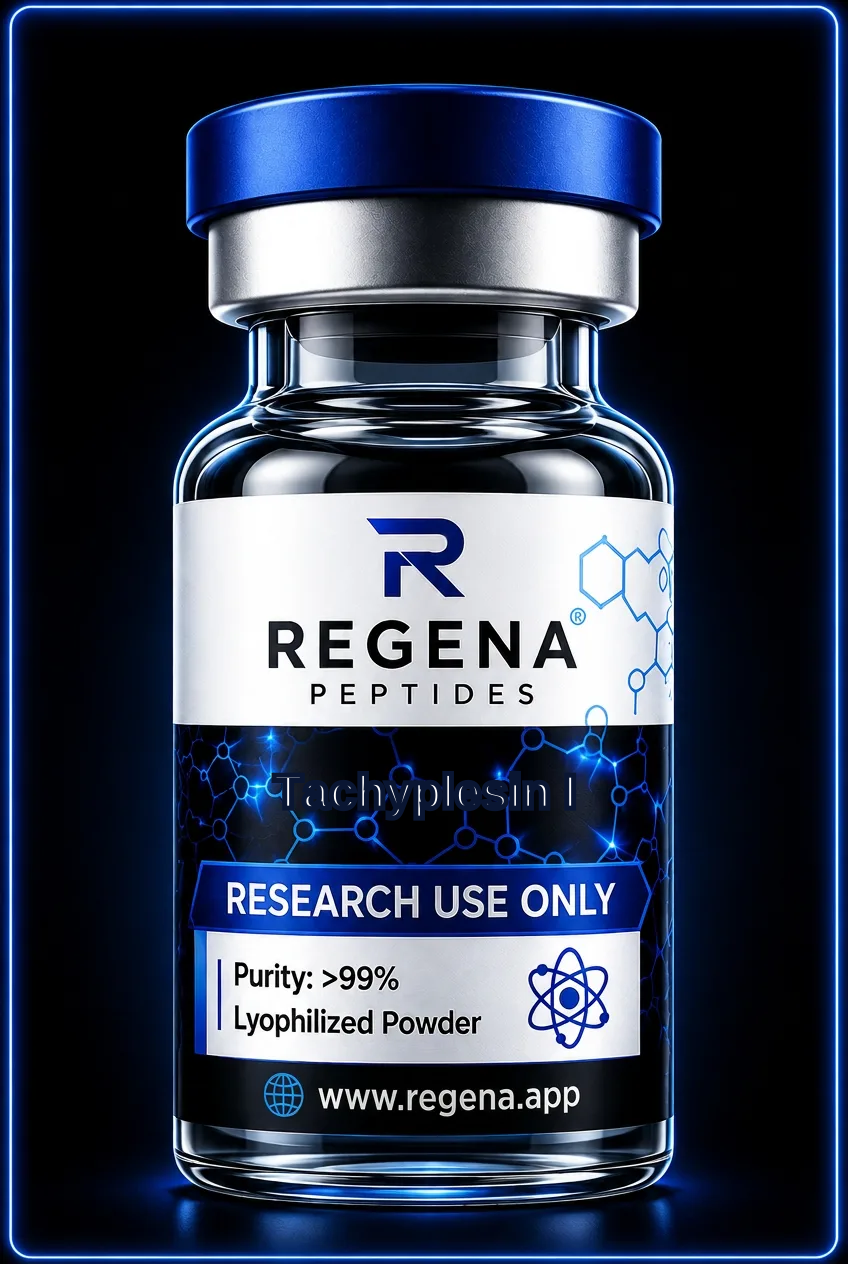
Antimicrobial · Cationic antimicrobial peptide (defensin-like)
Tachyplesin I
Also known as TPI
A 17-amino-acid cyclic peptide from horseshoe crab, studied for its membrane-disrupting antimicrobial and endotoxin-neutralising effects.
- Length
- 17 amino acids
- Half-life
- Not well characterised
- Mechanism
- Binds to microbial lipopolysaccharide (LPS) and phospholipids, disrupting membrane integrity by forming a beta-sheet structure upon interaction.
- Studied in
- Used in in vitro studies to examine its activity against bacteria and fungi, and its ability to neutralise endotoxins like LPS.
About Tachyplesin I
Tachyplesin I is an antimicrobial peptide isolated from the hemocytes of the horseshoe crab (Tachypleus tridentatus). This 17-residue peptide is cationic and contains two disulfide bridges that constrain it into a rigid, amphipathic beta-sheet structure. This stable conformation is essential for its biological function.
Its mechanism involves binding to the negatively charged surfaces of microbial membranes, including the lipopolysaccharide (LPS) of Gram-negative bacteria. Upon binding, it disrupts membrane integrity, leading to leakage and cell death. The peptide's ability to bind and neutralise LPS is also a significant focus of in vitro research.
Laboratory notes
- The two disulfide bonds are crucial for its rigid structure and activity; avoid reducing agents.
- Its high affinity for LPS makes it a useful reagent in studies involving endotoxin neutralisation.
- Reconstitute in pure water or low ionic strength buffer; high salt can interfere with its membrane-binding properties.
Storage and reconstitution basics: storage guide.
Questions about Tachyplesin I
What is the natural source of Tachyplesin I?
It is part of the innate immune system of the Asian horseshoe crab, isolated from its blood cells (hemocytes).
What is a key structural feature of this peptide?
It has a rigid, hairpin-like beta-sheet structure stabilized by two internal disulfide bonds.
Besides killing microbes, what other activity is it studied for?
It is investigated for its ability to bind and neutralise bacterial endotoxins, specifically lipopolysaccharide (LPS).
Is Tachyplesin I for human use?
No. It is supplied strictly for in-vitro laboratory research and is not for human or animal consumption.
Related research peptides
All products are sold for laboratory research use only. Not for human consumption, not a medicine, not for diagnosing, treating or preventing any condition.