
Hormone · Synthetic gonadotrophin-releasing hormone receptor antagonist
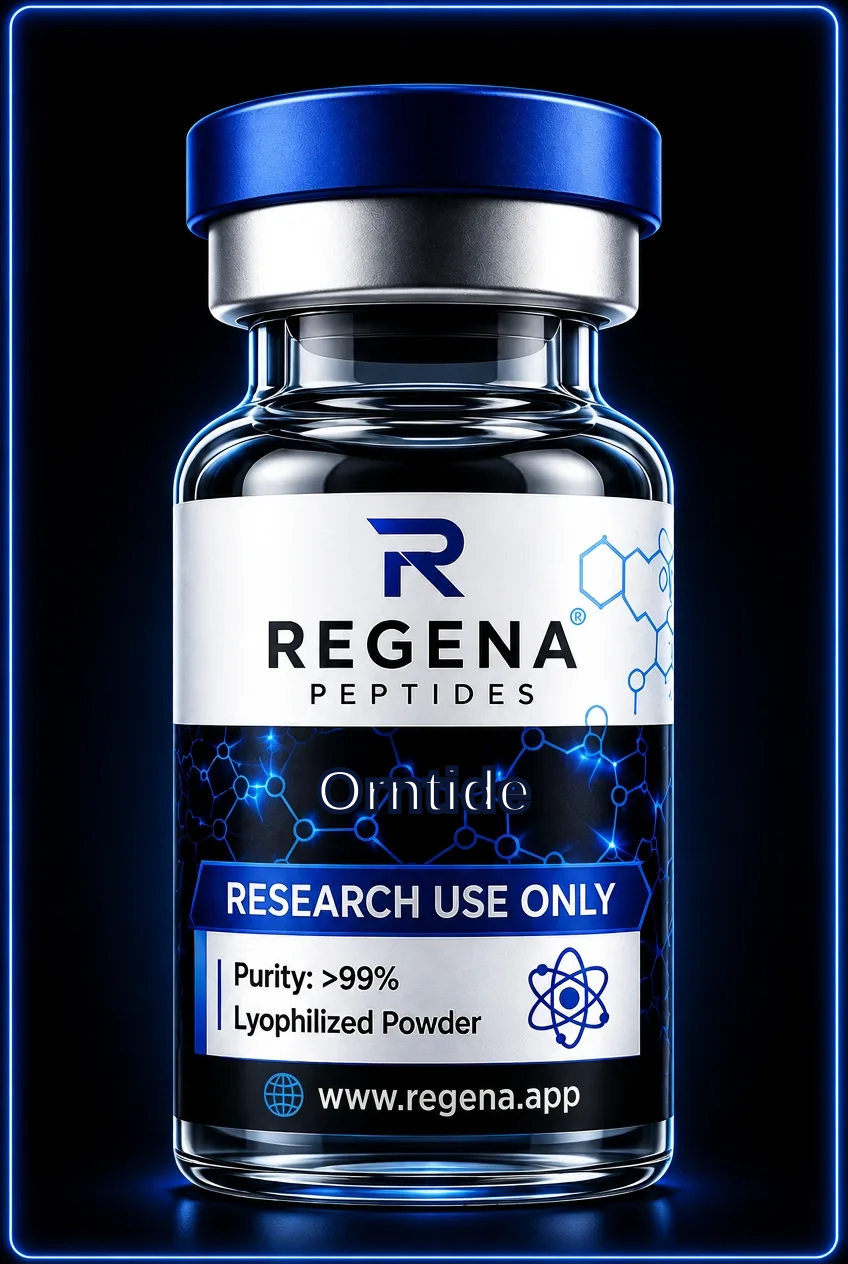
Orntide
Also known as —
A peptide GnRHR antagonist with a research literature spanning endocrine models and biodegradable microsphere release.
- Length
- 10 amino acids
- Half-life
- Not well characterised
- Mechanism
- Orntide antagonises GnRHR and inhibits GnRH-dependent activation of pituitary gonadotrophs. Its receptor blockade prevents the normal GnRH stimulus for gonadotrophin secretion.
- Studied in
- Orntide has been studied in biodegradable polymer microsphere systems, in-vitro peptide-release assays and rodent endocrine models linking release behaviour to gonadotrophin signalling.
About Orntide
Orntide is a synthetic decapeptide antagonist derived from the GnRH sequence framework. Modified residues distinguish it from the endogenous receptor agonist and support its use as an experimental blocker of GnRH signalling. Beyond receptor pharmacology, Orntide has featured in research on biodegradable polymer microspheres. These studies examine how a peptide antagonist interacts with a polymer matrix and how formulation properties influence the appearance of intact peptide in release media.
In microsphere experiments, peptide release and peptide integrity are separate questions. A bulk protein or peptide assay may detect material that is no longer the intact antagonist, while chromatographic analysis can help resolve degradation products from the parent compound. Polymer composition, particle size and the changing microenvironment during degradation may influence release profiles. Rodent endocrine readouts offer a complementary functional measure, but they do not replace direct characterisation of released Orntide.
Laboratory notes
- For release studies, quantify intact Orntide with a stability-indicating analytical method rather than relying solely on total peptide measurements.
- Document polymer composition, particle-size distribution and peptide loading when comparing microsphere preparations.
- Include free-peptide controls and assess recovery from release media and sample-processing materials.
Storage and reconstitution basics: storage guide.
Questions about Orntide
Why does Orntide appear in polymer formulation research?
It has been used as a peptide cargo in biodegradable microsphere studies examining encapsulation, release kinetics and retained antagonist activity.
Does a release curve describe Orntide's half-life?
No. Release kinetics describe movement out of a formulation, whereas elimination half-life describes loss from a defined biological compartment.
How can released peptide activity be assessed?
An appropriate GnRHR functional assay can test antagonism, alongside chromatography or mass spectrometry to establish peptide integrity.
Is Orntide for human use?
No. It is supplied strictly for in-vitro laboratory research and is not for human or animal consumption.
Related research peptides
All products are sold for laboratory research use only. Not for human consumption, not a medicine, not for diagnosing, treating or preventing any condition.