
Hormone · Peptide hormone
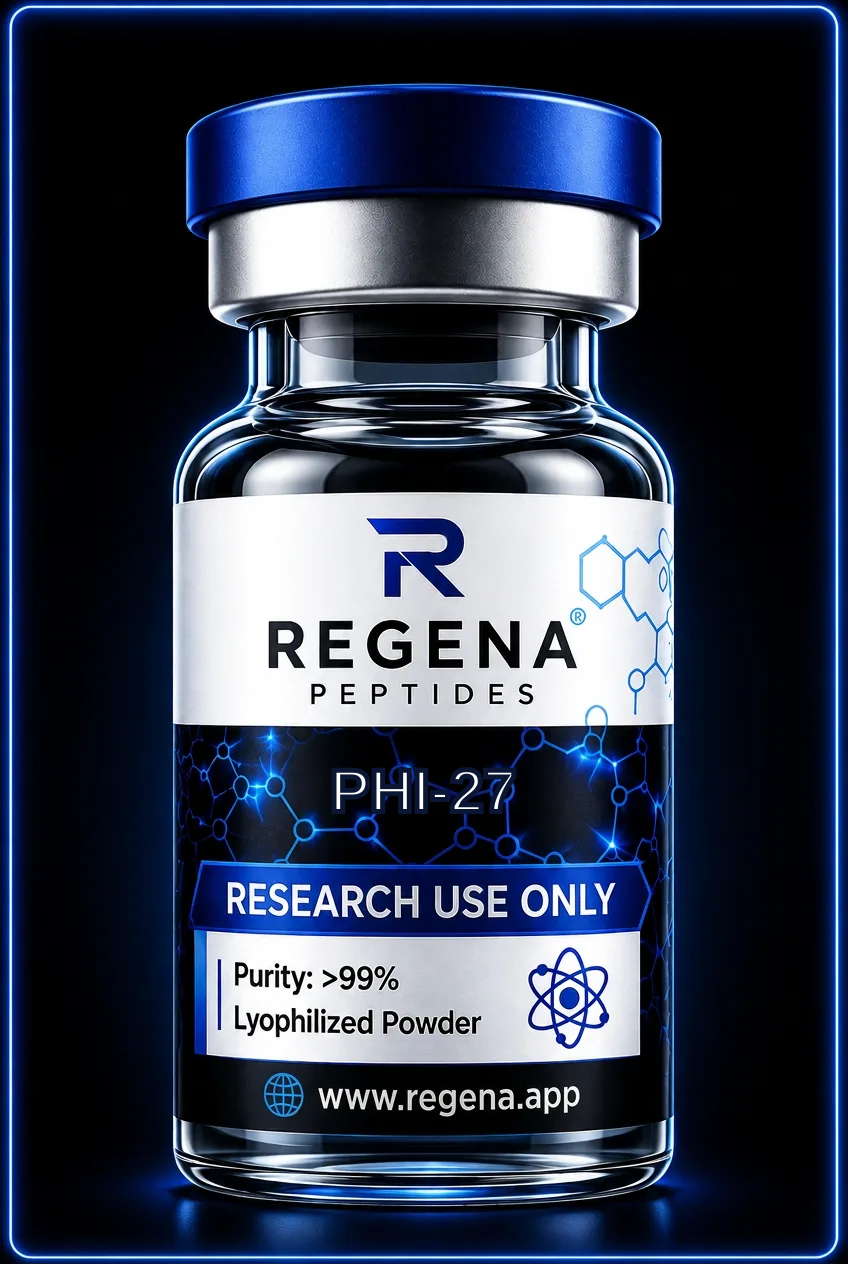
PHI-27
Also known as Peptide histidine isoleucine
PHI-27 is a 27-amino-acid peptide in the VIP/secretin family, used to investigate physiological processes regulated by VPAC receptors.
- Length
- 27 amino acids
- Half-life
- Not well characterised
- Mechanism
- Binds primarily to VPAC1 and VPAC2 receptors, showing little to no affinity for the PAC1 receptor.
- Studied in
- Employed in studies of the gastrointestinal and endocrine systems to explore functions mediated by VPAC receptors, such as smooth muscle relaxation.
About PHI-27
Peptide histidine isoleucine (PHI-27) is a 27-amino-acid peptide that is co-encoded on the same precursor gene as Vasoactive Intestinal Peptide (VIP). It shares significant sequence and structural homology with VIP and other members of the secretin/glucagon peptide family. As its name suggests, it has a histidine at the N-terminus and an isoleucine at position 27, and is C-terminally amidated in its active form.
PHI-27 demonstrates high affinity for both VPAC1 and VPAC2 receptors, similar to VIP. In contrast, it displays negligible affinity for the PACAP-specific PAC1 receptor. This receptor selectivity makes PHI-27 a valuable tool in pharmacological research to isolate and study biological responses mediated exclusively through VPAC receptors, distinguishing them from PAC1-mediated effects.
Laboratory notes
- The biological activity of the peptide is dependent on its C-terminal amidation.
- PHI-27 is a useful control peptide in experiments involving PACAP to confirm VPAC receptor involvement versus PAC1 receptor involvement.
- Store lyophilised peptide at -20°C and reconstituted aliquots at -80°C to maintain stability.
Storage and reconstitution basics: storage guide.
Questions about PHI-27
How is PHI-27 related to VIP?
They are derived from the same preprohormone and share about 50% sequence identity, resulting in similar binding profiles to VPAC receptors.
Can PHI-27 activate PAC1 receptors?
No, PHI-27 has very low affinity for PAC1 receptors, making it functionally selective for VPAC1 and VPAC2 receptors.
Where is PHI-27 primarily found?
It is co-localised with VIP and is found in the central and peripheral nervous systems, as well as in the gastrointestinal and reproductive tracts.
Is PHI-27 for human use?
No. It is supplied strictly for in-vitro laboratory research and is not for human or animal consumption.
Related research peptides
All products are sold for laboratory research use only. Not for human consumption, not a medicine, not for diagnosing, treating or preventing any condition.